
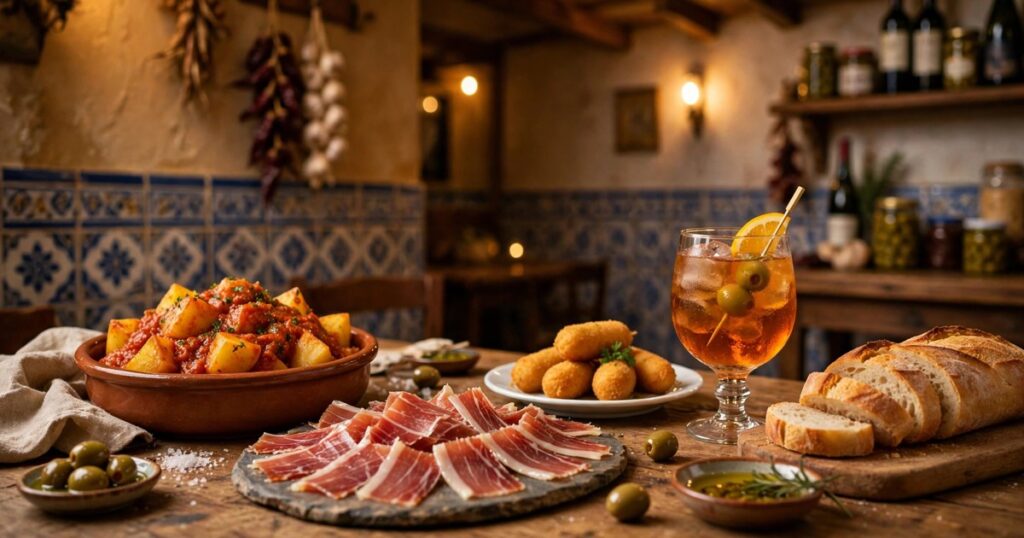
Madrid does not ask you to choose between tradition and trend. In one evening you can eat cocido madrileño in a wood-panelled tavern that has barely changed in a century, then finish with natural wine and creative small plates in a tiny bar in Lavapiés. The city eats late, shares everything, and treats lunch as a proper event rather than a sandwich at a desk. If you arrive hungry and a little flexible about timing, Madrid is one of the easiest food cities in Europe to love.
This guide answers the question every first-time visitor asks — where to eat in Madrid — neighbourhood by neighbourhood, budget by budget, and craving by craving. Use it to plan one great meal, or to eat your way through a whole long weekend.
Quick Answer: The best places to eat in Madrid are the tapas bars of La Latina and Huertas for classic small plates, Mercado de San Miguel for a market crawl, and the restaurants around Malasaña and Chueca for modern cooking. Try cocido madrileño, huevos rotos, patatas bravas, and jamón ibérico, eat dinner after 9 pm, and book ahead for sit-down restaurants.
Where Should You Eat in Madrid on Your First Visit?
Start in the centre, where the classic Madrid food experience is most concentrated. La Latina, just south of Plaza Mayor, is the tapas heartland: narrow streets, crowded bars, and a culture of standing, snacking, and moving on to the next place. Huertas, east of Puerta del Sol, is livelier at night and slightly more polished, with vermouth bars and small restaurants tucked between theatres and bookshops.
For a first day, do a tapas crawl rather than one long restaurant meal. Order one or two dishes per bar, drink a caña (a small beer) or a glass of vermouth, and keep walking. You will taste more, spend less, and understand Madrid’s social way of eating far better than you would from a single table. Save a sit-down restaurant for lunch or for a second evening, once you know what you like.
If you want a single orientation stop, head to a covered market first. Markets let you sample jamón, cheese, seafood, and sweets in one place, and they are a useful crash course in Spanish ingredients before you order from a menu in Spanish.
What Are Madrid’s Must-Try Dishes?
Madrid’s cooking is hearty, pork-and-chickpea friendly, and built for sharing. These are the dishes to prioritise:
- Cocido madrileño: the city’s signature chickpea stew, served in stages — broth first, then chickpeas and vegetables, then meats. It is a winter classic and a full meal in itself.
- Huevos rotos: broken eggs over fried potatoes, often topped with jamón or chorizo. Simple, salty, and perfect after a long walk.
- Patatas bravas: fried potatoes with spicy brava sauce and aioli. Every bar has its own version; trying several is half the fun.
- Jamón ibérico: cured Iberian ham, sliced thin and eaten on its own or on crusty bread. Look for bellota on the label for the top grade.
- Croquetas: creamy, fried béchamel croquettes, usually ham-flavoured. A good croqueta is crisp outside and almost liquid inside.
- Callos a la madrileña: Madrid-style tripe stew with chorizo and morcilla. Rich and deeply traditional — not for the faint-hearted, but beloved locally.
- Bocadillo de calamares: a fried squid sandwich, famously eaten around Plaza Mayor. Cheap, filling, and unmistakably Madrid.
- Churros con chocolate: thick hot chocolate for dipping crisp churros. Best late at night or as a sweet breakfast.
Vegetarians are not left out: tortilla española (potato omelette), pimientos de padrón (blistered peppers), grilled vegetables, and mushroom croquettes appear on most tapas menus. Vegans will find it harder in traditional bars, but modern restaurants in Malasaña and Lavapiés offer plant-based menus.
Where Are the Best Tapas Bars in Madrid?
Tapas culture is less about single famous bars and more about streets where several good places sit side by side. That said, these areas are the most reliable starting points:
La Latina and Cava Baja: the classic crawl
Cava Baja and neighbouring Cava Alta are lined with historic taverns. Expect standing room, chalkboard menus, and a crowd that spills onto the pavement. This is where to try vermouth on tap, bravas, and croquetas in quick succession. Come at lunchtime or around 8 pm to beat the densest evening crowds, and do not expect a table — standing at the bar is the authentic experience.
Huertas: vermouth and late-night energy
Huertas, also called Barrio de las Letras, mixes literary history with a buzzing bar scene. It is a good choice if you want a slightly dressier evening, with wine bars and modern tapas alongside the classics. It stays lively late, so it suits travellers who, like locals, prefer to eat dinner after 9 pm.
Malasaña: modern and creative
Malasaña skews younger and more experimental: natural wine bars, international small plates, craft beer, and brunch spots. It is the best neighbourhood if traditional taverns start to feel repetitive, or if your group includes vegetarians, vegans, or adventurous eaters.
Lavapiés: global flavours on a budget
Just south of the centre, Lavapiés is Madrid’s most multicultural neighbourhood, with Indian, African, Latin American, and Middle Eastern restaurants alongside Spanish bars. Prices are generally lower, portions generous, and the atmosphere is relaxed and local rather than touristy.
What Are the Best Food Markets in Madrid?
Madrid’s markets are attractions in their own right. They are also practical: you can graze, compare, and decide what you want more of later.
- Mercado de San Miguel: the famous iron-and-glass market near Plaza Mayor. Beautiful, busy, and pricier than local markets — ideal for a first tasting tour of jamón, oysters, vermouth, and sweets.
- Mercado de San Antón (Chueca): a three-storey market with fresh stalls below and a rooftop terrace for tapas and drinks. More local in feel than San Miguel.
- Mercado de la Paz (Salamanca): a traditional neighbourhood market in an elegant district, excellent for cheese, charcuterie, and a quieter sit-down lunch.
- Mercado de Mostenses: near Plaza de España, with a strong Latin American and Asian food presence — a good budget option.
Tip: markets are busiest at weekend lunchtimes. Visit on a weekday, or arrive just as stalls open, if you dislike crowds.
Where to Eat in Madrid by Neighbourhood
| Neighbourhood | Best for | What to expect | Budget |
|---|---|---|---|
| La Latina | Classic tapas crawl | Historic taverns, vermouth, bravas, croquetas | €–€€ |
| Huertas | Evening drinks + dinner | Wine bars, modern tapas, late-night buzz | €€ |
| Malasaña | Creative + brunch | Natural wine, international plates, coffee culture | €–€€ |
| Chueca | Markets + terrace dining | Mercado de San Antón, lively squares, diverse menus | €€ |
| Salamanca | Upscale dining | Refined restaurants, classic Spanish + international | €€–€€€ |
| Lavapiés | Budget + global food | Multicultural restaurants, generous portions | € |
| Retiro area | Relaxed lunch | Terraces near the park, family-friendly menus | €–€€ |
| Chamberí | Local favourite | Neighbourhood restaurants locals actually use | €–€€ |
Where Can You Find Madrid’s Most Famous Restaurants?
Madrid has a handful of institutions worth knowing, even if you only visit one. Sobrino de Botín, near Plaza Mayor, claims to be the world’s oldest continuously operating restaurant, founded in 1725, and is famous for roast suckling pig (cochinillo) cooked in a wood-fired oven. Book well ahead, expect a tourist-heavy room, and go for the history as much as the meal.
Casa Lucio, in La Latina, is famous for huevos rotos — the dish is so associated with the restaurant that many visitors treat it as a pilgrimage. It is pricier than a neighbourhood bar, but the quality and the old-Madrid atmosphere justify a splurge for many first-timers.
Beyond the institutions, Madrid’s Michelin-starred and fine-dining scene is strong, with celebrated restaurants across Salamanca and Chamberí serving modern Spanish tasting menus. If fine dining is your goal, reserve weeks ahead, check dress codes, and plan for a long, multi-course evening rather than a quick meal.
How Much Does Eating in Madrid Cost?
Madrid remains one of Western Europe’s better-value food cities, especially if you eat like a local. A tapas crawl with a few small plates and drinks can cost €15–€25 per person. A sit-down lunch is often the best deal of the day thanks to the menú del día — a fixed-price weekday lunch, typically two or three courses plus bread, drink, and coffee, for roughly €12–€20 outside the most touristy streets.
| Meal style | Typical cost per person | Best time |
|---|---|---|
| Tapas crawl (3–4 bars) | €15–€30 | Lunch or from 8 pm |
| Menú del día (weekday lunch) | €12–€20 | Weekday lunchtime |
| Casual sit-down dinner | €25–€45 | After 9 pm |
| Fine dining / tasting menu | €80–€180+ | Evening, booked ahead |
| Market grazing | €15–€25 | Late morning / lunch |
Watch for tourist-trap pricing around Plaza Mayor and Puerta del Sol: menus with photos in many languages, hawkers outside, and inflated drink prices are warning signs. Walk two streets away and prices usually drop sharply for better food.
When Do People Eat in Madrid?
Timing matters more in Madrid than in most European capitals. Breakfast is light — coffee and toast or churros — and usually eaten standing at a bar. Lunch is the main meal, served roughly from 1:30 pm to 4 pm. Many kitchens close in the late afternoon, so a 5 pm or 6 pm dinner hunt will disappoint you.
Dinner starts late: restaurants fill from about 9 pm, and tapas bars get busy from 8 pm onwards. If you are jet-lagged or travelling with children, eat a big lunch, snack in the afternoon, and aim for an early tapas crawl rather than forcing a 7 pm sit-down dinner that the kitchen has not really started serving yet.
Sundays have their own rhythm: La Latina fills for the El Rastro flea market in the morning, followed by vermouth and tapas. It is one of the best days for a casual food crawl, but book sit-down restaurants in advance, as popular places fill fast.
What Should You Eat for Breakfast in Madrid?
Madrid breakfasts are simple and coffee-led. A typical order is a café con leche with a toasted roll with tomato and olive oil (tostada con tomate), or a pincho de tortilla — a wedge of potato omelette on bread. Churros con chocolate is a treat rather than an everyday breakfast, but it is worth doing once, ideally at a classic chocolatería.
For a more substantial start, Malasaña and Chueca have the best brunch scene, with eggs, toast, and good coffee served later in the morning. If you need an early breakfast before a day trip, hotel breakfasts and station cafés are more reliable than neighbourhood bars, many of which open late.
Where to Eat Near Madrid’s Main Sights?
You do not need to eat badly just because you are sightseeing. Near the Prado and Retiro, the streets around Huertas and the Retiro’s western edge offer good lunch options away from museum-cafeteria prices. Around the Royal Palace and Plaza Mayor, head into La Latina or towards Mercado de San Miguel rather than settling for the first terrace on the square.
Near Gran Vía, look one or two blocks off the main drag for better value — Chueca to the north and Malasaña to the west both reward a short detour. If you are visiting the Santiago Bernabéu stadium area, Chamberí and the streets around the stadium have solid neighbourhood restaurants that are calmer on non-match days.
How Do You Order Tapas Like a Local?
Ordering in Madrid is refreshingly informal, but a few habits help. First, do not try to order everything at once: pick one drink and one or two dishes, then decide whether to stay or move on. Second, learn a handful of phrases — una caña (small beer), un vermut (vermouth), una ración (a full portion, for sharing) versus una tapa or media ración (smaller portions). Third, stand at the bar when it is busy; tables are often reserved or slower, and the bar is where the energy is.
Tipping is modest in Spain. Rounding up the bill or leaving a euro or two per person is normal; 10 percent is generous rather than expected. In fine-dining restaurants, a larger tip is appreciated but still not obligatory in the way it is in the United States.
What About Halal, Vegetarian, and Gluten-Free Eating in Madrid?
Madrid’s international neighbourhoods make special diets easier than the traditional tapas scene might suggest. Lavapiés has halal restaurants and Middle Eastern, South Asian, and North African cooking, and halal butchers and grocery shops serve the local community. Always confirm halal certification directly with the restaurant, as labelling varies.
Vegetarian travellers will manage well with tortilla, salads, grilled vegetables, and mushroom dishes, and will eat best in Malasaña, Chueca, and Lavapiés, where dedicated vegetarian restaurants are common. Gluten-free diners should note that many tapas are naturally gluten-free, but croquetas and fried dishes often contain wheat — ask about sin gluten options and cross-contamination if you are coeliac.
What Are the Best Day Trips for Food Lovers from Madrid?
If you have extra days, Madrid is a superb base for food day trips. Segovia is famous for roast suckling pig and its Roman aqueduct, and makes an easy train trip. Toledo offers marzipan, game dishes, and a beautiful old town. Ávila is known for roast meats and its medieval walls. Each is reachable in about an hour or so, and each rewards an unhurried lunch rather than a rushed visit.
Closer to home, the wine regions around Madrid itself — the Vinos de Madrid designation — produce reds and whites worth trying in city wine bars before you commit to a vineyard trip. Ask for a local wine by the glass; it is often excellent value.
How to Plan the Perfect Food Weekend in Madrid
A simple three-day plan works well. Day one: market tasting in the morning, tapas crawl in La Latina in the evening. Day two: a proper sit-down lunch (try cocido if it is in season, or huevos rotos at a classic restaurant), an afternoon in Retiro, and a modern dinner in Malasaña or Chueca. Day three: brunch, a neighbourhood wander in Chamberí or Lavapiés, and a final churros stop before you leave.
Book the sit-down restaurants, leave the tapas bars unbooked, and keep one evening deliberately empty — Madrid rewards wandering. Some of the best meals in the city happen when you follow a busy local crowd into a bar you had never heard of.
Frequently Asked Questions About Eating in Madrid
What is the best area to eat in Madrid?
La Latina is the best area for a classic tapas experience, Huertas is best for evening drinks and dinner, and Malasaña is best for modern, creative cooking. For a first visit, start with La Latina and add one other neighbourhood per day.
What food is Madrid most famous for?
Madrid is most famous for cocido madrileño (chickpea stew), huevos rotos (broken eggs over potatoes), bocadillo de calamares (fried squid sandwich), patatas bravas, and churros con chocolate. Jamón ibérico and vermouth are also essential tastes.
What time do restaurants open for dinner in Madrid?
Most Madrid restaurants open for dinner around 8 pm to 8:30 pm and fill from 9 pm onwards. Tapas bars are lively from about 8 pm, while sit-down restaurants are quietest before 9 pm.
Is Madrid expensive for food?
No, Madrid is relatively affordable for a Western European capital. A weekday menú del día costs roughly €12–€20, a tapas crawl runs about €15–€30 per person, and only fine dining pushes well above €80 per person.
Do I need to book restaurants in Madrid?
Tapas bars generally do not take bookings — just walk in and stand at the bar. Sit-down restaurants, especially famous or fine-dining ones, should be booked days or weeks ahead, particularly on weekends.
Is tipping expected in Madrid?
Tipping is modest in Madrid. Rounding up or leaving a euro or two per person is normal in bars, and around 5–10 percent is generous in sit-down restaurants. It is appreciated but not obligatory.
Can vegetarians eat well in Madrid?
Yes. Tortilla española, patatas bravas, pimientos de padrón, salads, and mushroom croquettes are widely available, and Malasaña, Chueca, and Lavapiés have dedicated vegetarian and vegan restaurants.
Madrid rewards the hungry and the unhurried in equal measure. Eat late, share everything, try the dish you cannot pronounce, and let one good bar lead you to the next. For more city food guides, explore our Food Guides, including where to eat in Paris and where to eat in London. Restaurant brand? Get featured — Work With Us.

I’m Lila Spoonbelle, your host on this flavorful ride through food, fun, and fearless puns. Let’s turn every bite into a burst of laughter!