
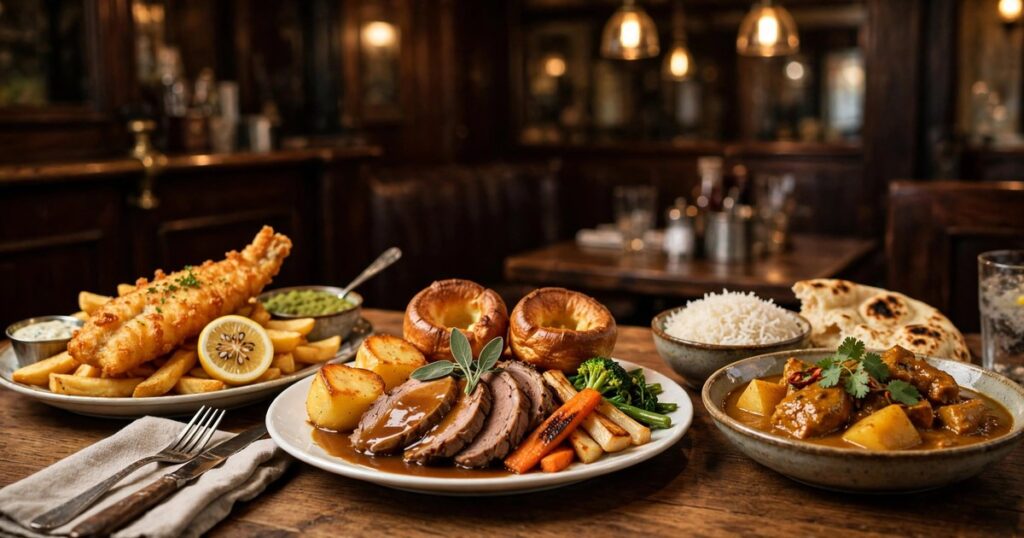
London does not have one food scene. It has dozens of them, layered on top of each other in the same few square miles: a 200-year-old pie shop next to a ramen counter with a queue out the door, a Michelin-starred dining room above a pub that still serves Sunday roast, and a market stall selling salt beef bagels at midnight. If you are trying to figure out where to eat in London, the first thing to accept is that you cannot eat it all in one trip — but you can eat very, very well if you know where to look.
This 2026 guide is built for first-time visitors and returning food lovers alike. It covers the neighbourhoods that matter, the dishes London actually does best, the markets worth planning a morning around, and the budget tricks that keep a food trip from draining your wallet. Whether you have two days or two weeks, start here.
Quick Answer: The best places to eat in London include Soho for all-round variety, Borough Market for a food-lover’s morning, Brick Lane for curry and bagels, and Shoreditch for street food and casual gems. Don’t miss classic fish and chips, a proper Sunday roast, and a pie and mash shop — then balance splurges with market stalls and set lunch menus.
What food is London famous for?
London’s most famous dishes are comfort food with history. Fish and chips, battered and served with mushy peas, is still the dish most visitors ask for first — and when it is done well, with fresh fish and properly crisp batter, it absolutely lives up to the hype. The full English breakfast, the Sunday roast with Yorkshire pudding and gravy, and pie and mash with liquor (a parsley sauce, not alcohol) are the other classics that have survived centuries of changing tastes.
But modern London is equally famous for what it borrowed. Chicken tikka masala was popularised in Britain, Brick Lane’s curry houses turned Bangladeshi cooking into a London institution, and the city’s Chinatown, Turkish grills on Green Lanes, and Caribbean spots in Brixton mean you can eat a different cuisine every night for a month without repeating yourself. London’s real signature is not one dish — it is that range.
That range is also why the city collects Michelin stars the way other cities collect rain. From fine-dining rooms in Mayfair and Chelsea to tiny tasting counters in Hackney, London rewards both the planner who books weeks ahead and the wanderer who follows a queue.
Where should first-time visitors eat in London?
If this is your first trip, base your eating around three areas and you will rarely go wrong.
Soho is the safest all-rounder. It is walkable, dense with restaurants, and covers almost every cuisine and price point: tiny ramen bars, old-school Italian trattorias, modern Indian restaurants, and late-night dumpling spots. You can eat breakfast, lunch, and dinner in Soho for three days and never repeat a cuisine.
Borough and South Bank suit the classic sightseeing day. Borough Market is a short walk from London Bridge, and the streets around it are packed with gastropubs, wine bars, and casual restaurants that are easy to drop into between the Tate Modern, Shakespeare’s Globe, and the river walk.
Covent Garden and the West End are best for a pre-theatre meal. Many restaurants here run set menus before evening shows, which is one of the easiest ways to eat well in central London without paying full à la carte prices. Book ahead — the good set menus fill up fast on Friday and Saturday nights.
Which London neighbourhoods are best for food lovers?
Each neighbourhood has its own eating personality. Use this table to pick your base — or to plan a day around a single area.
| Neighbourhood | Best for | Don’t miss | Budget feel |
|---|---|---|---|
| Soho | Variety, late nights | Ramen, dumplings, modern Indian | ££ |
| Borough / London Bridge | Markets, gastropubs | Borough Market, wine bars | ££ |
| Brick Lane / Shoreditch | Curry, bagels, street food | Salt beef bagels, curry houses | £ |
| Camden | Street food, casual eats | Camden Market stalls | £ |
| Green Lanes, Harringay | Turkish and Kurdish grills | Charcoal-grilled meats, meze | £ |
| Brixton | Caribbean, global village food | Brixton Village arcades | £ |
| Marylebone / Fitzrovia | Classic restaurants, brunch | Brunch spots, French bistros | ££ |
| Mayfair / Chelsea | Fine dining, special occasions | Michelin-starred tasting menus | £££ |
Shoreditch and Brick Lane deserve a special note. This is where London eats most casually and most creatively: bagel shops that have been open around the clock for decades, curry houses competing on the same street, coffee roasters, and food trucks that change with the seasons. If you want to understand what Londoners actually eat on a normal Friday night, start here rather than in a tourist restaurant near a landmark.
Where can I find the best fish and chips in London?
The honest answer is that the best fish and chips are rarely in the most central, most photographed shops. Look for places that fry to order, use sustainably sourced cod or haddock, and serve proper thick-cut chips rather than skinny fries. A good chip shop will tell you where its fish comes from and will not keep battered fish sitting under a heat lamp.
Central options with strong reputations include long-running shops in Soho and Marylebone, but some of the most loved fish and chips are found further out — in neighbourhood chip shops where locals queue on Friday nights. That Friday queue is itself a useful signal: Londoners still treat fish and chips as a weekly ritual, and a shop with a local line is usually a shop doing it right.
Order like a local: cod or haddock, mushy peas if you like them, salt and vinegar, and tartar sauce on the side. Skip the extras on your first visit — a great piece of fish needs very little help. And eat it fresh. Fish and chips lose their magic fast in a takeaway box carried across town, so sit in or eat nearby.
What are London’s best food markets?
Markets are the easiest way to taste a lot of London in a short time, and they are often cheaper than a sit-down restaurant.
Borough Market is the famous one, and it earns the crowds. Go on a weekday morning if you can — it is far calmer than a Saturday lunchtime — and graze: artisan bread, British cheeses, charcuterie, fresh oysters, and hot dishes from stalls that have been there for years. It is a market first, so bring an appetite and a willingness to stand and eat.
Camden Market leans younger and more global, with dozens of street-food stalls covering everything from Venezuelan arepas to Korean fried chicken. It is noisy, busy, and fun — ideal for a group where everyone wants something different.
Brick Lane’s Sunday markets and food halls are best for a weekend wander, while Brixton Village and Market Row offer a covered arcade of small, independent kitchens — Caribbean, Ethiopian, Colombian, Japanese, and more — in a space that still feels like a local market rather than a food court.
Market tip: arrive hungry, share dishes, and carry cash or a card that works for small contactless payments. Most stalls take cards now, but a few of the smallest still prefer cash.
Where can I eat on a budget in London?
London has a reputation for expensive food, and at the top end it is deserved. But it is also one of the easiest big cities to eat well on a budget, if you know the tricks.
- Eat at markets and street-food stalls for lunch — a filling meal for £8–£15 is normal at Camden, Borough, and Brick Lane.
- Book set lunch menus. Many good restaurants offer two or three courses at lunch for half the evening price, especially Monday to Friday.
- Look for pre-theatre menus in the West End — designed for theatre-goers, priced to be quick and affordable.
- Try neighbourhood restaurants over landmark restaurants. The same quality a few streets from a major attraction often costs 20–30% less.
- Use supermarkets for breakfast and picnics. A Meal Deal or a bakery breakfast keeps money free for one proper dinner a day.
- Drink tap water. London tap water is safe to drink, and asking for a jug saves several pounds per person per meal.
Neighbourhoods that stretch a budget furthest include Brick Lane, Brixton, Camden, and Green Lanes, where generous portions and family-run kitchens keep prices down. A curry on Brick Lane, a meze spread on Green Lanes, or a market lunch in Brixton can be the best meal of your trip for under £15 a head.
Where can I find halal food in London?
London is one of the easiest cities in Europe for halal eating, thanks to large Muslim communities and a restaurant scene that has served them for generations. Brick Lane and Whitechapel are the historic heart of the city’s Bangladeshi curry trade, while Edgware Road is lined with Lebanese, Egyptian, and Gulf restaurants, many of them halal. Green Lanes, Tooting, and Southall add Turkish, South Asian, and East African options.
Look for halal certification displayed in the window or on the menu, and don’t be shy about asking — most restaurants that serve halal food will say so clearly, and staff are used to the question. Many chains and central London restaurants also offer halal options now, but independent, family-run restaurants in the neighbourhoods above are where the cooking is most distinctive.
For a halal-focused day out, pair a Brick Lane curry with a salt beef bagel from a neighbouring shop (check the individual shop’s certification), or spend an evening on Edgware Road sampling shawarma, grilled meats, and Middle Eastern desserts. London’s halal scene is not a niche add-on — it is part of the city’s mainstream food identity.
What about vegetarian and vegan food in London?
Vegetarians and vegans eat exceptionally well in London. Almost every restaurant now offers at least one serious plant-based main, and dedicated vegan restaurants — from casual burger joints in Camden to fine-dining tasting menus in Shoreditch — have become part of the mainstream scene rather than a side note.
Indian restaurants are a natural starting point: much of the cuisine is vegetarian by tradition, and London’s Indian cooking, from South Indian dosa houses to modern small-plates restaurants, is among the best outside India. Middle Eastern restaurants are another easy win — falafel, hummus, mezze, and grilled vegetables are central, not afterthoughts. Borough Market and Brixton Village also make plant-based grazing easy, with stalls dedicated to vegan dishes alongside everything else.
Where should I go for a special occasion in London?
For a birthday, anniversary, or once-in-a-lifetime dinner, London’s fine-dining scene is hard to beat. Mayfair and Chelsea hold the highest concentration of Michelin-starred rooms, but some of the most memorable special-occasion meals are in smaller, chef-led restaurants in Shoreditch, Hackney, and Bermondsey, where tasting menus feel personal rather than formal.
Book as early as you can — top tables often open reservations weeks or months ahead — and check dress codes and cancellation policies before you commit. A tasting menu in London typically runs £100–£250 per person before wine, so treat it as the centrepiece of a day, not an add-on after a long day of sightseeing. If the full tasting menu is out of reach, many of the same restaurants offer a shorter lunch tasting menu at a lower price, which is one of the best value splurges in the city.
For a special occasion that is not fine dining, consider a Sunday roast in a historic pub, afternoon tea in a grand hotel, or a riverside dinner with a view of Tower Bridge. London does ceremony well in all its forms.
How much does eating out in London cost?
Prices vary wildly by neighbourhood and format, but these ranges give a realistic sense of what to budget per person in 2026.
| Meal type | Typical cost per person | Where |
|---|---|---|
| Street food / market lunch | £8–£15 | Borough, Camden, Brick Lane |
| Casual restaurant dinner | £20–£35 | Soho, Shoreditch, Brixton |
| Mid-range dinner (2 courses) | £35–£60 | Marylebone, Borough, Fitzrovia |
| Set lunch menu | £25–£45 | West End, Mayfair, City |
| Fine-dining tasting menu | £100–£250 | Mayfair, Chelsea, Shoreditch |
| Sunday roast in a pub | £18–£30 | Neighbourhood pubs citywide |
Drinks add up fast in London — a glass of wine in a central restaurant is often £9–£14 — so budget for drinks separately if you plan to order them. Service charges of 12.5–15% are commonly added to bills in sit-down restaurants; check whether service is included before tipping on top.
What mistakes should tourists avoid when eating in London?
A few common traps are easy to dodge once you know them. First, don’t judge a restaurant by its proximity to a landmark — the closest restaurant to a major attraction is often the most expensive and the least interesting. Walk two or three streets away and the quality usually jumps while prices fall.
Second, don’t skip booking. London’s best restaurants, even casual ones, fill up on weekends, and a walk-in at 7pm on a Saturday in Soho can mean a long wait or a disappointing fallback. A reservation made the day before costs nothing and saves the evening.
Third, don’t over-order at markets. It is tempting to buy everything that smells good at Borough Market, but portions are generous — share, graze, and leave room for a second stall.
Finally, don’t assume everything closes early. London’s late-night eating has improved enormously, with Soho, Shoreditch, and Brick Lane offering good food well past midnight. If you arrive late, head to those areas rather than settling for the nearest fast-food outlet.
How do I plan a perfect food day in London?
Here is a simple template that works for most first-time visitors. Start with breakfast at a neighbourhood café or bakery — London’s coffee and pastry scene is excellent, and a slow morning beats a rushed hotel buffet. Head to Borough Market for a late-morning graze, then walk the South Bank to work up an appetite.
For lunch, pick a neighbourhood and commit to it: a curry on Brick Lane, a meze spread in Brixton, or street food in Camden. Spend the afternoon sightseeing, then book an early dinner in Soho or Marylebone — early seatings are easier to book and often cheaper. Finish with dessert, a pub drink, or a late-night bagel, depending on your energy.
The key is to plan one anchor meal a day and let the others happen. London rewards a little structure and a lot of wandering — the best meal of your trip may be the one you didn’t plan at all.
Frequently Asked Questions
What is the best area to stay in London for food?
Soho is the best all-round base for food lovers — walkable, dense with restaurants, and open late. Shoreditch and Borough are strong alternatives if you prefer street food and markets over sit-down restaurants.
Is London expensive for food?
It can be, but it doesn’t have to be. Market lunches cost £8–£15, casual dinners £20–£35, and set lunch menus offer good value. Fine dining is the expensive end — budget £100–£250 per person for a tasting menu.
Where do locals eat in London?
Locals eat in their own neighbourhoods: Brick Lane for curry, Green Lanes for Turkish grills, Brixton for Caribbean and global food, and neighbourhood pubs for Sunday roasts. Follow local queues rather than tourist menus.
Do I need reservations in London?
For popular restaurants, yes — especially on Friday and Saturday nights. Book a day or two ahead for casual spots and weeks ahead for fine dining. Markets and street-food stalls never need reservations.
What should I eat in London for the first time?
Start with the classics: fish and chips, a Sunday roast, a full English breakfast, and a curry on Brick Lane. Then add a market morning at Borough and one meal in a neighbourhood you wouldn’t normally visit.
Is halal food easy to find in London?
Yes — London is one of the easiest European cities for halal eating. Brick Lane, Whitechapel, Edgware Road, Tooting, and Green Lanes all have large numbers of halal restaurants, and many central restaurants offer halal options.
When is the best time to visit Borough Market?
Weekday mornings are calmest, especially Thursday and Friday. Saturdays are busiest but have the fullest range of stalls. Arrive before noon for the best choice and shortest queues.
London’s food scene rewards curiosity more than money. A £10 market lunch eaten standing up can be just as memorable as a £200 tasting menu, and often more so — because London’s best meals are the ones that taste like the city itself: diverse, historic, a little chaotic, and endlessly generous. Plan one good meal a day, leave room for serendipity, and eat your way across the map.
For more city food guides, explore our Food Guides, including Where to Eat in Paris and Where to Eat in Houston — and if you run a restaurant or food brand, check out our Work With Us page.

I’m Lila Spoonbelle, your host on this flavorful ride through food, fun, and fearless puns. Let’s turn every bite into a burst of laughter!