
Pittsburgh is one of America’s most underrated food cities. Once known almost entirely for steel, the city has spent the last two decades quietly building a restaurant scene that is inventive, affordable, and deeply tied to its neighborhoods. Three rivers meet here, hills roll in every direction, and each district — from the market stalls of the Strip District to the restaurant-packed streets of Lawrenceville — has its own way of feeding you. If you are planning a visit and wondering where to eat in Pittsburgh, you are in for a treat: this is a city where a $12 sandwich can be as memorable as a $120 tasting menu, and where local pride runs through everything from pierogies to fine dining.
This guide covers the dishes Pittsburgh is famous for, the neighborhoods that matter most for eating out, and the restaurants worth prioritizing when your time is short. You will find old-school institutions, chef-driven newcomers, budget-friendly markets, and skyline-view dining rooms, plus practical tips on reservations, parking, and prices. Whether you have one evening or a whole long weekend, this is how to eat well in Pittsburgh without wasting a meal.
Quick Answer: The best restaurants in Pittsburgh cluster in the Strip District, Lawrenceville, the South Side, and Downtown’s Cultural District, with Shadyside and Squirrel Hill for classic neighborhood dining. Start with a Primanti Bros. sandwich and pierogies, then try Gaucho Parrilla Argentina, Apteka, Pamela’s Diner, and a Mount Washington restaurant for the skyline view.
What Food Is Pittsburgh Known For?
Pittsburgh’s food identity is built on hearty, working-class classics that locals defend with real passion. The city’s signature dishes were born in its mills, markets, and church basements, and they have survived because they are genuinely good — not just nostalgic. Understanding these foods first will make every restaurant choice easier, because you will know what to order the moment you sit down.
What Is a Primanti Bros. Sandwich?
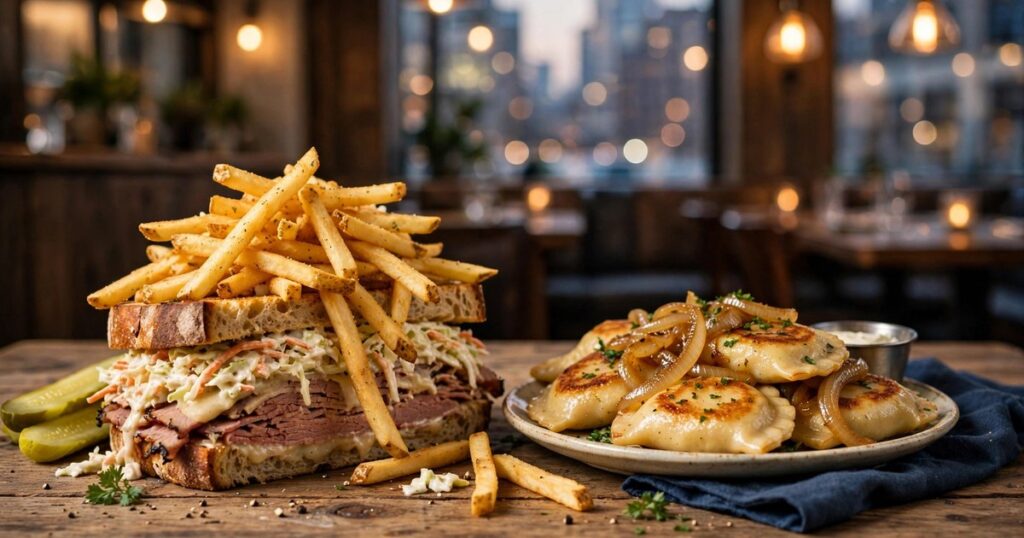
The Primanti Bros. sandwich is Pittsburgh’s most famous food export. Born in the Strip District in the 1930s, it was created for truck drivers who needed a full meal they could eat with one hand: grilled meat, melted provolone, a fried egg if you want it, and — crucially — french fries and vinegar-based coleslaw piled right inside the thick Italian bread. Eating one is gloriously messy, and the combination of hot meat, salty fries, and tangy slaw is the reason the chain has become a city landmark. The original Strip District location, open nearly around the clock for decades, is still the place most visitors aim for first. Order the Pitts-Burger or the pastrami, and do not ask them to hold the fries — that is the whole point.
Why Are Pierogies Such a Big Deal Here?
Pittsburgh’s Eastern European roots run deep, and pierogies are the dish that proves it. These pillowy dumplings, usually stuffed with potato and cheese, sauerkraut, or meat, show up everywhere: church fundraisers, food trucks, bar menus, and dedicated pierogi shops. The city’s baseball team even races giant pierogi mascots between innings. For visitors, the best introduction is a plate of pan-fried pierogies with caramelized onions and sour cream at a Polish or Eastern European restaurant in the Strip District or South Side, or from a food truck at a festival. They are cheap, filling, and unmistakably Pittsburgh.
What Is a Pittsburgh Salad?
Yes, Pittsburgh puts french fries on its salads — and yes, it works. A Pittsburgh salad is typically a bed of greens topped with grilled chicken or steak, tomatoes, cucumbers, shredded cheese, ranch dressing, and a generous pile of french fries. It sounds like a dare, but the hot, salty fries against cool greens and creamy dressing have made it a staple on menus across the city. Order one at a neighborhood bar or casual restaurant and you will understand why locals refuse to take the fries off.
What Are the Best Restaurants in Pittsburgh for First-Time Visitors?
If you only have a couple of days, prioritize restaurants that give you Pittsburgh in a single meal: a sense of place, a signature dish, and a room you will remember. The picks below are long-standing favorites and newer standouts that consistently appear on local recommendation lists, covering a range of styles and budgets.
Which Classic Restaurants Should I Visit First?
Primanti Bros. in the Strip District is the essential first stop — not just for the sandwich, but for the experience of eating where the tradition started, surrounded by market workers, students, and tourists at shared tables. Pamela’s Diner, a beloved local chain with several locations including the Strip District and Squirrel Hill, is the city’s classic breakfast spot: its crepe-style hotcakes, thin and slightly crispy at the edges, have a cult following, and the no-frills diner atmosphere is part of the charm. Get there early on weekends, because the line is real.
For something more upscale, Gaucho Parrilla Argentina in the Strip District serves wood-fired South American meats in a warm, industrial-chic room — the mixed grill and empanadas are the move, and it is one of the hardest tables in the city on weekend nights, so book ahead. Union Standard, downtown in the Cultural District, is a polished modern American brasserie in a grand old bank building, ideal for a pre-theater dinner. Meat & Potatoes, also downtown, is the city’s classic gastropub: hearty, creative, and reliably good, with a late-night menu that makes it a favorite after shows and games.
Where Do Locals Go for Something Different?
Apteka, in Bloomfield, is Pittsburgh’s most talked-about restaurant of recent years: a vegetable-forward, Eastern European-inspired kitchen and natural wine bar that has earned national attention without losing its neighborhood soul. It is proof that Pittsburgh’s food scene has grown far beyond its comfort-food roots. Morcilla, in Lawrenceville, is the city’s Spanish star — small plates, excellent charcuterie, and a lively bar that fills up fast. Bar Marco, in the Strip District, pairs inventive small plates and craft cocktails in a cozy, brick-walled space, while Soba, in Shadyside, has been the go-to for creative Asian cuisine and a serious sake list for years. If your group cannot agree, the food halls below solve the argument.
Where Are the Best Restaurants in Pittsburgh by Neighborhood?
Pittsburgh’s food scene makes the most sense when you think in neighborhoods. The city is a patchwork of distinct districts separated by rivers and hills, and choosing where to eat based on where you are staying — or where you plan to spend the day — makes planning much simpler. The table below gives a quick overview of the districts every food-loving visitor should know.
| Neighborhood | Vibe | Best For | Price Range |
|---|---|---|---|
| Strip District | Bustling markets, historic, daytime energy | Primanti Bros., international grocers, coffee, street food | $–$$ |
| Lawrenceville | Trendy, walkable, chef-driven | Morcilla, cocktail bars, brunch, indie restaurants | $$–$$$ |
| South Side | Lively, bar-heavy, late-night | Casual eats, pierogies, nightlife dining | $–$$ |
| Downtown / Cultural District | Polished, theater-adjacent, grand rooms | Pre-show dinners, gastropubs, fine dining | $$–$$$$ |
| Shadyside | Upscale, leafy, classic | Soba, cafes, Walnut Street dining | $$–$$$ |
| Squirrel Hill | Neighborhood feel, diverse | Pamela’s, kosher delis, Asian and Middle Eastern spots | $–$$ |
| North Side | Museums, stadiums, food hall | Federal Galley, game-day eats, casual dining | $–$$ |
| Mount Washington | Views, romantic, special occasion | Skyline-view dining, seafood, fine dining | $$$–$$$$ |
What Should I Eat in the Strip District?
The Strip District is Pittsburgh’s food market heart: a stretch of Penn Avenue and Smallman Street where wholesale produce houses, Italian grocers, fish markets, and coffee roasters have operated for generations. Come hungry and come in the morning, when the street vendors are out and the energy is highest. Beyond Primanti Bros., graze your way through the district: fresh bread and imported cheese at Pennsylvania Macaroni Company, seafood at Wholey’s, coffee from a local roaster, and street food from the carts outside. Smallman Galley, the district’s food hall, lets a group split up across four small restaurant stalls and meet back at a shared table — a perfect solution when nobody can agree on one cuisine. For a deeper dive into the city’s market culture, the Pittsburgh Public Market hosts local vendors selling everything from baked goods to pierogies.
Why Is Lawrenceville the City’s Hottest Food Street?
Butler Street in Lawrenceville is where Pittsburgh’s new food scene lives. Once a working-class corridor, it is now lined with chef-owned restaurants, cocktail bars, coffee shops, and bakeries, and it is the best single street for a progressive food crawl: start with small plates at Morcilla, move on for drinks at a cocktail bar, and finish with dessert at a bakery or ice cream shop. The neighborhood is very walkable, and its brunch scene — creative, affordable, and usually busy — is worth planning a slow morning around. Come in the evening for the full effect, when the street fills with locals and the restaurant patios are lively.
Where Should I Go for a Night Out on the South Side?
East Carson Street on the South Side is Pittsburgh’s nightlife strip: blocks of bars, casual restaurants, and late-night kitchens that stay busy well past midnight. It is the best neighborhood for a fun, low-key night out — pierogies at a bar, tacos from a late-night window, or a sit-down meal before the bars fill up. Prices are generally friendly, and the crowd skews younger on weekend nights. If you prefer a quieter evening, the South Side’s side streets and the South Side Works area offer calmer dining rooms with riverfront views.
Where Can I Eat on a Budget in Pittsburgh?
Pittsburgh is one of the most budget-friendly food cities in the US, and eating well here does not require a big spend. Primanti Bros. sandwiches, Pamela’s breakfasts, pierogies from a church festival or food truck, and market stalls in the Strip District all keep a meal under $15. The food halls — Smallman Galley in the Strip District and Federal Galley on the North Side — are excellent budget strategies, since everyone in your group can eat what they want without committing to one restaurant’s prices. Many of the city’s best ethnic restaurants, especially in Squirrel Hill and Bloomfield, serve generous portions at neighborhood prices. As a rule, lunch menus and weekday specials at downtown restaurants offer the same kitchens at a lower price than dinner.
Where Can I Eat With a View of the Pittsburgh Skyline?
For the city’s famous skyline, head up to Mount Washington. The Grandview Avenue overlooks are free and spectacular, and the restaurants along the ridge pair that view with serious cooking: Monterey Bay Fish Grotto and Altius are the classic special-occasion choices, with floor-to-ceiling windows facing downtown and the rivers. Book a window table and time your reservation for sunset if you can — the city lights coming on over the rivers is one of the best dinner views in America. If you want the view without the fine-dining price, ride the Duquesne Incline up, enjoy the overlook, and eat back down in the city at a casual spot.
How Much Should I Budget for Food in Pittsburgh?
Pittsburgh’s prices are gentler than those in New York, Chicago, or San Francisco, but they vary widely by neighborhood and occasion. The table below gives realistic daily ranges for a visitor eating out for most meals.
| Style | Per Person, Per Day | What It Gets You |
|---|---|---|
| Budget | $30–$50 | Market stalls, diners, food halls, Primanti Bros., pierogies |
| Mid-range | $60–$100 | Neighborhood restaurants, Lawrenceville, South Side, one nice dinner |
| Splurge | $120–$200+ | Fine dining, tasting menus, Mount Washington views, wine pairings |
What Should I Know Before Eating Out in Pittsburgh?
A few local habits will make your meals smoother. First, book ahead for the popular chef-driven restaurants in Lawrenceville and the Strip District, especially on Friday and Saturday nights — walk-ins can mean a long wait. Second, parking can be tricky in the Strip District on Saturday mornings and in Lawrenceville on weekend evenings; rideshares and the city’s buses are often easier than hunting for a spot. Third, game days change everything: when the Steelers, Penguins, or Pirates are playing, downtown and North Side restaurants fill up fast, so plan around the schedule or embrace the crowd. Finally, do not skip the neighborhood spots in favor of only the famous names — some of the best meals in Pittsburgh are in unassuming rooms in Squirrel Hill, Bloomfield, and Brookline that locals have loved for years.
To explore more of the city’s food scene, browse our Food Guides for more city eating guides, including our picks for where to eat in Louisville and where to eat in Philadelphia.
Frequently Asked Questions About Eating in Pittsburgh
What is the one dish I must try in Pittsburgh?
A Primanti Bros. sandwich from the original Strip District location. It is the dish most associated with the city — grilled meat, provolone, french fries, and coleslaw inside thick Italian bread — and it tastes like Pittsburgh in a way no other single plate does. Pair it with a side of pierogies and you have covered the city’s two signature foods in one day.
Where is the best neighborhood to stay for food lovers?
Lawrenceville for chef-driven restaurants and walkable evenings, the Strip District for markets and daytime grazing, and Downtown’s Cultural District if you want theaters, hotels, and polished restaurants within walking distance. Squirrel Hill and Shadyside are quieter, classic neighborhood choices with excellent everyday dining.
Is Pittsburgh expensive for eating out?
No — Pittsburgh is one of the most affordable major food cities in the US. A filling casual meal usually costs $12–$20 per person, a good neighborhood dinner runs $25–$45 per person, and only the fine-dining rooms and Mount Washington view restaurants push past $75 per person. Budget travelers can eat very well for $30–$50 a day.
Do I need reservations at Pittsburgh restaurants?
For popular spots in Lawrenceville, the Strip District, and Mount Washington, yes — especially on Friday and Saturday nights. Casual places like Primanti Bros. and Pamela’s Diner are walk-in, but expect a line at peak times. Booking a few days ahead is enough for most restaurants; the hardest tables need a week or more.
What is the best time of year to visit Pittsburgh for food?
Late spring through early fall, when farmers markets, food festivals, and restaurant patios are in full swing, and the Strip District is at its liveliest. Winter has its own charm — hearty comfort food, fewer crowds, and cozy dining rooms — but some patios and seasonal stalls close in the coldest months.
Where can I find vegetarian and vegan food in Pittsburgh?
Apteka in Bloomfield is the standout — a vegetable-forward restaurant that has earned national praise — and most Lawrenceville and Shadyside restaurants offer strong plant-based options. The food halls and Squirrel Hill’s Middle Eastern and Asian restaurants are also reliable for vegetarian and vegan meals.
Is the Strip District worth visiting if I am not a morning person?
Yes, though mornings are when the markets are busiest. The district’s restaurants, coffee roasters, and food hall are open through the afternoon and evening, and a late lunch of a Primanti Bros. sandwich followed by browsing the grocers still captures the neighborhood’s flavor without the early start.
Pittsburgh rewards visitors who eat like locals: start with the classics, wander the neighborhoods, and leave room for one more pierogi. With its markets, chef-driven streets, and unbeatable skyline views, it is a food city that punches well above its size — and one you will want to return to. Restaurant brand? Get featured — Work With Us.

I’m Lila Spoonbelle, your host on this flavorful ride through food, fun, and fearless puns. Let’s turn every bite into a burst of laughter!