
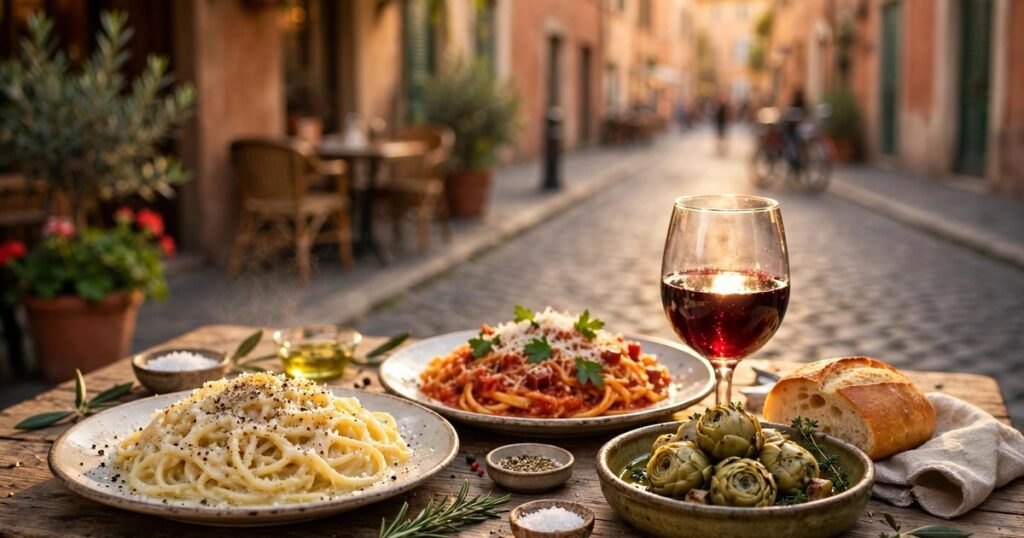
Rome is one of those cities where a meal is never just a meal. It is a plate of cacio e pepe eaten standing up at a market counter, a long Sunday lunch in a family-run trattoria, or a gelato eaten while walking home past a two-thousand-year-old temple. The city rewards eaters who slow down, wander a street or two away from the main sights, and order what the Romans themselves order.
This guide covers where to eat in Rome in 2026, neighborhood by neighborhood, from the beloved trattorias of Trastevere to the street-food stalls of Testaccio. Whether you are here for three days or three weeks, you will find the classic dishes, the restaurants worth booking, the budget tricks, and the traps to skip. For more city eating guides, browse our Food Guides collection.
Quick Answer: For the best food in Rome, head to Trastevere for cozy trattorias, Testaccio for authentic street food and markets, and the historic centre for classic Roman dishes near the Pantheon. Book ahead for popular spots, eat lunch like a local, and skip restaurants with picture menus near major sights.
What Should You Eat in Rome?
Roman cooking is famously simple. A short list of ingredients, treated with respect, is the whole philosophy. Before you start choosing restaurants, it helps to know the dishes that define the city.
The four pastas of Rome are the essential starting point. Cacio e pepe is tonnarelli or spaghetti tossed with pecorino Romano cheese and black pepper until it turns creamy without a drop of cream. Carbonara, in its true Roman form, is egg yolk, guanciale, pecorino, and pepper — no cream, no peas, no mushrooms. Amatriciana adds tomato and guanciale to the pecorino base, while gricia is essentially amatriciana without the tomato. If a menu offers all four, you are in a place that takes Roman tradition seriously.
Beyond pasta, look for saltimbocca alla romana (veal with prosciutto and sage), abbacchio (roast lamb, especially at Easter), carciofi alla romana and alla giudia (two very different preparations of artichoke, both worth trying), and coda alla vaccinara, the slow-braised oxtail that is the signature dish of Testaccio. For something quick, supplì — fried rice balls with a molten mozzarella heart — are the city’s beloved street snack, and trapizzino, a pocket of pizza dough filled with slow-cooked stews, is a modern Roman invention that has become a classic in its own right.
And then there is pizza. Roman pizza is thin, crisp, and crackery, a world away from the soft, puffy Neapolitan style. Order pizza al taglio (by the slice, cut with scissors and priced by weight) for lunch, and a whole round pizza tonda for dinner. Finish every meal the Roman way: with a gelato, eaten while walking, never rushed.
Where Are the Best Neighborhoods to Eat in Rome?
Rome’s food scene is organized by neighborhood, and each area has its own personality, price level, and specialties. The table below gives a quick overview, and the restaurant picks that follow are grouped by the same neighborhoods so you can plan a meal around wherever you happen to be.
| Neighborhood | What It’s Known For | Best For | Price Level |
|---|---|---|---|
| Trastevere | Trattorias, lively piazzas, evening atmosphere | Classic Roman dinners, first-time visitors | €€ |
| Testaccio | Market food, offal and oxtail, working-class tradition | Authentic local eating, street food | € |
| Historic Centre (Pantheon, Piazza Navona) | Iconic restaurants, refined Roman cooking | Special-occasion meals, classic dishes done well | €€–€€€ |
| Monti | Wine bars, creative small plates, young crowd | Casual evenings, aperitivo | €–€€ |
| Jewish Ghetto | Artichokes, fried foods, centuries-old recipes | A distinct Roman cuisine, lunch stops | €€ |
| San Lorenzo | Student-friendly prices, pizza and pasta | Budget dinners, late nights | € |
Where to Eat in Trastevere?
Trastevere, across the Tiber from the historic centre, is Rome’s most famous food neighborhood — and for good reason. Its narrow lanes are packed with trattorias, but the best ones are the ones Romans still queue for.
Da Enzo al 29 is the Trastevere trattoria that every Roman food lover knows. It is small, it does not take reservations, and the queue outside is part of the experience. The cacio e pepe and carbonara are textbook, the fried artichoke is superb in season, and prices stay refreshingly moderate for a place this beloved. Arrive early or be prepared to wait — it is worth it.
Trattoria Da Augusto, on the neighborhood’s prettiest piazza, is the old-school alternative: paper tablecloths, handwritten menus, and a kitchen that has barely changed in decades. It is the kind of place where the waiter tells you what is good today, and you should listen.
For something between a snack and a meal, Trapizzino serves its namesake pizza pockets stuffed with fillings like chicken cacciatore, meatballs in tomato sauce, and oxtail. It is cheap, filling, and genuinely Roman — a perfect lunch when you are between sights.
When the evening calls for gelato, Gelateria del Teatro is the connoisseur’s choice, with inventive flavors made fresh daily alongside the classics. Its Trastevere shop is a short walk from the main piazza, and the quality is a clear step above the average gelato counter.
Where to Eat in Testaccio?
If Trastevere is where visitors fall in love with Roman food, Testaccio is where Romans eat it. This former working-class district, built around the old slaughterhouse, is the birthplace of the city’s nose-to-tail cooking, and it remains refreshingly untouristy.
Start at the Mercato Testaccio, the covered market where you can graze your way through the morning: a supplì here, a sandwich of porchetta there, a glass of wine at a market stall. It is the best low-pressure introduction to Roman street food, and a full lunch here costs very little.
Felice a Testaccio is the neighborhood institution, famous for its tonnarelli cacio e pepe, which the waiter finishes tableside in a theatrical toss of cheese and pepper. It is a livelier, grander experience than a tiny trattoria, and it is where Roman families go for celebrations — which tells you everything you need to know.
Flavio al Velavevodetto, set partly inside a fragment of ancient Roman architecture, is another Testaccio landmark. Its carbonara and amatriciana are excellent, and the dining room itself, built around old stonework, is one of the most atmospheric in the city. Book ahead, especially for dinner.
Testaccio is also the right place to try coda alla vaccinara and other offal dishes that most tourist menus never attempt. If you are an adventurous eater, this is your neighborhood.
Where to Eat Near the Pantheon and the Historic Centre?
The historic centre is where many visitors spend most of their sightseeing hours, and it is home to some of Rome’s most celebrated restaurants. Prices run higher here, but so does the quality when you choose well.
Armando al Pantheon has been serving Roman classics a stone’s throw from the Pantheon for decades, and it remains the gold standard for a traditional meal in the centre. The setting is elegant without being stuffy, the pasta is flawless, and the artichokes are among the best in the city. This is a book-ahead restaurant — reservations are essential.
Roscioli, near Campo de’ Fiori, is really three experiences in one: a legendary deli and bakery, a restaurant, and a wine bar. The restaurant’s carbonara is frequently cited as the best in Rome, and the wine list is one of the deepest in the city. It is a splurge by Roman standards, but for a special meal it is hard to beat. If the restaurant is booked out, the deli next door serves superb sandwiches and plates of cured meats and cheeses.
For fried food, Dar Filettaro near Campo de’ Fiori is a Roman institution: it serves essentially one thing — baccalà, battered fried salt cod — plus a few sides, at communal tables. It is cheap, fast, and utterly authentic, and it has barely changed in generations.
For a sweet stop between sights, Giolitti, near the Pantheon, is Rome’s most famous historic gelateria. It has been scooping since the early twentieth century, and while it is popular with visitors, the quality holds up — especially the fruit flavors and the rich chocolate and hazelnut combinations.
Where to Eat in Monti and the Jewish Ghetto?
Monti, Rome’s oldest neighborhood, sits between the Colosseum and Termini station and has become the city’s hub for wine bars, small plates, and a younger, creative food scene. It is the best area for a casual evening that does not follow the trattoria formula.
Monti’s wine bars pair natural and Italian wines with plates of cheeses, cured meats, and seasonal small dishes — ideal if you want to eat lightly and try several things. The neighborhood also has excellent pizza al taglio counters, perfect for a quick lunch on the way to the Colosseum.
The nearby Jewish Ghetto offers one of Rome’s most distinctive cuisines: Roman-Jewish cooking, shaped over centuries. Its signature dish is carciofi alla giudia, the deep-fried artichoke that opens like a flower and is eaten whole. Pair it with fried zucchini flowers and a plate of fried cod, and you have tasted a tradition found nowhere else in Italy.
For pizza lovers, Pizzeria Ai Marmi in Trastevere — beloved by locals for its thin, blistered crusts and late-night hours — is worth a cross-neighborhood trip. It is loud, crowded, and unpretentious, and it serves the definitive Roman pizza experience.
How Can You Eat Well in Rome on a Budget?
Rome is one of Europe’s most budget-friendly capitals for food, provided you know where to look. These tips will keep costs down without sacrificing a single good meal.
- Eat your main meal at lunch. Many restaurants offer a fixed-price lunch menu that is far cheaper than the same dishes at dinner. Romans eat their biggest meal midday anyway.
- Stand at the bar for coffee and snacks. A cappuccino or espresso costs noticeably less standing at the counter than sitting at a table — this is standard Italian practice, not a tourist penalty.
- Choose pizza al taglio and market food. A slice of pizza, a supplì, or a porchetta sandwich from a market stall is a genuinely satisfying meal for a few euros.
- Drink the house wine. A carafe of the house red or white is usually excellent and a fraction of the price of bottled wine.
- Follow the “no picture menu” rule. Restaurants with multilingual picture menus near major sights charge more for worse food. Walk two streets away and prices drop while quality rises.
- Order the house dessert or gelato. A gelato from a good gelateria is cheaper than a restaurant dessert and usually better.
- Stay in Testaccio or San Lorenzo for dinner. Both neighborhoods serve generous, authentic meals at prices well below the historic centre.
As a rough guide, a street-food lunch runs €5–€10 per person, a trattoria dinner €20–€35, and a special-occasion meal at a top restaurant €50 or more. The sweet spot for most travelers is the middle range, where Rome’s cooking shines brightest.
Which Tourist Traps Should You Avoid in Rome?
A few common mistakes can turn a great food trip into a mediocre one. Fortunately, they are all easy to avoid once you know what to look for.
- Restaurants with hawkers outside. If someone is standing on the pavement inviting you in, the restaurant does not need to earn its customers with good food.
- Menus with photos of every dish, translated into six languages. This is the single most reliable sign of a tourist trap in Rome.
- Eating directly on the main squares. A table on Piazza Navona or right beside the Trevi Fountain costs double the price of the same meal two streets away, and the food is rarely as good.
- Ordering carbonara with cream. If a menu describes carbonara as a cream sauce, or offers it with chicken, walk away — it is not a Roman restaurant.
- Paying for bread you did not ask for. A small cover charge is normal in Italy, but check the bill: the “coperto” should be a modest per-person charge, not an inflated surprise.
- Skipping reservations at famous spots. The best restaurants in Rome fill up days ahead. Showing up without a booking at Armando al Pantheon or Roscioli usually means a long wait or a missed meal.
The simplest rule of all: if a restaurant is full of Romans, especially at lunch, it is almost certainly good. If it is full of people taking photos of the menu, keep walking.
Frequently Asked Questions About Eating in Rome
Do I need reservations for restaurants in Rome?
For well-known restaurants like Armando al Pantheon, Roscioli, and Felice a Testaccio, yes — book a few days ahead, especially for dinner and weekends. For small neighborhood trattorias and street-food spots, you can usually just walk in, though you may wait at the most popular ones.
What time do Romans eat dinner?
Later than most visitors expect. Restaurants typically open for dinner around 7:30 PM, and Romans usually sit down between 8:00 and 9:00 PM. Eating at 6:00 PM marks you as a tourist and often means the kitchen is not yet in full swing.
Is tap water safe to drink in Rome?
Yes. Rome’s public drinking fountains, the little “nasoni” found all over the city, supply clean, cold water, and restaurants serve tap water happily. Carry a refillable bottle and you will save money and plastic.
How much should I tip in Rome?
Tipping is modest in Italy. A small tip of a euro or two per person, or rounding up the bill, is appreciated but not expected. Check whether a service charge is already included before tipping on top of it.
Can vegetarians eat well in Rome?
Absolutely. Roman cuisine is rich in vegetable dishes: artichokes in two styles, fried zucchini flowers, puntarelle salad in winter, and pasta with tomato, cheese, or vegetables. Most trattorias offer several meat-free options without any fuss.
What is the difference between a trattoria, an osteria, and a ristorante?
A trattoria is a casual, family-run restaurant with a short menu of local dishes; an osteria is traditionally a simpler wine-focused spot that also serves food; a ristorante is more formal, with a longer menu and higher prices. For classic Roman cooking, trattorias and osterias are usually the best choice.
Where can I find the best gelato in Rome?
Look for gelaterias that make small batches daily, display gelato in covered metal tubs rather than tall, fluffy, brightly colored mounds, and list natural flavors. Gelateria del Teatro and Giolitti are two reliable names, but any small shop that follows those rules is worth trying.
Rome rewards the curious eater: the traveler who books one great trattoria, grazes a market for lunch, and saves room for gelato every night. If this guide has whetted your appetite for more European food cities, you will enjoy our companion guides on where to eat in Paris and where to eat in London, which follow the same neighborhood-by-neighborhood approach. Buon appetito — and see you at the table in Rome.

I’m Lila Spoonbelle, your host on this flavorful ride through food, fun, and fearless puns. Let’s turn every bite into a burst of laughter!