
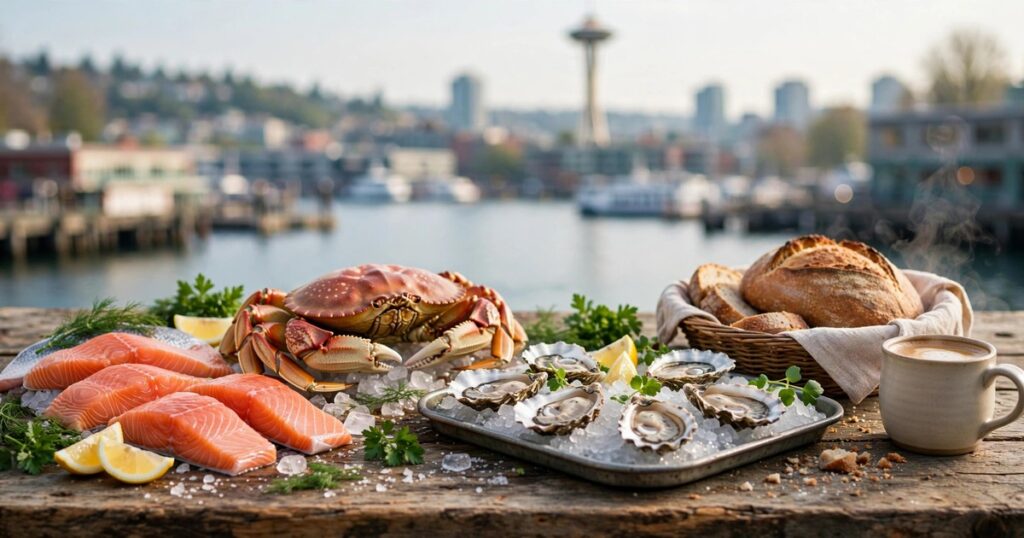
Seattle does not announce itself with one famous dish. It seduces you slowly: a cup of chowder eaten standing at Pike Place Market, a salmon fillet so fresh it barely needs cooking, an oyster slurped at a Ballard oyster bar, and a flat white from a tiny café that takes coffee more seriously than most cities take fine dining. If you are trying to figure out where to eat in Seattle, the good news is that the city makes it easy — the food is local, seasonal, and spread across neighbourhoods that each have their own personality.
This 2026 guide is built for first-time visitors and returning food lovers alike. It covers the neighbourhoods that matter, the seafood Seattle does best, the markets worth planning a morning around, the coffee culture that started a global obsession, and the budget tricks that keep a food trip affordable. Whether you have two days or two weeks, start here.
Quick Answer: The best places to eat in Seattle include Pike Place Market for seafood and local specialities, Ballard for oyster bars and Nordic-inspired restaurants, Capitol Hill for all-round variety, and the International District for dumplings, pho, and dim sum. Don’t miss fresh salmon, Dungeness crab, clam chowder, and a proper Seattle coffee.
What food is Seattle famous for?
Seattle’s most famous food is whatever came out of the cold waters of Puget Sound that morning. Wild salmon — king, sockeye, and coho, depending on the season — is the dish most visitors ask for first, and when it is grilled simply with a little butter and lemon, it lives up to the hype. Dungeness crab, sweet and meaty, shows up in crab cakes, crab Louie salads, and whole cracked crabs served with drawn butter. Oysters from the nearby bays, from briny Kumamotos to plump Pacifics, are shucked to order all over the city.
Then there is the food Seattle invented or made its own. Clam chowder, thick and creamy, is sold by the cup and the bread bowl at Pike Place Market and in waterfront restaurants. Geoduck, the giant clam that looks startling and tastes sweet and delicate, appears as sashimi and in stir-fries in the city’s Asian restaurants. And coffee — Seattle is the city that turned espresso into a global habit, from the first Starbucks store at Pike Place to the independent roasters that now outnumber the chains in many neighbourhoods.
Where should first-time visitors eat in Seattle?
If this is your first trip, base your eating around these three areas.
Pike Place Market and downtown are the natural starting point. The market is a working market, not a theme park, and its stalls, bakeries, and counter restaurants are where many visitors have their first great Seattle meal. Come hungry, arrive early, and graze rather than sitting down to one big meal.
Capitol Hill is the safest all-rounder. It is walkable, dense with restaurants, and covers almost every cuisine and price point: ramen bars, modern Vietnamese spots, classic American diners, and late-night pizza. You can eat breakfast, lunch, and dinner on Capitol Hill for three days and never repeat a cuisine.
Ballard suits a slower, more local day. This old Scandinavian fishing neighbourhood is now one of the city’s best eating districts, with oyster bars, Nordic-inspired restaurants, breweries, and bakeries along Ballard Avenue — and the Ballard Locks nearby make a food crawl easy to pair with a walk.
Which Seattle neighbourhoods are best for food lovers?
Each neighbourhood has its own eating personality. Use this table to pick your base — or to plan a day around a single area.
| Neighbourhood | Best for | Don’t miss | Budget feel |
|---|---|---|---|
| Pike Place / Downtown | Seafood, markets, classics | Chowder, salmon, Beecher’s cheese | $$ |
| Capitol Hill | Variety, late nights | Ramen, modern Asian, diners | $$ |
| Ballard | Oysters, breweries, Nordic food | The Walrus and the Carpenter, bakeries | $$ |
| Fremont | Quirky cafés, brunch | Weekend brunch, coffee shops | $$ |
| International District | Chinese, Vietnamese, Japanese | Dim sum, pho, dumplings | $ |
| Queen Anne | Classic restaurants, views | Canlis, neighbourhood bistros | $$$ |
| West Seattle | Beach cafés, casual seafood | Alki Beach eateries, fish and chips | $ |
| University District | Cheap eats, student favourites | Budget noodles, food trucks | $ |
Ballard and Capitol Hill deserve a special note. Ballard is where Seattle eats most like itself: oysters, salmon, and Scandinavian baking in a neighbourhood that still feels like a fishing village. Capitol Hill is where the city eats most creatively — a new restaurant opens there almost every month. If you want to understand what Seattleites actually eat on a normal Friday night, start in one of these two neighbourhoods rather than in a tourist restaurant on the waterfront.
Where can I find the best seafood in Seattle?
The honest answer is that the best seafood is rarely the most expensive plate in the fanciest dining room. Look for places that buy from the market that morning, cook simply, and let the fish speak. A good seafood restaurant will tell you where its salmon came from and what is in season right now.
For a classic experience, start at Pike Place Market. Pike Place Chowder serves the thick, award-winning clam chowder that visitors queue for — get the New England style in a bread bowl if it is your first time. Beecher’s Handmade Cheese is not seafood, but its mac and cheese, made with cheese produced in the shop, is one of the market’s most beloved dishes.
In Ballard, The Walrus and the Carpenter is the oyster bar that put modern Seattle seafood on the map. It is small, walk-in only, and almost always busy — go early and order a dozen oysters and the smoked trout. Nearby, Taylor Shellfish Farms serves oysters and geoduck at its own oyster bar, straight from the company’s own beds.
Order like a local: salmon in season (ask what the catch is that week), Dungeness crab when it is running, oysters by the half dozen with a squeeze of lemon, and chowder as a first course rather than a meal. Skip the heavily sauced tourist plates — a great piece of Seattle fish needs very little help.
What is Pike Place Market really like for eating?
Pike Place Market is the famous one, and it earns the crowds. It is a working public market that has been feeding Seattle since 1907: fish stalls, bakeries, cheese shops, produce stands, and small counter restaurants that have been there for decades. Go on a weekday morning if you can — it is far calmer than a Saturday lunchtime — and graze.
Start with the classics. Piroshky Piroshky, the tiny Russian bakery near the market entrance, sells hand-held piroshky stuffed with beef, cheese, potato, or salmon — get there early, because the popular fillings sell out. Beecher’s Handmade Cheese lets you watch cheese being made through the shop window before you order the mac and cheese. The fish stalls are worth a visit even if you are not buying — the quality of the salmon, halibut, and crab on ice is the real story.
Market tip: arrive hungry, share dishes, and carry a card that works for small contactless payments. The market is busiest from late morning to mid-afternoon, so an early start buys you shorter queues and fresher choices.
Where can I eat on a budget in Seattle?
Seattle has a reputation for expensive food, and at the top end it is deserved. But it is also one of the easiest American cities to eat well on a budget.
- Eat at Pike Place Market and food halls for lunch — a filling meal for $10–$18 is normal at market counters and food halls.
- Head to the International District. Dumplings, pho, and banh mi there are generous, delicious, and often under $15.
- Look for happy hour. Many good restaurants, especially in Ballard and Capitol Hill, offer discounted oysters, small plates, and drinks from 3–6pm.
- Try neighbourhood restaurants over waterfront restaurants. The same quality a few streets from a major attraction often costs 20–30% less.
- Use bakeries and cafés for breakfast. A pastry and a proper coffee keeps money free for one proper dinner a day.
- Drink tap water. Seattle tap water is famously clean and safe, and asking for a glass saves several dollars per person per meal.
Where is the best coffee in Seattle?
Seattle is the city that made coffee a culture, and it shows. The original Starbucks store at Pike Place Market is a pilgrimage site for coffee fans — expect a queue and a small, old-fashioned shop. But the coffee Seattleites actually drink every day comes from independent roasters and neighbourhood cafés.
Start with the roasters that built the city’s reputation: Victrola Coffee Roasters on Capitol Hill, Elm Coffee Roasters in Pioneer Square, and Milstead & Co. near the market are all respected by serious coffee drinkers. For a classic Seattle café experience, find a neighbourhood spot with a wooden counter, a pastry case, and a barista who asks how you take it.
Coffee etiquette is simple: drip coffee is cheap and everywhere, espresso drinks are the default order, and oat milk is standard. If you want to understand why Seattle coffee matters, order a flat white or a cortado rather than a flavoured latte — the milk and the espresso are the point.
Where can I find the best Asian food in Seattle?
Seattle’s Asian food scene is one of the best in the United States, thanks to large Chinese, Vietnamese, Japanese, and Filipino communities. The International District — the city’s historic Chinatown — is the heart of it, and it is where you should start.
For dumplings, Din Tai Fung in the University Village area is the famous name, and its soup dumplings (xiao long bao) are worth the wait — book ahead if you can. In the International District itself, look for dim sum restaurants that serve from rolling carts at weekends, hand-pulled noodle shops, and Vietnamese restaurants serving pho and banh mi at prices that feel like a different decade.
Japanese food is a Seattle strength too. The city has excellent sushi and omakase restaurants, from casual conveyor-belt spots to high-end counters in Capitol Hill and Belltown. Archipelago, a small tasting-menu restaurant in Hillman City, has earned national attention for its Pacific Northwest-meets-Japanese cooking — book well ahead, as seats are very limited.
Where should I go for a special occasion in Seattle?
For a birthday, anniversary, or once-in-a-lifetime dinner, Seattle’s fine-dining scene is hard to beat. Canlis, on Queen Anne hill, is the city’s most famous special-occasion restaurant — a mid-century modern dining room with views over Lake Union, a tasting menu built around Pacific Northwest ingredients, and service polished for more than 70 years. Book as early as you can: top tables often open reservations weeks ahead.
Smaller, chef-led restaurants are the other half of the special-occasion scene. Archipelago in Hillman City seats only a handful of guests a night for a tasting menu that changes with the seasons. In Ballard, Salumi, the cured-meat shop and sandwich counter run by the Batali family, is a more casual legend — arrive early, because the line forms before opening and the porchetta sandwich sells out.
A tasting menu in the city typically runs $125–$300 per person before wine, so treat it as the centrepiece of a day, not an add-on after a long day of sightseeing. If the full tasting menu is out of reach, many of the same restaurants offer a shorter lunch tasting menu at a lower price — one of the best value splurges in the city.
What are Seattle’s best food trucks and markets?
Pike Place Market is the famous one, but Seattle’s other markets are worth your time too. The Ballard Farmers Market, held every Sunday on Ballard Avenue, is one of the best farmers markets in the country — local farms, bakeries, and food stalls, plus a street full of restaurants and breweries to explore afterwards. The University District Farmers Market on Saturdays is smaller and more local, with excellent produce and prepared food.
Food trucks gather at breweries, farmers markets, and lunch spots across the city, especially in South Lake Union on weekdays and at brewery taprooms in Ballard on weekends. Look for taco trucks, Korean fried chicken, wood-fired pizza, and the city’s much-loved biscuit and sandwich trucks. Brewery taprooms are a particularly good deal: buy a beer, order from the truck outside, and eat at a picnic table like a local.
How much does eating out in Seattle cost?
Prices vary widely by neighbourhood and format, but these ranges give a realistic sense of what to budget per person in 2026.
| Meal type | Typical cost per person | Where |
|---|---|---|
| Market lunch / food truck | $10–$18 | Pike Place, food halls, trucks |
| Casual restaurant dinner | $25–$45 | Capitol Hill, Ballard, Fremont |
| Mid-range dinner (2 courses) | $45–$75 | Queen Anne, Belltown, Ballard |
| Happy hour small plates | $8–$15 per dish | Ballard, Capitol Hill, downtown |
| Fine-dining tasting menu | $125–$300 | Queen Anne, Hillman City, Capitol Hill |
| Seafood dinner (salmon / crab) | $35–$65 | Pike Place, waterfront, Ballard |
Drinks add up fast in Seattle — a glass of wine in a central restaurant is often $12–$18, and craft cocktails run $14–$18 — so budget for drinks separately. A 20% tip is standard in sit-down restaurants, and many places now add a service charge, so check the bill before tipping on top.
What mistakes should tourists avoid when eating in Seattle?
First, don’t judge a restaurant by its proximity to a landmark — the closest restaurant to the Space Needle or the waterfront is often the most expensive and the least interesting. Walk two or three streets away and the quality usually jumps while prices fall.
Second, don’t skip booking. Seattle’s best restaurants, even casual ones, fill up on weekends, and a walk-in at 7pm on a Saturday in Capitol Hill or Ballard can mean a long wait or a disappointing fallback. A reservation made the day before costs nothing and saves the evening. Oyster bars and small counters are the exception — they are usually walk-in only, so go early instead.
Third, don’t over-order at Pike Place Market. It is tempting to buy everything that smells good, but portions are generous — share, graze, and leave room for a second stall. And don’t assume the market is the only place to eat downtown: the International District is a short light-rail ride away and often cheaper.
Finally, don’t assume everything closes early. Seattle’s late-night eating has improved enormously, with Capitol Hill, the International District, and Ballard offering good food well past midnight. If you arrive late, head to those areas rather than settling for the nearest fast-food outlet.
Frequently Asked Questions About Eating in Seattle
What is the best area to stay in Seattle for food?
Capitol Hill is the best all-round base — walkable, dense with restaurants, and open late. Ballard and Pike Place are strong alternatives if you prefer oyster bars and markets.
Is Seattle expensive for food?
It can be, but it doesn’t have to be. Market lunches cost $10–$18 and casual dinners $25–$45. Fine dining is the expensive end — budget $125–$300 per person for a tasting menu.
Where do locals eat in Seattle?
Locals eat in their own neighbourhoods: Ballard for oysters and breweries, the International District for dumplings and pho, Capitol Hill for variety, and West Seattle for beach cafés. Follow local queues rather than tourist menus.
Do I need reservations in Seattle?
For popular restaurants, yes — especially on Friday and Saturday nights. Book a day or two ahead for casual spots and weeks ahead for fine dining like Canlis. Markets and food trucks never need reservations.
What should I eat in Seattle for the first time?
Start with the classics: fresh salmon, Dungeness crab, clam chowder at Pike Place Market, oysters in Ballard, and a piroshky from Piroshky Piroshky. Then add a coffee from a local roaster.
When is the best time to visit Seattle for food?
Late spring through early autumn (May to September) is best — salmon season, farmers markets in full swing, and food trucks out in force. Winter is quieter and cheaper, and Dungeness crab season peaks in the colder months.
Is Seattle good for vegetarians and vegans?
Yes — Seattle is one of the most vegetarian-friendly cities in the United States. Almost every restaurant offers a serious plant-based main, and the International District is an easy win, with tofu, vegetable dumplings, and noodle dishes everywhere.
Seattle’s food scene rewards curiosity more than money. A $12 market lunch eaten standing up can be just as memorable as a $250 tasting menu — because Seattle’s best meals are the ones that taste like the city itself: fresh, local, a little rainy, and endlessly generous. Plan one good meal a day, leave room for serendipity, and eat your way across the map.
For more city food guides, explore our Food Guides, including Where to Eat in London and Where to Eat in Paris — and if you run a restaurant or food brand, check out our Work With Us page.
I’m Lila Spoonbelle, your host on this flavorful ride through food, fun, and fearless puns. Let’s turn every bite into a burst of laughter!