
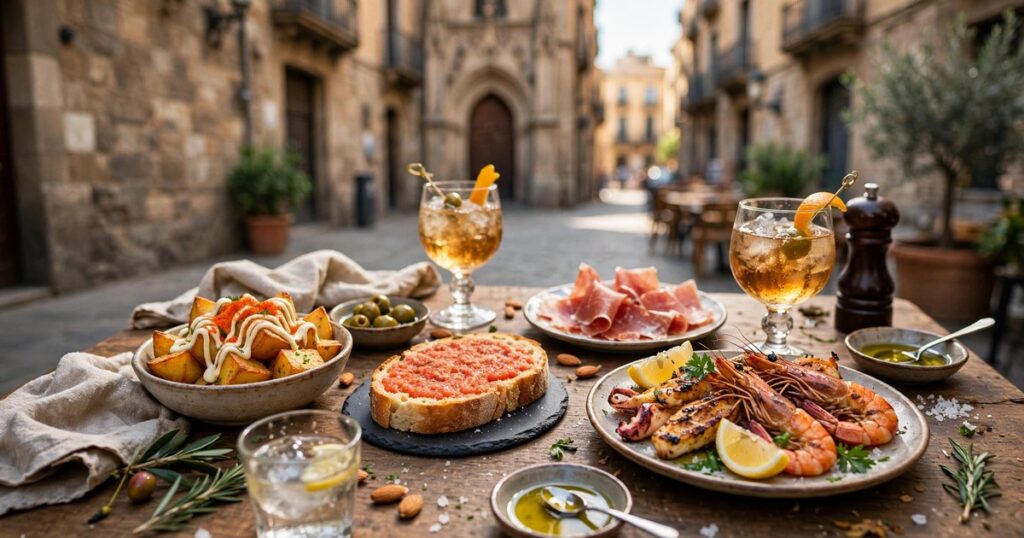
Barcelona is one of those rare cities where eating well is not an extra on the trip — it is the trip. A morning coffee and a warm pastry in a Gràcia bakery, a long tapas lunch in El Born, grilled fish by the sea in Barceloneta, and a glass of vermouth in Poble-sec as the evening begins: that rhythm is Barcelona itself. Catalan cooking sits at the centre of it all, with Spanish classics, Mediterranean seafood, and market-fresh produce layered on top, and prices that can suit almost any budget if you know where to look.
This guide answers the question every first-time visitor asks — where to eat in Barcelona — neighbourhood by neighbourhood, dish by dish, and budget by budget. Use it to plan one perfect food day in the Catalan capital, or to eat your way through a whole long weekend without falling into a single tourist trap.
Quick Answer: The best places to eat in Barcelona are El Born for tapas and wine bars, Barceloneta for seafood by the beach, and Gràcia for local, affordable Catalan cooking. Start with patatas bravas, pan con tomate, and a glass of vermouth, and save a morning for La Boqueria market.
What Should You Eat First in Barcelona?
If you eat only a handful of things in Barcelona, make them the city’s signatures. First, patatas bravas: crisp fried potatoes topped with a spicy bravas sauce and, in the classic Barcelona style, a drizzle of garlicky allioli. Every bar has its own version, and comparing them is half the fun — order bravas at two or three different places and you will quickly learn which style you prefer.
Second, pan con tomate, or pa amb tomàquet in Catalan: toasted bread rubbed with ripe tomato, olive oil, and salt, sometimes with garlic. It sounds almost too simple to matter, and then you taste it done properly — with good bread, good oil, and a tomato at the peak of ripeness — and you understand why it appears on almost every table in the city.
Third, jamón ibérico, sliced thin and eaten on its own or on pan con tomate. You do not need the most expensive grade to enjoy it; a good mid-range jamón from a market stall or a specialist bar is one of Barcelona’s great small luxuries. Fourth, seafood: grilled sardines, fried calamari, and a seafood fideuà, the short-noodle cousin of paella that is arguably more Catalan than paella itself.
Finally, make time for vermouth. The vermouth hour — la hora del vermut — is a Barcelona institution: a glass of red vermouth on ice with an olive and an orange slice, served with a small plate of olives, anchovies, or crisps, usually before lunch on a weekend. It is less about the drink than about the pause it creates, and it is the most local way to begin an afternoon of eating.
What Are Barcelona’s Must-Try Dishes?
Barcelona’s table is Catalan at its core and Mediterranean by habit. These are the dishes to prioritise:
- Patatas bravas: crisp potatoes with spicy bravas sauce and allioli — Barcelona’s defining tapas dish.
- Pan con tomate (pa amb tomàquet): tomato-rubbed toast with olive oil and salt, the base of countless meals.
- Jamón ibérico: cured ham sliced paper-thin, best with bread and tomato or on its own.
- Fideuà: short noodles cooked in seafood stock, like paella but with noodles instead of rice.
- Escalivada: smoky grilled aubergine, peppers, and onion, dressed with olive oil and often served with anchovies.
- Botifarra amb mongetes: Catalan pork sausage with white beans, a hearty local classic.
- Bombas: Barcelona’s own invention — a fried potato ball filled with meat, topped with bravas sauce and allioli, born in Barceloneta.
- Calçots (in season): sweet grilled spring onions, eaten with romesco sauce, a winter and early-spring ritual.
- Crema catalana: the Catalan answer to crème brûlée, with a caramelised sugar crust over vanilla custard.
- Churros con chocolate: thick hot chocolate for dipping, a late-night and winter favourite.
- Seafood: grilled sardines, squid, and shellfish, best eaten close to the sea in Barceloneta.
- Cava: Catalonia’s sparkling wine, made just outside Barcelona and served everywhere, often for less than still wine.
Where Are the Best Neighbourhoods to Eat in Barcelona?
Barcelona’s food map follows its old town, its markets, and its sea. Each district has its own price level and speciality, and choosing the right one matters more than chasing a single famous restaurant.
| Neighbourhood | Best for | Vibe and prices |
|---|---|---|
| El Born | Tapas bars, wine bars, creative small plates | Atmospheric and busy; mid-range |
| Gothic Quarter (Barri Gòtic) | Historic restaurants, vermouth bars, classic Catalan dishes | Old-town charm; watch prices on main streets |
| Barceloneta | Seafood, beachside restaurants, bombas | Seaside and lively; mid-range to pricey |
| Gràcia | Local Catalan cooking, bakeries, affordable menus | Village-like and local; excellent value |
| Eixample | Modern restaurants, upscale dining, lunch menus | Elegant and spacious; mid-range to splurge |
| Poble-sec | Vermouth bars, tapas crawls, casual dining | Relaxed and local; great value |
| Sant Antoni | Market food, vermouth, trendy small restaurants | Trendy and young; good value |
Why Is El Born the Best First-Night Choice?
El Born, the medieval district east of the Gothic Quarter, is Barcelona’s most enjoyable place to eat on your first night. Narrow lanes, small squares, and a dense cluster of tapas and wine bars make it ideal for a crawl: one plate here, a glass there, and another bar around the corner. Start with patatas bravas and pan con tomate, add a plate of jamón or grilled vegetables, and finish with crema catalana or a walk to the waterfront. Prices run a little higher than in Gràcia or Poble-sec, so treat El Born as your special-evening neighbourhood and save everyday eating for the markets and the local districts.
What Makes Gràcia Special?
Gràcia feels like a village inside the city — and it once was one, before Barcelona absorbed it. Its squares fill with families and neighbours in the evening, its bakeries open early, and its restaurants serve Catalan cooking at prices well below the old town. This is where to go for a proper lunch menu, a quiet dinner of botifarra or grilled fish, and a morning coffee that costs what locals actually pay. If you want to eat like a Barcelonan rather than a visitor, spend at least one full day eating in Gràcia.
Where Should You Go for Tapas?
Tapas in Barcelona are not a single meal but a way of eating: small plates, shared at the bar or at a small table, with a drink in hand. The classic crawl works best in Poble-sec and Sant Antoni, where the bars are close together and the prices are honest, or in El Born, where the cooking is more creative. Order two or three plates per bar, then move on — the point is variety, not a feast in one place.
A good crawl has a shape. Begin with cold plates — jamón, olives, anchovies, escalivada — then move to hot plates like bravas, grilled squid, or croquettes, and finish with something sweet or a final vermouth. Avoid bars with picture menus in many languages and staff calling you in from the street; the best tapas bars have a short menu, a busy local crowd, and a chalkboard of the day’s specials. And do not rush: a tapas crawl is meant to stretch across an evening, with a walk between bars to work up an appetite for the next one.
What About Barcelona’s Markets?
Markets are the best way to taste Barcelona in one stop. La Boqueria, just off La Rambla, is the most famous — a riot of fruit stalls, jamón counters, seafood, and small bars where you can eat standing up. Go early in the morning, before the crowds arrive, and graze: a juice, a cone of jamón, a plate of grilled seafood at a market bar. It is touristy, yes, but the produce is real, and the experience is worth it once.
For a more local market, head to Mercat de Santa Caterina in El Born, with its colourful wavy roof, or the Sant Antoni market, recently renovated and surrounded by vermouth bars. Both sell the same Catalan produce — tomatoes, olive oil, cheese, cured meats, fresh fish — with far fewer visitors. Buy bread, cheese, jamón, and fruit, and build a picnic to eat in a Gràcia square or on the beach at Barceloneta. A market picnic is one of Barcelona’s simplest and best lunches.
Where to Eat in Barcelona on a Budget?
Barcelona has a reputation for being pricey, but its best-value meals are also its most characteristic. Follow local habits and you will rarely need to spend much.
- Order the menú del día: the weekday lunch menu — starter, main, dessert, and often a drink — is the best value in Spanish dining, usually far cheaper than ordering à la carte at dinner.
- Eat in Gràcia and Poble-sec: local districts serve the same Catalan dishes as the old town, at noticeably lower prices.
- Drink vermouth and cava: both are local, excellent, and usually cheaper than imported wine by the glass.
- Shop the markets: Santa Caterina and Sant Antoni sell picnic supplies for a fraction of restaurant prices.
- Share tapas: small plates split between two or three people cost less per person than a full main course each.
- Follow the lunch hour: many restaurants offer a fixed-price lunch that is much cheaper than the same dishes in the evening.
Where Should You Go for Seafood?
For seafood, head to Barceloneta, the old fishing quarter by the beach. Its restaurants specialise in grilled fish, shellfish, and rice and noodle dishes, and eating a long seafood lunch with the sea in view is one of Barcelona’s essential experiences. The smart move is to walk past the first row of beachfront restaurants — the ones with the largest picture menus and the most aggressive touts — and choose a smaller place a street or two back, where locals eat and the menu is shorter.
Order simply: grilled sardines or squid to start, a fideuà or a seafood rice to share, and a glass of white wine or cava. Ask what is fresh today rather than ordering from a long frozen list, and be wary of a seafood platter priced far below its neighbours — fresh seafood in Barcelona is never the cheapest thing on the menu. If a full seafood lunch feels too much, order a few small plates at a market bar in La Boqueria instead and save the big meal for another day.
How Much Should You Budget for Food in Barcelona?
Food costs in Barcelona vary by neighbourhood and time of day, but these ranges will help you plan. Prices below are per person in euros. Tipping is not obligatory in Spain, but rounding up or leaving a few euros for good service is common and appreciated.
| Meal | Budget | Mid-range | Splurge |
|---|---|---|---|
| Coffee + pastry breakfast | €3–6 | €6–10 | €10+ |
| Menú del día lunch | €12–18 | €18–28 | €28+ |
| Tapas crawl (per person) | €15–25 | €25–45 | €45+ |
| Casual dinner (main + drink) | €20–35 | €35–60 | €60+ |
| Seafood lunch in Barceloneta | €25–40 | €40–65 | €65+ |
| Fine-dining tasting menu | — | €90–140 | €150+ |
When Should You Eat in Barcelona?
Barcelona eats late by northern European standards, and planning around that rhythm makes everything easier. Lunch runs from about 1 pm to 3:30 pm, with the menú del día served on weekdays. Dinner starts around 8 pm, with locals arriving from 9 pm onwards. Many kitchens close between lunch and dinner, so a 5 pm search for a full meal can disappoint — that is the hour for vermouth, coffee, or a market wander instead.
Season matters too. Spring and autumn are the best times for a food trip: terraces are open, markets are full, and restaurants are busy without being overwhelmed. Summer is hot and crowded, but it is also the season for beachside seafood and late dinners that stretch past midnight. Winter brings calçots, hearty stews, and churros con chocolate, when a warm drink after a cold walk through the Gothic Quarter tastes better than anything else in the city.
What Are the Best Day Trips for Food Lovers?
Barcelona is a superb base for food day trips. Sitges, half an hour by train, offers beachside seafood and a charming old town in one easy outing. Girona, just over half an hour by fast train, is one of Catalonia’s great food cities, with a beautiful old town and restaurants that draw visitors from across Spain. And the Penedès wine region, an hour away, is where most cava is made — book a winery visit, taste cava at the source, and pair it with a long Catalan lunch. Each trip pairs easily with a morning pastry in Gràcia and a late tapas crawl back in Barcelona.
How Do You Avoid Tourist Traps in Barcelona?
The busiest streets around La Rambla and the Sagrada Família hold some of the city’s worst value restaurants: picture menus in many languages, waiters calling you in from the street, and dishes that look Catalan but taste generic. Walk a few blocks in any direction — into the quieter lanes of El Born, over to Gràcia, or down to Poble-sec — and the cooking improves and the prices fall. Other warning signs include a menu with no prices, a long list of dishes from every cuisine on earth, and a room with no Catalan or Spanish voices in it. A short menu, a busy local crowd, and a server who asks what you like rather than pushing the most expensive dish are the opposite signals.
Frequently Asked Questions About Eating in Barcelona
What is the most famous food in Barcelona?
Patatas bravas, pan con tomate, and jamón ibérico are the city’s three most famous foods. Try all three on your first day — bravas at a tapas bar, pan con tomate with breakfast, and jamón from a market stall or a specialist bar.
Is Barcelona expensive for food?
It can be, but it does not have to be. The menú del día, market picnics, and restaurants in Gràcia and Poble-sec keep costs low; beachfront restaurants and old-town tourist spots are where prices climb fastest.
Do I need reservations in Barcelona?
For popular restaurants and weekend dinners, yes — book a few days ahead, and weeks ahead for special occasions. For tapas bars, vermouth bars, and casual lunch spots, you can usually walk in, though you may wait for a table at peak times.
What time is dinner in Barcelona?
Dinner starts around 8 pm, with most locals eating from 9 pm onwards. Lunch runs from about 1 pm to 3:30 pm, and many kitchens close in between.
Where is the best tapas crawl in Barcelona?
Poble-sec and Sant Antoni offer the most local, best-value crawls, with bars close together and honest prices. El Born is the more creative, atmospheric alternative for a first-night crawl.
What is the vermouth hour?
La hora del vermut is the Barcelona tradition of a glass of red vermouth on ice, with an olive and an orange slice, served with small snacks before lunch — usually at the weekend. It is a pause, a social ritual, and the most local way to start an afternoon of eating.
Is Barcelona good for vegetarians?
Yes, with a little planning. Escalivada, grilled vegetables, pan con tomate, market produce, and cheese are excellent meat-free options, and most restaurants in El Born and Gràcia offer vegetarian dishes. Traditional Catalan menus can be meat- and seafood-heavy, so check the menu before sitting down.
Plan Your Barcelona Food Trip
Barcelona rewards the traveller who eats like a local: one plate of bravas, one glass of vermouth, one market morning, and one long seafood lunch by the sea. Start in El Born, spend a day eating in Gràcia, and save a second evening for the district you liked best. For more city food guides, see our Food Guides hub, plus Where to Eat in Paris and Where to Eat in Rome, and our newest European guide, Where to Eat in Madrid. Barcelona is not Europe’s quietest food city — it is one of its most joyful, and one good meal here tends to turn into a return trip.

I’m Lila Spoonbelle, your host on this flavorful ride through food, fun, and fearless puns. Let’s turn every bite into a burst of laughter!