
Las Vegas and halal dining look like a contradiction at first glance. The city’s entire identity is built around the Strip — casinos, 24-hour buffets, celebrity chef steakhouses — and almost none of that speaks to Muslim travelers. I remember my first trip wondering whether I’d survive a week on grocery-store hummus and granola bars.
Here’s what I wish someone had told me back then: the Las Vegas Strip barely matters for halal food. The real halal dining scene lives off the Strip, in working-class neighborhoods where Persian, Turkish, Bosnian, Pakistani, and Lebanese families have been running restaurants for decades. Once you know where to look, eating well in Vegas as a Muslim traveler isn’t hard at all — it just takes a little planning.
Quick Answer: The best halal food in Las Vegas is off the Strip — along Spring Mountain Road, Sahara Avenue, and the Decatur/West Sahara corridor, where Persian, Turkish, Bosnian, Lebanese, and Pakistani restaurants cluster. Expect lunch kabobs around $16–$22 and dinners $20–$35. Strip buffets are generally not halal-safe; plan a 10–15 minute trip off-Strip or order delivery.
How Does Halal Dining Actually Work in Las Vegas?
Vegas is a tale of two food cities. On the Strip, you’ll find the famous buffets and celebrity steakhouses — and almost zero reliable halal options. Off the Strip, roughly 10 to 20 minutes by car, you’ll find a dense, genuinely good halal restaurant scene that most tourists never see.
The divide exists for simple reasons. Strip real estate is among the most expensive restaurant space in America, so Strip dining is dominated by corporate groups and high-end steakhouses that don’t cater to halal sourcing. Off-Strip, rent is saner, immigrant communities are established, and a halal kitchen can actually pencil out.
The practical upshot: if you’re staying at a Strip hotel, treat halal meals as short trips out. Budget 10–20 minutes each way by Uber or car. Most visitors find one or two reliable spots and rotate through them. It becomes a rhythm quickly — and honestly, the off-Strip spots often outcook the Strip anyway.
Where Do Halal Restaurants Cluster in Las Vegas?
Three corridors carry most of the scene. Learn them once and you’ll navigate the whole week.
Spring Mountain Road (Chinatown)
Spring Mountain is the most useful strip of road for a halal diner. Despite the “Chinatown” label, it’s really a pan-Asian and Middle Eastern food corridor, and several solid halal options sit along it — Persian kabob houses, Turkish grills, and Southeast Asian spots with halal sourcing. If you’re staying mid-Strip or near the Wynn/Venetian side, this is your closest cluster, roughly 5–10 minutes west.
Sahara Avenue and Decatur / West Sahara
Further north and west, the Sahara–Decatur area is where many of the established Middle Eastern restaurants live. This is the corridor for Bosnian grills, Lebanese bakeries, and Persian restaurants that have been around long enough to have loyal local followings. It’s a slightly longer ride from the Strip (12–18 minutes), but the concentration is worth it — you can do dinner, dessert, and a bakery run in one trip.
South of the Strip: Mediterranean and South Asian Pockets
South of the airport and along parts of Eastern Avenue, you’ll find Pakistani and Indian restaurants, halal burger and fried-chicken shops, and South Asian groceries. This is the affordable end of the scene — hearty food, family-run spots, and prices that will make you do a double take after looking at Strip menus.
| Neighborhood | Main cuisines | Minutes from mid-Strip | Typical dinner price (per person) |
|---|---|---|---|
| Spring Mountain Rd | Persian, Turkish, Southeast Asian | 5–10 | $20–$30 |
| Sahara / Decatur corridor | Bosnian, Lebanese, Persian, bakeries | 12–18 | $18–$28 |
| South Strip / Eastern Ave | Pakistani, Indian, halal fast food | 10–15 | $14–$22 |
| The Strip itself | Very few reliable options | 0 | $30+ (rare, limited menus) |
Neighborhoods shift — restaurants open, close, and change suppliers more often than you’d hope. It’s worth checking our broader food guides hub alongside this post, since city guides get refreshed when the ground truth changes.
What Cuisines Dominate the Vegas Halal Scene?
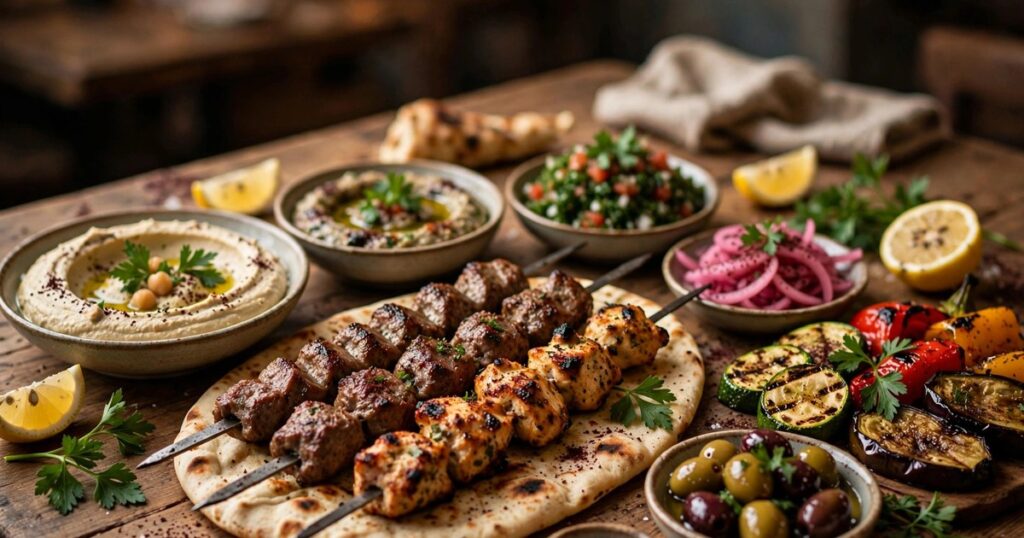
The halal map of Vegas is really a map of its Muslim communities. Persian kabob houses are the backbone — chelo kabob, barg, koobideh, lamb shank with rice, always with grilled tomatoes and sumac onions. Turkish grills run a close second, with adana, pide, and doner that hold their own against anything in the big coastal cities.
Bosnian restaurants are the surprise find. Cevapi — small skinless beef sausages served in warm somun bread with kajmak — is one of the great value meals in the city, and Bosnian spots in Vegas tend to be halal by default because the community is largely Muslim. Lebanese bakeries do excellent manakeesh and shawarma for lunch. Pakistani and Indian spots cover the curry side — nihari, biryani, kebab rolls — at prices that feel frozen in time.
Halal BBQ deserves its own mention. Smoked brisket and grilled meats done the halal way are having a moment, and the Vegas scene includes spots that do it properly. If that sounds like your kind of meal, our halal BBQ guide goes deeper on cuts, smoke styles, and what to look for.
Are Las Vegas Buffets Halal?
This question comes up constantly, because the buffet is the defining Vegas meal. The honest answer: no — treat Strip buffets as off-limits for halal dining.
The problems are structural, not fixable by picking around the edges. Meat suppliers for mega-buffets aren’t zabiha-certified, and even if a single dish were, the cross-contact on shared lines, tongs, and cutting boards is constant. Carving stations share boards and knives between pork, beef, and everything else. Breakfast sausages and bacon sit on the same line as the eggs. No amount of careful choosing solves this.
A few buffets occasionally advertise a “halal” dish or two, but in my experience the sourcing claims are vague and the staff on the floor usually can’t verify anything when asked. For a Muslim traveler, the buffet is the one Vegas experience to skip. The good news: a full Persian dinner for two costs less than one Strip buffet per person, and the food is better.
How Do You Verify a Restaurant Is Actually Halal?
“Halal” on a window sign means different things to different owners, and Vegas has its share of loose claims. Verification takes two minutes and saves you a lot of doubt. Here’s the practical version:
- Ask directly: “Is your meat zabiha halal?” Don’t ask “is this halal?” in a vague way — ask specifically about the meat. A confident yes with specifics (“all our chicken and lamb is zabiha, from [supplier]”) is what you want. Hesitation is an answer too.
- Ask about the supplier. Legitimate halal restaurants know their supplier and will usually name one. Midamar, Crescent Foods, and local halal distributors come up often in the Southwest.
- Check the whole menu, not one dish. Some places serve halal chicken but conventional beef, or halal everything except one dish. Ask which proteins are halal, not whether “the restaurant” is halal.
- Watch for the pork-and-alcohol caveat. Many genuinely halal restaurants in Vegas still serve alcohol or pork-free-but-alcohol-present menus to survive commercially. For some travelers that’s fine; for others it isn’t. Decide your own line and ask — “do you serve alcohol or pork here?” is a fair question.
- Certified vs. Muslim-owned. A formal halal certificate from an agency is the gold standard but rare among small restaurants. Muslim-owned-and-operated, with clear sourcing answers, is the realistic standard for most Vegas spots — and it’s what the local Muslim community itself relies on.
- Cross-check with the community. Local mosque Facebook groups and halal-food apps are more current than any guide article. Our general halal food near me guide covers the verification questions that work in any city, Vegas included.
How Much Does Halal Food Cost in Vegas in 2026?
Off-Strip halal prices are one of the city’s genuine bargains. Here is what typical menus run in 2026, based on current restaurant pricing across the corridors above:
- Lunch specials: $13–$18 for kabob plates, shawarma wraps, and lunch combos at Persian, Turkish, and Lebanese spots.
- Dinner entrees: $18–$32 for chelo kabob, mixed grills, lamb shank, and fish dishes at sit-down restaurants.
- Pakistani/Indian curries: $13–$20 for nihari, biryani, and kebab platters — the best value in the city.
- Bosnian cevapi and burek: $12–$17 for a full, filling meal.
- Halal burgers and fried chicken: $10–$16 for combos.
- Dessert and tea runs: $6–$12 for baklava, knafeh, and Turkish tea at bakeries.
For context, a single Strip buffet now runs $50–$80 per person depending on the property and meal. A full, excellent halal dinner for two off-Strip typically lands under $70 including tip. Vegas rewards the halal diner who leaves the Strip.
What About Late-Night Halal Food?
Vegas is a 24-hour city, and thankfully some halal spots keep pace. Several Middle Eastern restaurants along the Spring Mountain and Sahara corridors stay open until midnight or later on weekends, and a handful of halal burger and shawarma shops run genuinely late.
The practical play for late nights: before you go out, identify one or two late-night spots near your corridor and save them. After a show or a late casino session, rideshares are quick and the kitchens are still hot. Delivery apps also run late — DoorDash and Uber Eats both list halal restaurants in the off-Strip zones, with many kitchens accepting orders until 11 PM–1 AM.
How Do You Get Halal Food to the Strip?
If you’d rather eat at the hotel than ride out for every meal, delivery is the answer — with a few caveats:
- Order early, especially on weekends. Off-Strip kitchens get slammed on Friday and Saturday nights. Ordering at 6 PM for a 7:30 dinner beats ordering at 8 PM and waiting 90 minutes.
- Watch the distance. Delivery fees and times climb fast when the kitchen is 15 minutes out. Stick to restaurants within about a 5-mile radius of your hotel when possible.
- Confirm halal status in the order notes if it’s a new spot. A quick “please confirm all meat is zabiha halal” note costs nothing and occasionally catches a menu-labeling problem before food is cooked.
- Consider a rental car for longer stays. If you’re in town for 3+ days, a car pays for itself in avoided delivery fees and opens up the whole Sahara/Decatur corridor. Parking at off-Strip restaurants is free and easy.
- Grocery backup: Halal markets along the corridors stock zabiha meat, and most Strip hotel rooms have at least a fridge. For long stays, one grocery run covers breakfasts and snacks.
What Should You Avoid?
A few honest warnings from experience:
- Strip “halal-friendly” menu claims without verification. Some Strip restaurants mark dishes halal-friendly on paper. Ask the same verification questions — supplier, zabiha status, cross-contact. Polished marketing is not evidence.
- Assuming every Middle Eastern restaurant is halal. Ownership doesn’t guarantee sourcing. Plenty of Lebanese and Turkish spots in Vegas run conventional meat. Always ask.
- The 2 AM gas-station gyro. Vegas has late-night food of every kind; not all of it is halal. Verify before you eat, even at 2 AM.
- Skipping breakfast planning. Halal breakfast options are thinner than dinner options. Plan for bakery runs, grocery yogurt and fruit, or hotel breakfast (eggs and fruit are usually safe bets).
A Simple 3-Day Halal Eating Plan for Vegas
If decision fatigue is setting in, here’s a plug-and-play rhythm that works for most visitors:
Day 1 — Arrival: Land, check in, and head to Spring Mountain Road for a Persian kabob dinner — chelo koobideh, grilled tomato, saffron rice. Grab baklava from a nearby bakery on the way back. Easy, filling, no stress.
Day 2 — Explore: Lunch at a Bosnian spot for cevapi (cheap, fast, excellent). Afternoon grocery run at a halal market for snacks and breakfast supplies. Dinner in the Sahara/Decatur corridor — a mixed grill or lamb shank, somewhere with a local following.
Day 3 — Comfort food: Pakistani or Indian lunch — nihari or biryani — then a Turkish dinner: adana, pide, Turkish tea. If you’re flying out late, a shawarma wrap travels well.
FAQ: Halal Food in Las Vegas
Is there halal food on the Las Vegas Strip?
Very little that’s reliably verified. The Strip’s big buffets and steakhouses generally can’t confirm zabiha sourcing or prevent cross-contact. The dependable halal scene is 5–20 minutes off-Strip along Spring Mountain Road, Sahara Avenue, and the Decatur/West Sahara corridor. Plan short trips out or use delivery.
Is Las Vegas good for Muslim travelers overall?
For food, yes — once you know the off-Strip corridors, eating well is easy and affordable. The city itself is what it is: casinos and nightlife are everywhere, including inside most Strip hotels. Many Muslim travelers stay off-Strip or in suite-style properties and have perfectly comfortable trips. It depends on your comfort level.
Are Vegas buffets halal if I only eat vegetarian dishes?
This is a personal judgment call. Vegetarian buffet dishes still share cooking lines, oils, and serving utensils with meat and pork dishes, and staff rarely can verify preparation details. Most strict halal observers skip buffets entirely. If you go this route, ask detailed questions first — and expect vague answers.
What is the difference between halal and zabiha?
Halal is the broad category of what is permissible in Islam; zabiha (dhabiha) refers specifically to meat slaughtered according to Islamic rites. When verifying a restaurant, “is your meat zabiha?” is the precise question — a place can be broadly “halal-friendly” while serving conventionally slaughtered meat, which doesn’t meet the standard most Muslim diners expect.
Do halal restaurants in Las Vegas serve alcohol?
Some do and some don’t. Many Middle Eastern restaurants in Vegas serve alcohol to stay commercially viable, even with fully halal meat sourcing. If an alcohol-free environment matters to you, ask before you go — it’s a completely normal question and staff answer it all the time.
Can I get halal food delivered to my Strip hotel?
Yes. DoorDash and Uber Eats both cover the off-Strip halal corridors, and many kitchens deliver to Strip hotels. Order early on weekend nights, stick to restaurants within about five miles to keep fees and wait times down, and confirm zabiha status in the order notes if it’s a spot you haven’t verified in person.
What is the cheapest good halal meal in Las Vegas?
Bosnian cevapi and Pakistani/Indian lunch plates are the value kings — $12–$17 for a full meal at most spots. Lunch specials at Persian and Turkish restaurants ($13–$18) are the next best deal. You can eat very well in Vegas for under $20 a meal if you stay off the Strip.
Las Vegas rewards the halal traveler who does a little homework. The Strip will sell you a $70 buffet; ten minutes west, a family-run Persian kitchen will feed you better for a third of the price. Learn the corridors, ask the two-minute verification questions, and you’ll eat well all week — no granola-bar survival plan required.
If you run a halal restaurant or food brand and want to be featured in our city guides, we’d love to hear from you — reach out through our Work With Us page.
I’m Lila Spoonbelle, your host on this flavorful ride through food, fun, and fearless puns. Let’s turn every bite into a burst of laughter!