
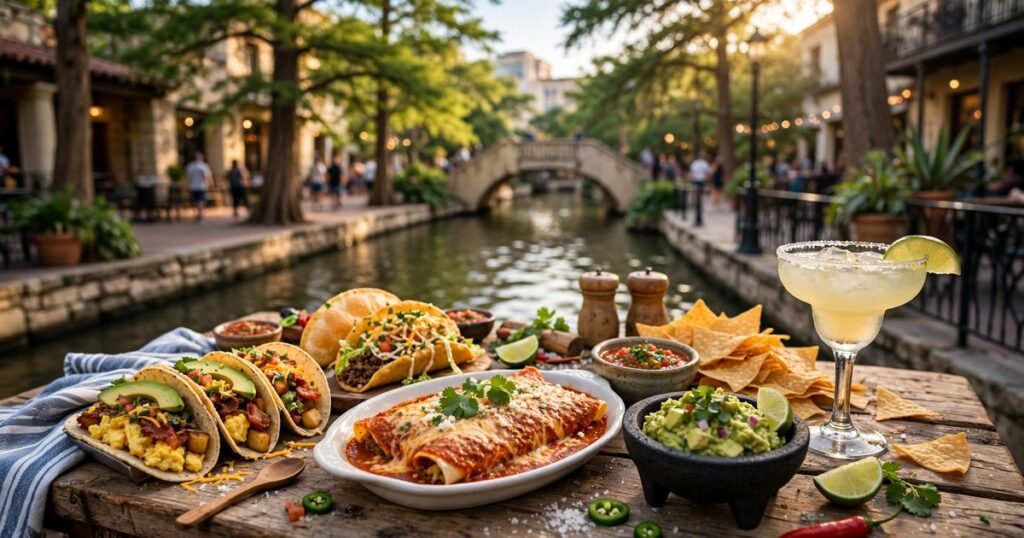
San Antonio eats like a city that has been feeding people for three hundred years and has no plans to stop. This is the birthplace of the puffy taco, the home of the breakfast taco, and the city where Tex-Mex stopped being a style and became a way of life. You can spend $4 on a taco from a truck on the Westside and remember it longer than a $100 dinner anywhere else, then find a James Beard-nominated chef plating Gulf seafood two miles away. The Alamo gets the postcards, but the food brings people back. Whether you are in town for a weekend on the River Walk or a week of eating your way through the neighborhoods, this guide will show you exactly where to eat in San Antonio without wasting a single meal.
San Antonio’s food is organized by neighborhood, and each one tastes different. The River Walk is the city’s front porch — scenic, tourist-friendly, and full of margaritas. The Pearl District is the polished, chef-driven heart of the city, built around a restored brewery. Southtown is the artsy, walkable strip south of downtown where locals actually eat out. Alamo Heights and the north side bring bakeries, brunch spots, and old-school institutions. And Market Square, the largest Mexican market in the United States, is where the city’s Mexican roots are loudest and proudest. This guide covers all of them, plus what to order, what it costs, and how to plan a great eating day. It is part of our Food Guides series — if you are planning a food-focused Texas trip, pair it with our guides to where to eat in Houston and where to eat in Austin.
Quick Answer: If you are wondering where to eat in San Antonio, start with Mi Tierra at Market Square, Rosario’s in Southtown, Cured at the Pearl, Boudro’s on the River Walk, and Smoke Shack for barbecue. Expect $8–$15 per person for tacos and casual meals, and $60–$120 for fine dining.
What Is San Antonio Known for Food-Wise?
San Antonio is known first for Tex-Mex, and the city has a fair claim to having invented it. The chili queens of the late 1800s sold chili con carne from carts in the plazas downtown, and the dishes that followed — cheese enchiladas, crispy tacos, chalupas, queso — were shaped by Mexican home cooking meeting Texas ingredients. The puffy taco, San Antonio’s signature dish, was born here in the 1960s: a corn tortilla puffed in hot oil until it turns into a golden, airy shell, then filled with picadillo, chicken, or bean and cheese.
Beyond Tex-Mex, San Antonio is known for the breakfast taco, a morning institution that Texans take very seriously. A warm flour tortilla filled with eggs, bacon, potato, and cheese costs a few dollars and fuels the whole city. The city is also known for barbacoa, slow-cooked beef cheek traditionally served on weekends, and for pan dulce, the sweet Mexican breads sold by the tray at panaderias across town. Add a serious barbecue scene, a growing fine dining scene led by chefs at the Pearl, and a margarita culture that treats the frozen margarita as a civic treasure, and you have one of the most rewarding food cities in Texas.
Where Should First-Time Visitors Eat in San Antonio?
If you only have one day to figure out where to eat in San Antonio, start at Market Square. Arrive in the morning and eat at Mi Tierra Cafe y Panaderia, the sprawling, mariachi-filled restaurant that has fed the city since 1941 — order the huevos rancheros or a plate of enchiladas, then buy pan dulce from the bakery next door. After the Alamo, walk down to the River Walk for a margarita and a late lunch at Boudro’s, where the tableside guacamole is made right in front of you. In the evening, head to the Pearl District for dinner at Cured, the charcuterie-focused restaurant inside the old Pearl brewery.
On your second day, eat like a local. Start with breakfast tacos — a barbacoa taco and a bean and cheese taco from a neighborhood taqueria, eaten in the car like everyone else does. Spend the late morning in Southtown, then have lunch at Rosario’s, where the margaritas are strong and the enchiladas are the real deal. In the afternoon, drive out to the Westside for a puffy taco at Ray’s Drive Inn. For your last dinner, book a table at Bliss in Southtown, or keep it casual with barbecue at Smoke Shack. That is San Antonio in a weekend: markets, tacos, the river, and neighborhoods that each taste like themselves.
What Are the Best Restaurants in San Antonio by Neighborhood?
San Antonio rewards visitors who explore by neighborhood. Each district has its own rhythm, its own specialties, and its own price range. Here is how they compare.
| Neighborhood | What to eat | Price range |
|---|---|---|
| Downtown / River Walk | Tex-Mex, margaritas, tableside guacamole, tourist classics | $$–$$$ |
| The Pearl District | Chef-driven restaurants, charcuterie, bakeries, farmers market | $$–$$$$ |
| Southtown | Tex-Mex, fine dining, coffee shops, galleries | $$–$$$$ |
| Market Square / Westside | Puffy tacos, pan dulce, barbacoa, Mexican markets | $–$$ |
| Alamo Heights | Bakeries, brunch, classic American, neighborhood bistros | $$–$$$ |
| North Side / Stone Oak | Barbecue, food truck parks, modern Texas restaurants | $$–$$$ |
| Government Hill / East Side | New Orleans food, barbecue, neighborhood joints | $–$$ |
Downtown is the easiest base for a first visit. The River Walk puts dozens of restaurants within a short stroll, and the Alamo and Market Square are both walkable from it. The Pearl, just north of downtown along the river, is the city’s best dining district for a full evening — restaurants, a weekend farmers market, and bakeries clustered around the old brewery buildings. Southtown, a short walk or drive south of downtown, is where locals go for dinner. The Westside is where the food is most authentic and cheapest — puffy tacos, barbacoa, and panaderias that have been there for decades. Alamo Heights offers a quieter, neighborhood feel with excellent bakeries and brunch spots, while the north side has the city’s newer restaurants and food truck parks.
Where Should I Eat on the River Walk?
The River Walk is San Antonio’s most famous dining scene, and it is a mixed bag — some of the restaurants are genuinely good, and some exist mostly for the view. The trick is knowing which is which. Boudro’s, on the river level near the heart of the Walk, is the standout: a Texas bistro with a beautiful patio, prickly pear margaritas, and tableside guacamole made to order. The Esquire Tavern, the oldest bar on the River Walk, is the best place for a drink and a burger — its long wooden bar dates to Prohibition, and the downstairs bar stays open late. For a classic San Antonio experience, the River Walk’s umbrella-shaded patios are perfect for a long lunch of enchiladas and a frozen margarita.
A few practical tips make the River Walk better. Go for lunch or an early dinner — the patios are quieter, the light is better, and the same food costs less than at the dinner rush. The River Walk is busiest on weekends and during Fiesta in April, when tables fill up and waits get long. Do not be afraid to walk a few minutes away from the busiest stretch: the restaurants near the Pearl are generally better and calmer. And if a restaurant’s menu looks identical to the one next door, it probably is — the independent places, not the chains, are where the good food lives.
What Are the Best Breakfast Tacos in San Antonio?
Breakfast tacos are San Antonio’s morning ritual, and the city argues about them the way other cities argue about pizza. The formula is simple — a warm flour tortilla, scrambled eggs, and a filling — but the details matter. The classic combinations are bacon and egg, potato and egg, bean and cheese, and barbacoa, the slow-cooked beef cheek that is traditionally a weekend specialty.
For the real thing, skip the chains and look for the small taquerias. La Panaderia, in Alamo Heights, pairs excellent breakfast tacos with some of the best pan dulce in the city — the breakfast tacos are what locals line up for. Pete’s Tako House, on the north side, is a no-frills favorite for bacon and egg tacos and carne guisada. On the Westside, look for the taco trucks and tiny shops that open at dawn and sell out by mid-morning — that is where you will find barbacoa tacos done right. The best rule of thumb: if the parking lot is full of work trucks at 7 a.m., the tacos are good.
Where Can I Find the Best Tex-Mex in San Antonio?
San Antonio is the capital of Tex-Mex, and the city has been perfecting it for generations. The best Tex-Mex restaurants here are not trendy — they are family-run places that have served the same plates for decades. Mi Tierra Cafe y Panaderia, at Market Square, is the most famous: a sprawling, brightly decorated restaurant that has operated since 1941, with mariachi bands strolling between tables and a bakery full of pan dulce next door. The enchiladas, the carne guisada, and the puffy tacos are all worth ordering, and the atmosphere alone is worth the visit.
Rosario’s, in Southtown, is the locals’ choice — a lively, colorful restaurant with strong margaritas, excellent enchiladas verdes, and a patio that fills up on warm evenings. La Fonda on Main, a San Antonio institution since 1932, serves classic Tex-Mex in an elegant old dining room; the puffy tacos and the chicken mole are long-time favorites. Los Barrios, on the north side, is a family-run spot known for its margaritas and generous plates of enchiladas and fajitas. A few ordering tips: the cheese enchiladas with chili con carne are the benchmark dish — if a restaurant gets those right, everything else will be good. Ask for the house salsa and the chips, and do not skip the queso.
What Is a Puffy Taco?
The puffy taco is San Antonio’s signature dish, and it is exactly what it sounds like — with a twist you have to taste to believe. A corn tortilla is dropped into hot oil, where it puffs up like a balloon, turning golden, crisp, and airy. The shell is then filled with picadillo (seasoned ground beef), shredded chicken, or bean and cheese, and topped with lettuce, tomato, and cheese. The result is light and crunchy rather than heavy, and it eats completely differently from a regular crispy taco.
The place to try one is Ray’s Drive Inn, on the Westside, which is widely credited with making the puffy taco famous. Ray’s is a drive-in with a big menu and a loyal local following — order a puffy taco plate with rice and beans and eat it at one of the outdoor tables. Henry’s Puffy Tacos, on the northwest side, is another classic, with a big dining room and a menu built around the puffy taco in several fillings. Many of the city’s Tex-Mex restaurants also serve them, including Mi Tierra and La Fonda on Main. Order the picadillo if it is your first time; it is the traditional filling, and the seasoned beef with the crisp shell is the combination that made the dish famous.
Where to Eat in the Pearl District?
The Pearl District is San Antonio’s best dining neighborhood, built around the restored Pearl Brewery on the northern stretch of the River Walk. It is where the city’s chefs cook their most ambitious food, and where a single evening can cover everything from a bakery breakfast to a tasting menu. Cured, the district’s flagship restaurant, is a charcuterie-focused spot in a beautiful old building — the house-made sausages, pâtés, and the burger are all excellent. Brasserie Mon Chou Chou, the French brasserie next door, is the place for a long, indulgent dinner: steak frites, oysters, and a serious wine list in a grand, high-ceilinged room.
Southerleigh, on the Pearl’s riverfront, serves Gulf Coast food with a Texas accent — oysters, Gulf fish, and fried chicken in a big, lively dining room with a raw bar. Bakery Lorraine is the place for pastries, quiche, and macarons, and its Pearl location is a perfect breakfast or coffee stop. Best Quality Daughter, the Asian restaurant upstairs from the Pearl’s food hall, serves modern Southeast Asian dishes in a stylish, colorful room. The Pearl’s weekend farmers market, held on Saturday and Sunday mornings, is one of the best in Texas. If you only have one evening in San Antonio, spend it at the Pearl: start with a drink at the bar, have dinner at one of the restaurants, and finish with a walk along the river.
What Are the Best BBQ Spots in San Antonio?
San Antonio’s barbecue scene is smaller than Austin’s or Houston’s, but it is serious — and the city’s best pitmasters have loyal followings. Smoke Shack, on North St. Mary’s Street, is the city’s most famous barbecue restaurant: a friendly, order-at-the-counter spot with excellent brisket, pulled pork, and house-made sides, plus a big patio and live music on weekends. 2M Smokehouse, on the southeast side, is the pitmaster’s pick — a small, no-frills spot that regularly sells out of brisket by early afternoon, and the beef ribs are worth the drive.
Barbecue in San Antonio works a little differently than in the rest of Texas. Many of the city’s best spots also serve Tex-Mex-influenced sides — beans, rice, and pickled jalapeños next to the coleslaw — and several barbecue restaurants have strong breakfast taco menus, too. Arrive early: the best barbecue sells out, and a 1 p.m. arrival can mean a shorter menu. Order by the half-pound at the counter, try the brisket first, and do not skip the sausage.
Where Should I Eat in Southtown?
Southtown is San Antonio’s arts district and, for many locals, its best eating neighborhood. The streets around South Alamo and South St. Mary’s are lined with restaurants, coffee shops, galleries, and bars, all within a short walk of each other — and the area is at its best on First Friday, when the galleries open late and the streets fill with people. Rosario’s is the anchor: a colorful, lively Tex-Mex restaurant with strong margaritas and enchiladas that locals swear by. Bliss, a few blocks away, is the neighborhood’s fine dining star — an intimate, elegant restaurant with a seasonal American menu and a tasting menu that is one of the best meals in the city. Book ahead; the dining room is small and fills up fast.
The rest of Southtown rewards wandering. The Friendly Spot, the neighborhood’s beloved ice house, has a huge outdoor patio, food trucks, and a long beer list — the perfect place for a casual afternoon. The Cookhouse, just north in Government Hill, is worth the short drive: a New Orleans restaurant serving po’boys, gumbo, and shrimp and grits. Parking can be tight on weekends, so walk or use a rideshare if you can.
How Much Does It Cost to Eat in San Antonio?
San Antonio is one of the most affordable food cities in Texas, and noticeably cheaper than Austin. A breakfast taco costs a few dollars, a plate of enchiladas at a neighborhood Tex-Mex restaurant runs under $15, and a proper dinner at a mid-range restaurant is usually $30 to $50 per person before drinks. Here is a practical guide.
| Daily budget | What it covers | Example day |
|---|---|---|
| $25–$45 | Budget | Breakfast tacos, puffy taco lunch, food truck dinner |
| $45–$80 | Mid-range | Panaderia breakfast, Tex-Mex lunch, Southtown dinner |
| $80–$130 | Comfortable | Bakery brunch, River Walk lunch, nice restaurant dinner |
| $130–$220 | Fine dining | Brunch, Pearl lunch, tasting menu at Bliss or Cured |
For a typical weekend trip, budget about $60 to $100 per person per day for food, including one nice dinner. That covers breakfast tacos, a Tex-Mex lunch, and a proper dinner at a good restaurant — with a margarita or two thrown in. If you are traveling on a tight budget, $35 a day is genuinely doable: the city’s tacos, panaderias, and food trucks are delicious and cheap. And if you are celebrating, a tasting menu at Bliss runs around $85 to $120 per person before wine. Tips are standard: 18 to 20 percent at sit-down restaurants, a dollar or two at a counter.
When Is the Best Time to Eat Out in San Antonio?
San Antonio is a year-round food city, but each season has its own flavor. Spring, from March through May, is the best all-around season: the weather is mild, the patios are open, and Fiesta San Antonio in April turns the whole city into a ten-day food festival, with street food, cascarones, and celebrations in every neighborhood. If you visit during Fiesta, plan your restaurant meals around the events — the River Walk and Market Square are packed, and reservations are essential.
Summer brings the city’s outdoor dining into full swing — the River Walk patios, the Pearl’s riverside tables, and the food truck parks are all at their best — but it also brings serious heat. Temperatures regularly pass 100 degrees, so eat your big meals in the evening, drink plenty of water, and treat the frozen margarita as the survival tool it is. Fall, from October through November, is arguably the best time to visit for food: the weather cools, the crowds thin, and the restaurant scene settles into its rhythm. Winter is the quietest season — reservations get easier, the holiday lights on the River Walk are beautiful, and the city’s comfort food tastes best in the cool air.
Timing within the day matters too. Breakfast tacos are a morning thing — the best taquerias sell out by mid-morning, and barbacoa is traditionally a weekend dish. Tex-Mex restaurants are busiest at lunch and on Friday and Saturday nights, so try a weeknight for easier seating. And if you are visiting during Fiesta, a convention, or a Spurs game, book your restaurant tables as early as you can.
Frequently Asked Questions About Eating in San Antonio
Where should I eat in San Antonio for the first time?
Start at Mi Tierra at Market Square for classic Tex-Mex, have a margarita and tableside guacamole at Boudro’s on the River Walk, and book dinner at Cured in the Pearl District. Those three stops cover the market, the river, and the chef-driven dining that define where to eat in San Antonio.
What is a puffy taco?
A puffy taco is a San Antonio original: a corn tortilla puffed in hot oil until it turns golden, crisp, and airy, then filled with picadillo, chicken, or bean and cheese. Try one at Ray’s Drive Inn on the Westside or Henry’s Puffy Tacos — order the picadillo filling if it is your first time.
Where are the best breakfast tacos in San Antonio?
The best breakfast tacos come from small taquerias and panaderias, not chains. Try La Panaderia in Alamo Heights, Pete’s Tako House on the north side, or any Westside taco truck with a full parking lot at 7 a.m. Order bacon and egg, potato and egg, or barbacoa if they have it — and eat them right away.
How much does it cost to eat in San Antonio?
Casual meals cost $8–$15 per person — breakfast tacos, puffy tacos, and enchilada plates are all in that range. A nice dinner at a mid-range restaurant runs $30–$50 per person, and a tasting menu at a fine dining restaurant costs $60–$120 per person before drinks.
Is the River Walk worth eating at?
Yes, but choose carefully. Boudro’s and the Esquire Tavern are genuinely good, and a patio lunch with a margarita is a classic San Antonio experience. But the best food in the city is in the neighborhoods — use the River Walk for a drink and a view, then eat in Southtown, the Pearl, or the Westside.
What food is San Antonio famous for besides Tex-Mex?
San Antonio is also famous for breakfast tacos, barbacoa, pan dulce, and its barbecue scene, led by Smoke Shack and 2M Smokehouse. The city is also known for the Pearl District’s chef-driven restaurants, the farmers market, and a margarita culture that treats the frozen margarita as a civic treasure.
Where is the best neighborhood to stay for food in San Antonio?
Downtown and the River Walk are the best bases for a first visit: they are walkable, close to the Alamo and Market Square, and packed with restaurants. Southtown is the best choice if you want the city’s most local, walkable dining scene, and the Pearl is best if you want chef-driven restaurants within steps of your hotel.
San Antonio is a city that feeds you like family — generously, noisily, and with food you will think about long after you leave. The tacos are cheap, the margaritas are cold, and the best meals are often the ones you stumble into in a neighborhood you had not planned to visit. So come hungry, order the puffy taco, and save room for pan dulce. And if you run a restaurant or food brand and want to reach hungry readers like these, Restaurant brand? Get featured — Work With Us.
I’m Lila Spoonbelle, your host on this flavorful ride through food, fun, and fearless puns. Let’s turn every bite into a burst of laughter!