
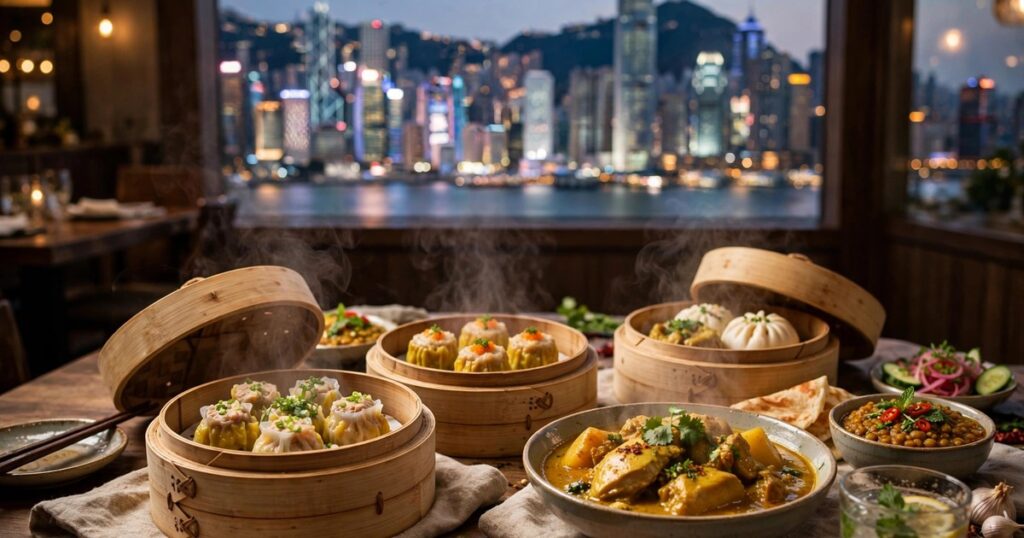
Hong Kong is one of the great eating cities on earth — a neon-lit maze of dim sum halls, dai pai dongs, and late-night noodle shops. For Muslim travelers, the surprise is how well you’ll eat: around Tsim Sha Tsui, Wan Chai, and Kowloon City, halal-certified restaurants, Pakistani kebab houses, and mosque canteens have served locals and visitors for decades. Certification is handled by the Incorporated Trustees of the Islamic Community Fund of Hong Kong, so real halal restaurants carry a recognizable certificate — you just need to know where to look.
Quick Answer: The best halal food in Hong Kong centers on Wai Kee (Wan Chai) for legendary halal Cantonese, Islam Food (Kowloon City) for curry beef brisket, Ma’s Restaurant (Sham Shui Po), Bismillah Kebab House (Wan Chai) for Pakistani kebabs, Bayt al Qasr (Central) for Middle Eastern grills, and the mosque-adjacent cluster around Kowloon Mosque in Tsim Sha Tsui. Look for halal certification from the Incorporated Trustees of the Islamic Community Fund of Hong Kong.
This guide is part of our Travel Guides series on eating well as a Muslim traveler in Asia’s great food cities — everything we wish we’d known before our first halal food trip to Hong Kong.
Is halal food easy to find in Hong Kong?
Honestly? Easier than most people expect, and harder than it should be — both things are true. Halal food in Hong Kong is concentrated rather than scattered: once you know the handful of neighborhoods where it clusters, you’ll eat extremely well. Outside those clusters, a random street in Sai Ying Pun or Tai Po may offer you nothing clearly halal at all.
The scene exists because Hong Kong has long had a substantial Muslim community — Indonesian domestic workers, Pakistani and South Asian families, Middle Eastern traders, and Muslim tourists from Malaysia, Indonesia, and the Gulf. That community supports real infrastructure: certified halal restaurants, halal butchers, two major mosques, and even halal dim sum, spanning Cantonese, Pakistani, Indian, Turkish, Thai, and Middle Eastern cuisines.
The catch: Hong Kong’s default food culture revolves around pork — roast pork, char siu, pork dumplings, lard in pastry. So save the neighborhoods below to your maps app, and you’ll spend your trip eating, not hunting.
Which Hong Kong neighborhoods are best for halal food?
Hong Kong’s halal restaurants cluster in a few districts. Here’s how they compare:
| Neighborhood | Why go | Halal scene | Price level |
|---|---|---|---|
| Tsim Sha Tsui | Tourist hub, harbour views, Kowloon Mosque on Nathan Road | Strong — Turkish, Indian, and Middle Eastern restaurants around the mosque | $$ |
| Wan Chai | Central Hong Kong Island, near the business district | Excellent — Wai Kee, Bismillah Kebab House, and the mosque canteen at Masjid Ammar | $–$$ |
| Kowloon City | “Little Thailand,” famous foodie streets | Great for budget eats — Islam Food plus Thai and Malay halal spots | $ |
| Sham Shui Po | Old-school Hong Kong grit, electronics markets | Ma’s Restaurant plus local cha chaan teng culture nearby | $ |
| Central | Finance district, high-end dining | Upscale — Bayt al Qasr and premium Indian restaurants | $$$ |
| Causeway Bay | Shopping mecca | Solid mid-range — Aladin Mess and mall-adjacent options | $$ |
First-timers staying in Tsim Sha Tsui have the easiest time: you’re within walking distance of the mosque, several certified restaurants, and late-night kebab options. But the single most rewarding halal food pilgrimage is crossing the harbour to Wan Chai for Wai Kee.
What are the best halal restaurants in Hong Kong?
The names that come up whenever Muslim travelers swap Hong Kong tips — real, established spots. Planning a wider Asia trip? See our complete halal food guide for Japan too. Hong Kong’s essentials:
- Wai Kee (Wan Chai) — the legend: halal-certified Cantonese famous for braised goose web, curry beef brisket, and claypot rice.
- Islam Food (Kowloon City) — a beloved no-frills institution whose curry beef brisket over rice has a devoted local following.
- Ma’s Restaurant (Sham Shui Po) — halal-certified Chinese cooking in one of Hong Kong’s most characterful old neighborhoods.
- Bismillah Kebab House (Wan Chai) — Pakistani-style kebabs, biryani, and karahi, served fast and cheap; the go-to late-night halal stop on Hong Kong Island.
- Bayt al Qasr (Central) — polished Middle Eastern dining with grilled kebabs, shawarma, and mezze.
- Istanbul Turkish Restaurant (Tsim Sha Tsui) — a long-standing Turkish favorite near the mosque, known for kebabs and pide.
- Aladin Mess (Causeway Bay) — Turkish and Pakistani comfort food at budget-friendly prices, handy between shopping stops.
- Dragon-i (Tsim Sha Tsui) — Chinese restaurant with halal certification at its Tsim Sha Tsui outlet, one of the few places for proper dim sum with a certificate (confirm current status before you go).
- Islamic Centre Canteen (Wan Chai) — the canteen inside the Masjid Ammar Islamic Centre serves famously cheap halal dim sum and noodles; arrive early, it sells out.
- Chaat (Rosewood, Tsim Sha Tsui) — upscale Indian fine dining with harbour views; confirm its current halal status when booking, as hotel certifications can change.
Where can I find halal dim sum in Hong Kong?
Dim sum is the heart of Cantonese food culture, and yes, you can have it halal — with homework. Traditional dim sum is a minefield: siu mai is typically pork-and-shrimp, char siu bao is literally barbecue-pork bun, and kitchens use lard in pastry and shared steamers for everything.
Your best bets for halal dim sum in Hong Kong:
- The Islamic Centre Canteen in Wan Chai — the undisputed champion. This humble mosque canteen serves halal dim sum — steamed dumplings, cheung fun, congee — at prices that feel like a different decade. Cash-friendly, chaotic at lunchtime, wonderful.
- Wai Kee (Wan Chai) — its halal-certified Cantonese kitchen covers dim sum-style items you can trust.
- Certified Chinese restaurants — a small number of Hong Kong Chinese restaurants, including Dragon-i’s Tsim Sha Tsui outlet, hold halal certification and serve dim sum. Call ahead to confirm it’s current.
Skip “vegetarian” dim sum at ordinary teahouses — it’s often steamed in baskets used for pork items. When in doubt, stick to the certified spots.
Is Hong Kong street food halal? What can I eat?
Hong Kong’s street food is legendary — and mostly off-limits without careful vetting. Curry fish balls — the iconic street snack — are usually not halal: the fish paste is often mixed with pork and the skewers sit all day in shared curry broth of unknown stock. Egg waffles (gai daan jai) look innocent, but many recipes include lard for crispness; ask directly at a reputable stall or enjoy them at a certified café.
Cheung fun (rice noodle rolls) from street carts are risky — often cooked on shared equipment at carts selling pork items too. Dai pai dongs (open-air cooked-food stalls) are wonderful but a cross-contamination minefield: shared woks, shared oil, pork-heavy menus.
Safer street-level bets include:
- Roasted chestnuts and sweet potatoes from street vendors (single-ingredient, roasted in their own drums)
- Fresh sugarcane juice, pressed to order
- Cut fruit from fruit stalls
- Tau fu fa (silken tofu dessert) from dedicated dessert shops — ask about gelatin in the syrup
- Egg tarts and pineapple buns from bakeries — but check for lard in the pastry; many traditional bakeries use it
The golden rule: if it’s cooked in a shared pot, wok, or fryer with unknown ingredients, admire it, photograph it, and walk on.
How do I know if a restaurant is really halal in Hong Kong?
Halal certification in Hong Kong is issued by the Incorporated Trustees of the Islamic Community Fund of Hong Kong. A genuinely certified restaurant displays the Fund’s certificate near the entrance — ask to see it if you don’t spot one.
Here’s what we tell every Muslim traveler to Hong Kong:
- “No pork” is not the same as certified halal. That says nothing about meat suppliers, alcohol in cooking, or shared equipment.
- Ask about alcohol, not just pork. Cantonese cooking uses Shaoxing wine and other alcohols in marinades and sauces.
- Ask about lard. Lard appears in pastry, fried rice, and even some “vegetable” dishes — the single most common hidden non-halal ingredient tourists miss.
- Mosque-adjacent restaurants earn extra trust. The clusters around Kowloon Mosque and Masjid Ammar serve worshippers daily — owners stake their reputation with the local Muslim community.
- When in doubt, eat at the certified places. Hong Kong’s certified halal restaurants are good enough that you never need to gamble on a maybe.
What Hong Kong dishes are naturally halal or easily made halal?
Several beloved Hong Kong dishes are naturally halal or need only small tweaks. At certified or Muslim-run restaurants, order with confidence:
- Congee — plain, or with century egg, beef, or fish. Simple, comforting, naturally halal at a certified shop.
- Steamed whole fish — a Cantonese banquet staple; ginger-and-scallion preparation needs no modification.
- Curry beef brisket — the signature halal-friendly Cantonese dish, perfected at Islam Food and Wai Kee.
- Typhoon shelter crab — ask them to hold any wine in the seasoning; the garlic-chili preparation is otherwise fine.
- Beef chow fun and beef brisket noodles — naturally halal at certified restaurants.
- Mango pomelo sago — the famous dessert, but confirm no gelatin in the preparation.
- Egg tarts — halal only if the bakery confirms no lard in the pastry. Worth the ask.
Treat with caution: wontons (usually pork), siu mai (pork-shrimp), char siu anything (barbecue pork by definition), and “vegetarian” dishes at non-certified restaurants (often cooked with lard or oyster sauce of uncertain origin).
How much does halal food cost in Hong Kong?
Hong Kong has a reputation for expense, but halal food here spans every budget. Here’s what to expect in 2026, in Hong Kong dollars:
| Tier | What it looks like | Typical cost per person |
|---|---|---|
| Budget | Islamic Centre Canteen dim sum, Islam Food curry rice, kebab rolls at Bismillah | HKD 40–80 |
| Mid-range | Wai Kee dinner dishes, Istanbul Turkish kebabs, Bayt al Qasr mezze | HKD 100–200 |
| Splurge | Chaat at Rosewood, hotel halal buffets | HKD 300–700 |
A filling halal lunch in Kowloon City or Wan Chai often costs under HKD 80, and a proper Cantonese dinner at Wai Kee runs about HKD 150–200 per person. The usual 10% service charge applies at sit-down places; tipping beyond that is optional.
Can I eat halal at Hong Kong Disneyland, Ocean Park, or the airport?
Hong Kong International Airport is the best of the three: Terminal 1 has halal-certified food-court outlets plus a prayer room. Check the airport’s dining directory for current options before you fly.
Hong Kong Disneyland: options are limited and change with the seasons — check Disney’s official site before your visit and pack snacks. The Disney hotels are generally more accommodating than in-park counters; call ahead if halal dining matters for your stay. For a Korea comparison, see our Seoul halal food guide.
Ocean Park: similar story — limited certified options inside the park. Eat a proper halal lunch in Causeway Bay or Wan Chai before you go (both an easy MTR ride away), and bring snacks for the day.
For all three: verify on the official website the week of your visit, and keep packaged snacks in your daypack — convenience stores stock plenty of clearly labeled backup options.
What should I know about Ramadan in Hong Kong?
Ramadan in Hong Kong is a genuinely special time to visit. The city’s Muslim community is visible and active, and the mosque neighborhoods come alive after sunset.
Kowloon Mosque on Nathan Road is the spiritual center — taraweeh draws big crowds and the surrounding streets fill with iftar options. Masjid Ammar in Wan Chai (home of the famous canteen) is the Hong Kong Island hub. Both welcome visitors; arrive early for taraweeh.
For iftar, Wai Kee, Istanbul Turkish Restaurant, and Aladin Mess are known for generous Ramadan spreads, and Tsim Sha Tsui’s late-night kebab shops cover post-taraweeh hunger. Suhoor is trickier — stock up the night before. Hong Kong doesn’t slow down for Ramadan, so plan your own meals and book Tsim Sha Tsui hotels early.
What are common halal-food scams or mistakes tourists make?
Most Hong Kong food vendors are honest, but tourists make the same handful of mistakes:
- Trusting a “halal” sign with no certificate. A handwritten “HALAL” sticker means nothing without the Incorporated Trustees of the Islamic Community Fund certificate behind it. Ask to see it.
- Confusing “no pork” with halal. The #1 mistake: no pork says nothing about alcohol in the cooking wine, the meat supplier, or shared equipment.
- Assuming all seafood is safe. Shrimp dumplings at a regular dim sum hall are steamed in baskets shared with pork siu mai. “It’s just seafood” doesn’t survive a shared kitchen.
- Forgetting about lard in bakeries. Traditional egg tarts, pineapple buns, and wife cakes often use lard in the pastry. Always ask.
- Alcohol hiding in desserts. Tiramisu, rum balls, and some Hong Kong-style desserts contain alcohol. At certified restaurants this is a non-issue; at regular dessert shops, ask.
- Buying “halal” meat at wet markets. Butchers sell pork and beef side by side with shared scales and chopping blocks. Use a dedicated halal butcher in the mosque neighborhoods instead.
- Mixed-kitchen “halal menus.” Some non-certified restaurants offer a “halal menu” cooked in the same kitchen as everything else. For strict observers, that’s not halal.
The fix is always the same: eat at certified restaurants, ask direct questions, and when something feels off, walk to the next option. In the mosque neighborhoods, the next option is never far.
Frequently asked questions
Is Hong Kong good for Muslim travelers?
Yes. Halal food in Hong Kong is concentrated but excellent — certified restaurants across Cantonese, Pakistani, Turkish, Indian, and Middle Eastern cuisines, two major mosques, prayer rooms at the airport and malls, and a long-established Muslim community. Plan around the mosque neighborhoods and it’s one of East Asia’s easier food cities.
Do I need to book halal restaurants in advance?
For casual spots like Islam Food, Bismillah Kebab House, and the Islamic Centre Canteen — no, just show up (arrive early for the canteen). For weekend dinner at Wai Kee, a quick phone booking helps. For upscale places like Chaat or hotel halal buffets, definitely reserve ahead and confirm the halal certification when you book.
Are there halal hotels in Hong Kong?
No fully halal-certified hotels, but several major hotels have halal-certified restaurants — especially in Tsim Sha Tsui near the mosque. Ask about halal dining and prayer facilities when booking.
Can I find halal food at the airport?
Yes — several halal-certified outlets in Terminal 1 plus a prayer room. Check the airport’s dining directory before you travel, as lineups change.
Is dim sum halal?
Usually not — pork siu mai, char siu bao, lard in pastry, and shared steamers are standard. But halal dim sum exists: the Islamic Centre Canteen in Wan Chai serves it daily at bargain prices, and certified spots like Wai Kee and Dragon-i’s Tsim Sha Tsui outlet cover the classics. Stick to certified kitchens.
What is the halal certification body in Hong Kong?
It’s issued by the Incorporated Trustees of the Islamic Community Fund of Hong Kong. Certified restaurants display the Fund’s certificate near the entrance — no visible current certificate means treat it as uncertified.
Is Hong Kong expensive for halal food?
Not necessarily. A satisfying halal lunch at Islam Food or the mosque canteen costs HKD 40–80; a proper Cantonese dinner at Wai Kee runs HKD 150–200 per person. Only hotel restaurants and buffets (HKD 300–700) hit luxury prices.
Hong Kong rewards the Muslim traveler who does a little homework — and repays it deliciously. Between Wai Kee’s halal Cantonese feasts, the mosque canteen’s bargain dim sum, and Tsim Sha Tsui’s late-night kebab streets, you’ll eat as well as anyone in town. For more Muslim-friendly food city guides, browse our Travel Guides — and if Hong Kong stole your heart, start planning the return trip before you’ve left.
I’m Lila Spoonbelle, your host on this flavorful ride through food, fun, and fearless puns. Let’s turn every bite into a burst of laughter!