
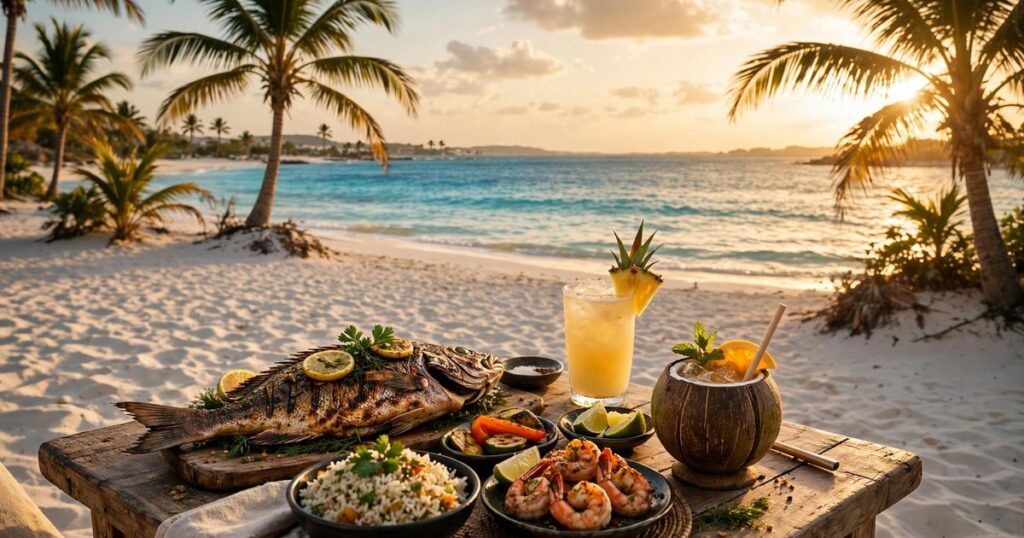
Aruba is one of those rare islands where eating well is not a side activity — it is the holiday. A pastechi from a roadside snack truck in the morning, fresh-caught fish grilled at a beach shack at noon, and a long dinner with your feet in the sand as the sun sets over the Caribbean: that rhythm is Aruba itself. The island’s cooking is a happy fusion of Dutch, Caribbean, Latin American, and South American influences, shaped by more than ninety nationalities living on one small island, and it suits almost any budget if you know where to look.
This guide answers the question every first-time visitor asks — where to eat in Aruba — area by area, dish by dish, and budget by budget. Use it to plan one perfect food day on the island, or to eat your way through a whole week without falling into a single tourist trap.
Quick Answer: The best places to eat in Aruba are Palm Beach for beachfront dining and variety, Oranjestad for local favourites and markets, and Savaneta for fresh-caught seafood at the water’s edge. Start with keshi yena, pastechi, and a plate of fresh catch, and save one sunset for a toes-in-the-sand dinner.
What Should You Eat First in Aruba?
If you eat only a handful of things in Aruba, make them the island’s signatures. First, keshi yena: a baked dish of spiced chicken or seafood folded into melted Gouda cheese, a legacy of Aruba’s Dutch history and the closest thing the island has to a national dish. It is rich, comforting, and found on menus from home-style local restaurants to upscale dining rooms, and every cook has a slightly different version.
Second, pastechi: a golden, half-moon pastry filled with cheese, chicken, tuna, or beef, sold at bakeries, snack trucks, and breakfast counters all over the island. It is Aruba’s everyday snack — cheap, portable, and best eaten warm in the morning with a cup of coffee. Third, fresh catch: whatever the local boats brought in that day, usually grilled simply with garlic, lime, and butter. In Aruba, “catch of the day” is not a menu cliché; it is genuinely the freshest thing you can order.
Fourth, seafood in all its forms — shrimp, red snapper, grouper, and mahi-mahi — often served with funchi (a cornmeal side similar to polenta) or pan bati, a thin, slightly sweet pancake that is the island’s classic accompaniment. And finally, make time for a cold Balashi, the beer brewed on the island, or a glass of fresh tropical juice. Aruba’s drinking culture is relaxed and social, and a cold drink with a plate of fried snacks at a beach bar is the most local way to end an afternoon.
What Are Aruba’s Must-Try Dishes?
Aruban cooking blends Dutch pantry staples with Caribbean and Latin flavours. These are the dishes to prioritise:
- Keshi yena: spiced meat or seafood baked in a shell of melted Gouda cheese — Aruba’s signature dish.
- Pastechi: a flaky half-moon pastry filled with cheese, chicken, tuna, or beef — the island’s favourite snack and breakfast.
- Fresh catch of the day: grilled snapper, grouper, or mahi-mahi, simply prepared with garlic, lime, and butter.
- Seafood platters: shrimp, mussels, and grilled fish, often shared family-style at beachfront restaurants.
- Funchi and pan bati: cornmeal-based sides — funchi is firm and sliceable, pan bati is a thin, sweet pancake — served with stews and seafood.
- Stoba (stew): slow-cooked beef, goat, or chicken stew, rich with local herbs and served with rice or funchi.
- Sopi di pisca: a hearty fish soup, a traditional Aruban comfort dish worth seeking out at local restaurants.
- Calco stoba: a conch stew, beloved by locals and a true taste of the island’s fishing heritage.
- Grilled shrimp and lobster: a special-occasion favourite, best at beachfront restaurants in season.
- Johnny cakes and fried plantains: simple, satisfying sides that appear on local menus everywhere.
- Dutch treats: pancakes, bitterballen (crispy meatballs), and Gouda, reflecting Aruba’s Dutch heritage.
- Tropical desserts: coconut cake, rum cake, and fresh fruit — mango, papaya, and watermelon — sold at markets and beach shacks.
Where Are the Best Areas to Eat in Aruba?
Aruba is small — you can drive from one end to the other in under an hour — but its food map still matters. Each area has its own price level and speciality, and choosing the right one matters more than chasing a single famous restaurant.
| Area | Best for | Vibe and prices |
|---|---|---|
| Palm Beach | Beachfront dining, international restaurants, nightlife | Busy and polished; mid-range to splurge |
| Eagle Beach | Relaxed beachfront meals, low-rise resorts, sunset dinners | Calm and scenic; mid-range |
| Oranjestad | Local favourites, markets, Dutch treats, affordable lunches | Historic capital; excellent value |
| Noord | Fine dining, upscale restaurants, dinner out of the resort strip | Quiet and refined; mid-range to splurge |
| Savaneta | Fresh-caught seafood, beach shacks, toes-in-the-sand dining | Laid-back and local; great value |
| San Nicolas | Local eateries, street art, authentic island cooking | Off the tourist trail; best value |
Why Is Palm Beach the Best First-Night Choice?
Palm Beach, the island’s high-rise resort strip, is Aruba’s most convenient place to eat on your first night. The beachfront is lined with restaurants of every kind — steakhouses, seafood grills, Italian and Asian restaurants, and casual beach bars — and you can walk from your hotel to dinner without a car. Start with a seafood dinner at a beachfront table, add a plate of local fish or shrimp, and finish with a walk along the sand. Prices run higher than in Oranjestad or San Nicolas, so treat Palm Beach as your special-evening area and save everyday eating for the local districts.
What Makes Savaneta Special?
Savaneta, a quiet fishing village on the south coast, is where Aruba’s seafood is at its freshest and most honest. Its beach shacks serve the day’s catch grilled simply, with your feet in the sand and a view across calm water. This is where to go for a long, lazy seafood lunch, a sunset dinner without the resort crowds, and a sense of the island that the hotel strip cannot offer. If you want to eat like an Aruban rather than a visitor, spend at least one afternoon eating in Savaneta.
Where Should You Eat in Palm Beach, Oranjestad, and San Nicolas?
Where to Eat in Palm Beach?
Palm Beach is Aruba’s dining capital by sheer variety. The strip and the streets just behind it hold everything from fine-dining rooms to food trucks, and the beachfront restaurants are the island’s most popular sunset tables. For a casual daytime bite, look for beach shacks serving smoothies, wraps, and fresh salads — a well-known example is Eduardo’s Beach Shack, a Palm Beach favourite for healthy breakfast bowls and fresh juices. For dinner, the beachfront grills and steakhouses are the classic choice: grilled seafood, generous portions, and a table close enough to the water that you hear the waves.
The smart move in Palm Beach is to book ahead for dinner, especially for beachfront tables at sunset, and to step one street back from the sand for better value. The restaurants on the main beachfront row are the most expensive; the places a block inland, where locals and long-stay visitors eat, often serve the same quality of seafood and steak for noticeably less. And do not skip the food trucks and casual spots that gather near the resorts in the evening — they are a fun, affordable way to taste Aruba without a reservation.
Where to Eat in Oranjestad?
Oranjestad, Aruba’s colourful capital, is where the island’s Dutch heritage and local daily life meet. Its pastel-colonial streets hold bakeries, snack counters, and small restaurants that serve the island’s most affordable and authentic food. This is the place to try pastechi from a local bakery in the morning, a plate of keshi yena or stoba at a home-style restaurant at lunch, and a Dutch pancake in the afternoon. The Dutch Pancakehouse in Oranjestad is a long-standing favourite for sweet and savoury pancakes, and it makes a charming stop between sightseeing and shopping.
Oranjestad is also the island’s market town. The downtown market area and the small food stalls around it are great for fresh fruit, local snacks, and a cheap, tasty lunch. Prices here are typically well below the resort strip, and the cooking is often more traditional. If you are staying in Palm Beach, a half-day trip to Oranjestad for lunch and a wander through the old town is one of the best food outings on the island — and it costs far less than a resort dinner.
Where to Eat in San Nicolas?
San Nicolas, at the island’s southeastern end, is Aruba’s second city and its most local food scene. Far from the resort crowds, its streets are lined with small eateries, bakeries, and snack trucks serving Aruban home cooking at island prices. This is where to go for a proper local lunch — stoba with funchi, fresh fish, or a plate of pastechi and fried snacks — and for a taste of the island’s multicultural character, with Caribbean, Latin, and South American influences on the same menu.
San Nicolas is also famous for its street art, and combining a walk among the murals with lunch at a local spot makes a rewarding day trip. Come hungry, carry cash for the smaller places, and do not expect resort polish — the charm here is the opposite: simple rooms, generous portions, and cooking that tastes like someone’s grandmother made it. For visitors who want to see the real Aruba beyond the beaches, San Nicolas is essential.
Where Should You Go for Fine Dining and Beachfront Dinners?
Aruba has a serious fine-dining scene, concentrated in Noord and along the Palm Beach and Eagle Beach strips, and it is one of the island’s great surprises. Restaurants here serve Caribbean seafood with European technique — think grilled lobster, fresh snapper with tropical sauces, and tasting menus that pair local fish with Dutch and French influences. Madame Janette, in Noord, is one of the island’s best-known fine-dining names, famous for its open-air garden setting and its seafood and meat dishes, and it is a favourite for special occasions.
For a romantic beachfront dinner, the toes-in-the-sand restaurants of the south coast are the classic choice. Flying Fishbone, in Savaneta, is Aruba’s most famous beachfront table — diners sit with their feet literally in the sand, eating fresh seafood as the sun sets — and it is worth booking well ahead. Zeerovers, also on the south coast, is the opposite kind of legend: a casual, open-air fish shack where you pick your fresh catch and it is fried or grilled on the spot, eaten at picnic tables by the water. Both are unforgettable, and together they show Aruba’s range: fine dining and fish-shack simplicity, at their best on the same island.
Where to Eat in Aruba on a Budget?
Aruba has a reputation for being pricey, but its best-value meals are also its most characteristic. Follow local habits and you will rarely need to spend much.
- Eat pastechi for breakfast: a couple of warm pastechi from a bakery or snack truck cost a few dollars and keep you going until lunch.
- Try the snack trucks: Aruba’s food trucks and snack counters serve burgers, fried snacks, and local plates at a fraction of resort prices.
- Lunch in Oranjestad or San Nicolas: local restaurants in the capital and the second city serve the same island dishes as the resorts, at noticeably lower prices.
- Head to Savaneta for seafood: beach shacks there serve fresh catch at honest prices, without the resort markup.
- Drink local: Balashi beer and fresh tropical juices are local, refreshing, and usually cheaper than imported drinks.
- Share seafood platters: generous platters split between two or three people cost less per person than a full main course each.
- Shop the markets: fruit, bread, cheese, and snacks from Oranjestad’s markets make a cheap and delicious picnic lunch.
What Is the Best Breakfast in Aruba?
Breakfast in Aruba is a relaxed affair, and the island does it in several styles. The local way starts with pastechi and coffee from a bakery, eaten on the go or at a small counter. The resort way is a big buffet or a beachfront table with eggs, fruit, and pancakes — good, but usually the most expensive meal of the day. The in-between option, and often the best, is a casual café or beach shack: smoothie bowls, fresh fruit, eggs, and Dutch pancakes, eaten slowly with a sea view.
If you want one memorable breakfast, make it a pancake morning. The Dutch pancake tradition runs deep in Aruba, and a plate of thin, crisp-edged pancakes with fruit, cheese, or bacon is a treat that feels both Dutch and Caribbean. Alternatively, head to a beach shack for a smoothie bowl topped with local fruit — light, fresh, and perfect before a day in the sun. Either way, eat breakfast late and slowly: Aruba mornings are made for lingering.
How Much Should You Budget for Food in Aruba?
Food costs in Aruba vary by area and by whether you eat at a resort or a local spot, but these ranges will help you plan. Prices below are per person in US dollars. Aruba uses the florin, but US dollars are accepted almost everywhere, and most menus are priced in dollars or show both currencies. Tipping is customary: around 15–20% for good service at sit-down restaurants, though some places add a service charge — check the bill before tipping twice.
| Meal | Budget | Mid-range | Splurge |
|---|---|---|---|
| Pastechi + coffee breakfast | $4–8 | $8–15 | $15+ |
| Casual lunch (local restaurant) | $10–18 | $18–30 | $30+ |
| Beach-shack seafood lunch | $15–25 | $25–45 | $45+ |
| Casual dinner (main + drink) | $20–35 | $35–60 | $60+ |
| Beachfront seafood dinner | $30–50 | $50–85 | $85+ |
| Fine-dining dinner | — | $75–120 | $120+ |
When Should You Eat in Aruba?
Aruba eats on a relaxed, island schedule, and planning around it makes everything easier. Breakfast runs late and long, lunch is typically from around noon to 2 pm, and dinner starts around 6 pm, with locals and visitors alike filling beachfront tables for sunset. Many kitchens stay open through the afternoon in the resort areas, so unlike some European destinations, a late-afternoon meal is usually easy to find — though smaller local restaurants may close between lunch and dinner, so check hours before a special trip to San Nicolas or Savaneta.
Season matters too. The high season, from mid-December to April, brings the busiest restaurants and the highest prices, and reservations become essential for popular beachfront tables. The low season, from May to November, is quieter and often cheaper, with the same sunshine — Aruba sits outside the hurricane belt, so summer rain is usually brief. Shoulder months like May and November offer the best balance: warm weather, open terraces, and tables without a long wait. Whenever you visit, book sunset dinners ahead and leave at least one evening unplanned, for the restaurant you discover by walking past it.
How Do You Avoid Tourist Traps in Aruba?
The busiest resort streets hold some of the island’s worst-value restaurants: generic menus that could be anywhere in the Caribbean, waiters calling you in from the sidewalk, and seafood that is neither fresh nor local. Walk a few blocks inland from the beachfront, or drive ten minutes to Oranjestad or Savaneta, and the cooking improves and the prices fall. Other warning signs include a menu with no prices, a long list of dishes from every cuisine on earth, and a room with no Aruban voices in it. A short menu, a busy local crowd, and a server who tells you what the boats brought in today are the opposite signals.
Another trap is assuming that the most expensive restaurant is the best. In Aruba, some of the finest meals come from beach shacks and local kitchens, while some of the priciest resort restaurants serve food you could get at home. Judge a place by its fresh catch, its local dishes, and its crowd — not by its price tag or its position on the beach. And be wary of “free” extras that inflate the bill: check whether a service charge is already included before adding a tip, and ask the price of the day’s special before ordering it.
What Does a Perfect One-Day Food Itinerary in Aruba Look Like?
One day is enough to taste Aruba’s range, if you plan it well. Start with pastechi and coffee from a local bakery, eaten on the way to the beach. For lunch, head to the south coast for fresh-caught seafood at a beach shack — grilled fish, funchi, and a cold Balashi, with your feet in the sand. Spend the afternoon in Oranjestad, wandering the pastel streets and stopping for a Dutch pancake and a fresh juice. Then, for dinner, book a beachfront table for sunset: a seafood platter to share, a glass of wine, and dessert as the sky turns orange. If you have a second day, spend it in San Nicolas for lunch among the street art, and save your fine-dining evening for Noord. That two-day arc — beach shack, local capital, fine dining — is Aruba in miniature.
What Practical Tips Should You Know Before Eating Out in Aruba?
A few practical details make eating in Aruba smoother. Reservations are wise for popular beachfront and fine-dining restaurants, especially at sunset and in high season — book a few days ahead, and weeks ahead for special occasions. For local restaurants, snack trucks, and beach shacks, you can usually walk in. Tap water in Aruba is safe to drink — the island desalinates its seawater, and the water is famously pure — so there is no need to buy bottled water at every meal. Dress codes are relaxed: smart-casual is fine almost everywhere, though some fine-dining rooms ask for long trousers and closed shoes in the evening.
Payment is easy: US dollars are accepted nearly everywhere, cards are widely taken, and most menus are priced in dollars. Carry some cash for snack trucks, market stalls, and small local places. If you are driving, remember that Aruba is small and parking near popular restaurants can be tight at sunset — arrive a little early, or take a taxi for dinner and enjoy a drink without worrying about the drive. Finally, pace yourself: Aruba’s portions are generous, the sun is strong, and the best meals here are long ones. Order a little less than you think you need, and leave room for dessert and a slow walk on the beach afterwards.
What About Dietary Needs in Aruba?
Aruba is a relatively easy island for special diets, thanks to its international restaurants and its seafood- and produce-rich cooking. Vegetarians will find plenty to eat: grilled vegetables, salads, pasta, and cheese dishes appear on most menus, and the island’s fresh fruit is superb. Vegans have a smaller but growing choice, especially at beach cafés and health-focused spots in Palm Beach, where smoothie bowls, salads, and plant-based plates are common. Gluten-free visitors should note that funchi and pan bati are corn-based, and many restaurants will adapt grilled fish and meat dishes on request — but always mention coeliac disease clearly, as kitchens vary in their awareness.
For seafood allergies, be direct with your server: fish and shellfish are everywhere in Aruban cooking, and cross-contact is possible in small kitchens. Most resort restaurants handle allergies well, and menus in the resort areas often mark common allergens. If you have a serious allergy, choose larger, established restaurants over tiny shacks, carry a card explaining your allergy in English (and, if you can, in Dutch and Spanish, both widely spoken on the island), and double-check sauces and stews, which may contain hidden seafood or meat stock.
Frequently Asked Questions About Eating in Aruba
What is the most famous food in Aruba?
Keshi yena — spiced meat or seafood baked in melted Gouda cheese — is Aruba’s most famous dish, followed by pastechi pastries and fresh-caught grilled fish. Try all three on your first day: pastechi for breakfast, fresh catch for lunch, and keshi yena for dinner.
Is Aruba expensive for food?
It can be, but it does not have to be. Resort beachfront restaurants and fine dining are pricey, but pastechi breakfasts, snack trucks, and local restaurants in Oranjestad, Savaneta, and San Nicolas keep costs low — a satisfying local lunch typically costs around $10–18 per person.
Do I need reservations in Aruba?
For popular beachfront and fine-dining restaurants, yes — book a few days ahead, and weeks ahead for sunset tables in high season. For local restaurants, snack trucks, and beach shacks, you can usually walk in, though you may wait for a table at peak times.
What time is dinner in Aruba?
Dinner typically starts around 6 pm, with beachfront tables filling up for sunset. Lunch runs from around noon to 2 pm, and breakfast is a late, relaxed affair — perfect for slow mornings before a day on the beach.
Where is the best seafood in Aruba?
Savaneta, on the south coast, is the best area for fresh-caught seafood, with beach shacks grilling the day’s catch right by the water. Palm Beach and Eagle Beach also have excellent seafood restaurants, and Oranjestad’s local spots serve fresh fish at lower prices.
Is the tap water safe to drink in Aruba?
Yes. Aruba desalinates its seawater, and the tap water is famously pure and safe to drink. You can happily drink tap water at restaurants and refill a bottle during the day.
Is Aruba good for vegetarians?
Yes, with a little planning. Grilled vegetables, salads, pasta, cheese dishes, and the island’s superb fresh fruit are widely available, and beach cafés in Palm Beach offer plant-based bowls and salads. Traditional Aruban menus can be meat- and seafood-heavy, so check the menu before sitting down.
Plan Your Aruba Food Trip
Aruba rewards the traveller who eats like a local: one pastechi in the morning, one plate of fresh catch with your feet in the sand, one sunset dinner by the sea, and one local lunch in a town the resort crowds never reach. Start in Palm Beach, spend an afternoon eating in Savaneta, and save a second evening for the area you liked best. For more city food guides, see our Food Guides hub, plus Where to Eat in Barcelona and Where to Eat in Madrid. Aruba is not the Caribbean’s quietest food island — it is one of its most joyful, and one good meal here tends to turn into a return trip.

I’m Lila Spoonbelle, your host on this flavorful ride through food, fun, and fearless puns. Let’s turn every bite into a burst of laughter!