
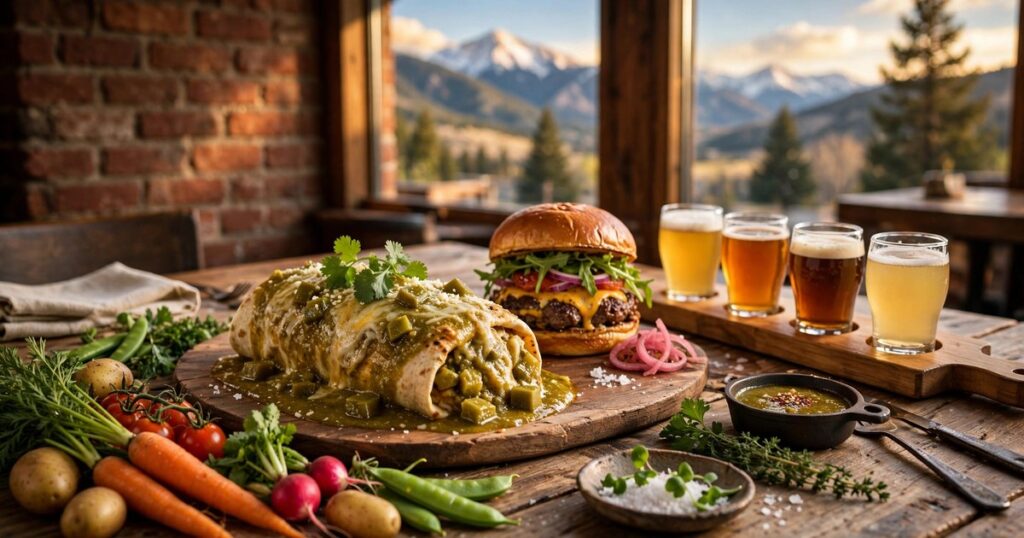
Denver eats like it lives: outdoorsy, a little rugged, and far more interesting than its steak-and-potatoes reputation suggests. A mile above sea level, with the Rockies on the horizon, Denver has quietly built one of the most exciting food scenes in the Mountain West. James Beard winners cook next to green chile slingers, food halls buzz inside century-old buildings, and a $10 breakfast burrito can rival a $150 tasting menu. Whether you are here for a weekend or a ski trip stopover, this guide will help you find the best restaurants in Denver without wasting a single meal.
Denver’s food scene is spread across distinct neighborhoods, each with its own flavor: historic LoDo, artsy RiNo, hilltop LoHi, upscale Cherry Creek, and eclectic Capitol Hill and South Broadway. This guide covers all of them, plus what to order, what it costs, and how to plan a great eating day. It is part of our Food Guides series — pair it with our guides to where to eat in Nashville and where to eat in Houston if you are planning a food-focused road trip.
Quick Answer: The best restaurants in Denver include Beckon and The Wolf’s Tailor for fine dining, Rioja and Guard and Grace for special occasions, Hop Alley and Uncle for casual meals, Denver Biscuit Co. and Snooze for breakfast, and Denver Central Market for sampling many vendors in one stop. Budget $15–$25 per person for casual meals and $75–$150 for fine dining.
What Is Denver Known for Food-Wise?
Denver’s food identity starts with the land around it. This is high-plains and mountain country, and the city’s signature flavors reflect that: green chile, bison, Rocky Mountain oysters, and game meats. Green chile is the dish to understand first. It is not a salsa and not quite a soup — a thick, savory sauce of roasted chiles, pork, and spices, ladled over burritos, eggs, and fries all over town. Ask any local where to get the best green chile and you will start an argument.
Beyond the regional classics, Denver’s other great strength is its farm-to-table cooking. Colorado’s farms and ranches supply a remarkable range of produce and meat, and the city’s best chefs build seasonal menus around what is growing nearby: bison short ribs, trout from mountain streams, Palisade peaches in late summer, and Olathe sweet corn. Denver also has one of the best craft beer scenes in America, and the food around the breweries is often excellent.
Where Should First-Time Visitors Eat in Denver?
If you only have one day in Denver, start downtown in LoDo, where the highest concentration of polished, visitor-friendly restaurants sits around Union Station. Begin with breakfast at Snooze, where the pancake flights and breakfast burritos are worth the wait. For lunch, head to Denver Central Market in RiNo, a food hall where you can sample several local vendors in one visit. In the evening, book a table at Rioja, the long-running Mediterranean restaurant in Larimer Square.
On your second day, head to RiNo and LoHi. RiNo is the best place to feel the city’s creative energy: breweries, street art, and restaurants like The Wolf’s Tailor, where the tasting menu changes constantly. Cross the river to LoHi for a sunset dinner at Linger, the rooftop restaurant in a former mortuary with sweeping skyline views, or Avanti Food & Beverage, a food hall with a big rooftop deck and mountain views on a clear day.
What Are the Best Restaurants in Denver by Neighborhood?
Denver rewards visitors who explore by neighborhood. Each district has its own rhythm and price range. Here is how they compare.
| Neighborhood | Vibe | Best for | Price range |
|---|---|---|---|
| LoDo / Union Station | Historic, polished, downtown energy | Fine dining, classic restaurants, first-timers | $$–$$$$ |
| RiNo | Artsy, industrial, brewery-heavy | Creative kitchens, food halls, beer | $–$$$ |
| LoHi | Hilltop patios, skyline views | Rooftop dining, brunch, date nights | $$–$$$ |
| Cherry Creek | Upscale, polished, shopping district | Fine dining, steak, special occasions | $$$–$$$$ |
| Capitol Hill | Eclectic, historic, walkable | Casual dining, international food, coffee | $–$$ |
| South Broadway | Unpretentious, diverse, local | Mexican food, dive bars, budget eats | $–$$ |
| Five Points | Historic, soulful, evolving | Soul food, jazz history, neighborhood gems | $–$$ |
LoDo and Union Station
LoDo is where Denver puts on its best suit. Rioja, on Larimer Square, is the neighborhood’s classic special-occasion restaurant, serving seasonal Mediterranean food in a warm, elegant dining room. Mercantile Dining & Provision, inside the restored Union Station, is another downtown favorite — a market-driven restaurant and artisan grocery in one. Guard and Grace, a modern steakhouse downtown, serves dry-aged steaks and classic sides in a polished, lively room. For something more casual, Biker Jim’s Gourmet Dogs, on Larimer Street, is a Denver institution — gourmet hot dogs made with elk, reindeer, and wild boar.
RiNo
RiNo — the River North Art District — is the neighborhood to visit if you want to eat well without dressing up. Denver Central Market is the anchor, a food hall with stalls serving wood-fired pizza, sushi, ice cream, and sandwiches. The Source, a few blocks away, is another food hall worth a visit, with restaurants, a brewery, and artisan shops. The Wolf’s Tailor is the neighborhood’s flagship fine dining restaurant, serving a creative tasting menu in a warm, wood-filled room. Hop Alley, a modern Chinese restaurant, is famous for its duck and dumplings — one of the most fun meals in the city.
LoHi
LoHi — Lower Highland — sits on a hill just across the river from downtown, and its patios have some of the best views in the city. Linger is the neighborhood’s best-known restaurant, a rooftop spot in a former mortuary serving globally inspired small plates, with the downtown skyline below. Avanti Food & Beverage, a food hall with a huge rooftop deck, is the best place in LoHi for a group, because everyone can order from a different stall and eat outside with a mountain view. Root Down, also in LoHi, is one of the city’s most beloved farm-to-table restaurants, serving seasonal dishes in a converted gas station with a lovely patio.
Cherry Creek
Cherry Creek is Denver’s polished, upscale district, and its restaurants match: high-end steakhouses, seasonal tasting-menu rooms, and elegant cafes and wine bars. Prices run higher here than in most Denver neighborhoods, so Cherry Creek is best for a special occasion.
Which Denver Restaurants Are Best for Each Occasion?
Not every great restaurant is great for every situation. Here is a quick guide to matching the meal to the moment.
- Best for a special occasion: Beckon (RiNo) — intimate, tasting-menu-only, seasonal, $$$$; book well ahead.
- Best classic fine dining: Rioja (Larimer Square) — seasonal Mediterranean, $$$; and Guard and Grace (downtown) — modern steakhouse, $$$.
- Best creative tasting menu: The Wolf’s Tailor (RiNo) — inventive, seasonal cooking, $$$$.
- Best casual favorite: Hop Alley (RiNo) — modern Chinese, duck, and dumplings, $$; and Uncle (LoHi) — ramen and Asian small plates, $$.
- Best breakfast: Denver Biscuit Co. — giant biscuit sandwiches, $–$$; and Snooze — pancake flights and breakfast burritos, $$.
- Best for a group with different tastes: Denver Central Market (RiNo) and Avanti Food & Beverage (LoHi) — food halls with many stalls, $–$$.
- Best for a date night: Bar Dough (LoHi) — handmade pasta and natural wine, $$–$$$; and Tavernetta (Union Station area) — elegant Italian, $$$.
- Best for a food crawl: RiNo’s brewery district — food halls, food trucks, and tasting rooms on foot.
- Best for a day trip: Frasca Food and Wine (Boulder, about 30 minutes away) — James Beard-winning Friulian-Italian food, $$$$.
- Best Mexican food: Super Mega Bien (RiNo) — Latin-inspired dishes, $$–$$$.
What Is Denver’s Signature Dish?
If Denver has a signature dish, it is probably the breakfast burrito smothered in green chile — or more precisely, the green chile itself. The sauce is the city’s culinary calling card: roasted chiles, pork, garlic, and spices, cooked down into something thick, savory, and just spicy enough. You will find it ladled over burritos, eggs, fries, and burgers all over town. Sam’s No. 3, a downtown diner, is a classic place to try it.
Bison is the other contender for the city’s signature. The Buckhorn Exchange, Denver’s oldest restaurant, has been serving game meats since 1893, and its menu still features bison, elk, and Rocky Mountain oysters — the local name for fried bull testicles, more a rite of passage than a regular dinner order. Many farm-to-table restaurants serve bison short ribs, bison burgers, or bison chili, and the meat’s rich, lean flavor is a genuine taste of the region.
Where Is the Best Breakfast and Brunch in Denver?
Denver takes breakfast seriously. Denver Biscuit Co. is the place to start: enormous biscuit sandwiches filled with fried chicken, sausage gravy, or eggs. The portions are generous, the biscuits are flaky and buttery, and the weekend line is a sign you are in the right place. Order the Franklin, the classic fried chicken biscuit sandwich with sausage gravy.
Snooze, an A.M. Eatery, is the other breakfast institution. Its locations across the city serve pancake flights — three small pancakes in flavors like sweet potato, blueberry, and pineapple upside-down cake — plus breakfast burritos, benedicts, and excellent coffee. The wait on weekend mornings can be long, so arrive early or put your name on the list and wander the neighborhood while you wait.
For a more relaxed brunch, Root Down in LoHi serves a seasonal brunch menu on a lovely patio, built around Colorado produce. Sam’s No. 3 in downtown has been serving breakfast all day for decades, with green chile, huevos rancheros, and enormous portions at diner prices.
What Are the Best Food Halls and Markets in Denver?
Denver’s food halls are the best way to taste the city in a single visit, and the best option for groups. Denver Central Market, in RiNo, is the biggest and best known: a historic building filled with stalls serving wood-fired pizza, sushi, ice cream, sandwiches, and coffee, with long communal tables and a lively atmosphere.
Avanti Food & Beverage, in LoHi, is the food hall to choose on a sunny day. Its rooftop deck has one of the best views in the city, and the stalls inside serve everything from tacos and poke to pizza and cocktails. The Source, also in RiNo, is a smaller, more curated food hall with a brewery, a bakery, and a handful of restaurants.
Where Can I Find the Best Mexican and International Food in Denver?
Denver’s Mexican food scene is deep, running the full range from street tacos to upscale Latin dining. For the classic experience, head to South Broadway, where taquerias and family-run restaurants serve tacos, burritos, and pozole at honest prices. The breakfast burrito, smothered in green chile, is the dish to order first — a Denver institution, and the best versions come from small places where the tortillas are made to order.
For a more modern take on Latin food, Super Mega Bien in RiNo serves Latin-inspired dishes with natural wine in a bright, stylish room. Casa Bonita, the legendary Lakewood restaurant that recently reopened after a major renovation, is a different kind of experience altogether: a sprawling, theatrical dining room with cliff divers, mariachi, and sopapillas, where the meal is as much about the spectacle as the food.
Beyond Mexican food, Denver’s international scene is strong and growing. Sushi Den, in the University Hills area, is widely considered the best sushi in the city, with fresh fish flown in regularly. Jax Fish House, with locations in LoDo and Glendale, is the classic Denver seafood spot, serving oysters, fish and chips, and a great raw bar. Temaki Den, the hand-roll bar from the Sushi Den team, is a newer, sleeker option for sushi lovers, and Hop Alley in RiNo proves that Denver’s Chinese food is not an afterthought — its duck and dumplings are among the best in the city.
Is Denver Good for Vegetarian and Vegan Food?
Yes. Denver’s farm-to-table culture means vegetables get real respect here. City O’ City, on East 13th Avenue in Capitol Hill, is the city’s best-known vegetarian and vegan restaurant, serving a fully plant-based menu in a relaxed, neighborhood setting, with a great bakery case and a lively bar.
Root Down, in LoHi, is particularly good for seasonal vegetable cooking built around Colorado produce. The food halls — Denver Central Market, Avanti, and The Source — are also great for vegetarians, because everyone in a group can order from a different stall. Denver is an easy city to eat well in without meat.
Where to Eat in Denver on a Budget?
Denver is a friendly city for budget eating, especially outside LoDo and Cherry Creek. The best value is the food hall: at Denver Central Market or Avanti, a satisfying meal runs $12 to $20 per person, and you can share plates across stalls to taste more for less. Food trucks around the RiNo breweries on weekends are another great budget option — most plates run $10 to $16.
South Broadway is the neighborhood to choose when you want to eat well and cheaply. Taquerias, diners, and casual counters line the street, and most meals run $10 to $18 per person. Sam’s No. 3, the downtown diner, is the classic Denver budget meal: a huge plate of green chile-smothered breakfast food or a sandwich, for well under $20. Biker Jim’s Gourmet Dogs serves a filling meal — a gourmet game-meat hot dog with toppings — for around $12 to $15.
How Much Does a Meal Cost in Denver?
Denver is more affordable than coastal cities like New York or San Francisco. A casual counter-service meal — a breakfast burrito, a taco plate, or a bowl of ramen — typically costs $12 to $20 per person. A mid-range sit-down dinner runs $30 to $50 per person, with an entree in the $20 to $38 range. Fine dining is a different world: expect $75 to $150 per person at the city’s top restaurants, more with a tasting menu or a bottle of wine.
| Meal type | Typical cost per person | Example |
|---|---|---|
| Food hall / food truck | $12–$20 | Denver Central Market, Avanti Food & Beverage |
| Casual counter service | $12–$18 | Biker Jim’s Gourmet Dogs, Sam’s No. 3 |
| Neighborhood sit-down | $30–$50 | Hop Alley, Uncle, Linger |
| Upscale dinner | $50–$85 | Rioja, Guard and Grace, Tavernetta |
| Fine dining | $75–$150+ | Beckon, The Wolf’s Tailor |
| Breakfast / brunch | $15–$30 | Denver Biscuit Co., Snooze, Root Down |
Taxes and tips add to every bill. Colorado sales tax applies to restaurant meals, and a standard tip is 18 to 20 percent. A few restaurants add a service charge, so check the bottom of the menu before you order.
What Mistakes Should Visitors Avoid When Eating in Denver?
The most common mistake is staying only in LoDo. Downtown has good restaurants, but the most interesting food in Denver is in the neighborhoods: RiNo, LoHi, South Broadway, and Capitol Hill. If you never leave downtown, you will miss the food halls, the breweries, and the Mexican restaurants that make the city special. Rent a car or use rideshares — Denver is a driving city.
The second mistake is not booking ahead. Beckon, The Wolf’s Tailor, Rioja, and Guard and Grace all fill up on weekends, and a walk-in on a Friday night is likely to be turned away. Book at least a few days ahead for the popular spots, and a week or more ahead for a Saturday night. For the casual places — the food halls, the taquerias, the counters — no booking is needed.
The third mistake is underestimating the altitude. Denver sits a mile above sea level, and the thin air affects everything: alcohol hits harder and dehydration comes faster. Drink plenty of water, go easy on the cocktails, and do not try a huge tasting menu on your first night in town.
Frequently Asked Questions About Eating in Denver
Where should first-time visitors eat in Denver?
Start in LoDo: breakfast at Snooze, lunch at Denver Central Market, dinner at Rioja. On day two, explore RiNo and LoHi — The Wolf’s Tailor or Hop Alley for dinner, Avanti for a rooftop lunch.
What are the best restaurants in Denver for fine dining?
The best restaurants in Denver for fine dining are Beckon in RiNo, The Wolf’s Tailor in RiNo, Rioja on Larimer Square, and Guard and Grace downtown. Beckon and The Wolf’s Tailor serve seasonal tasting menus, while Rioja and Guard and Grace offer classic, elegant dining rooms. Book ahead — all four fill up on weekends.
What is Denver known for food-wise?
Denver is known for green chile, bison, Rocky Mountain oysters, farm-to-table cooking, and craft beer. The green chile-smothered breakfast burrito is the city’s signature dish.
Is Denver expensive to eat in?
Denver is more affordable than most coastal US cities. A casual meal costs $12–$20 per person, a mid-range dinner $30–$50, and fine dining $75–$150 or more. Food halls and food trucks are the best value.
Where can I eat late at night in Denver?
Denver is not a 24-hour city. Most restaurants stop seating by 9 or 10pm. The RiNo brewery district has late options on weekends, and Sam’s No. 3 is a reliable late-ish option. Check hours before you go.
What neighborhoods are best for food in Denver?
LoDo is best for fine dining and first-timers, RiNo for creative kitchens and food halls, LoHi for rooftop dining, Cherry Creek for upscale dining, Capitol Hill for casual and international food, and South Broadway for Mexican food and budget eats.
Is Denver good for vegetarian and vegan food?
Yes. City O’ City in Capitol Hill is the city’s best-known vegetarian and vegan restaurant, and Root Down in LoHi serves excellent seasonal vegetable cooking. The food halls have vegetarian-friendly stalls too.
Denver rewards eaters who wander. Pick a neighborhood, walk it, and let the smell of green chile guide you.
If you run a restaurant, food brand, or local business and would like to be featured in a GiggleGrubs guide, check our Work With Us page to learn more.

I’m Lila Spoonbelle, your host on this flavorful ride through food, fun, and fearless puns. Let’s turn every bite into a burst of laughter!