
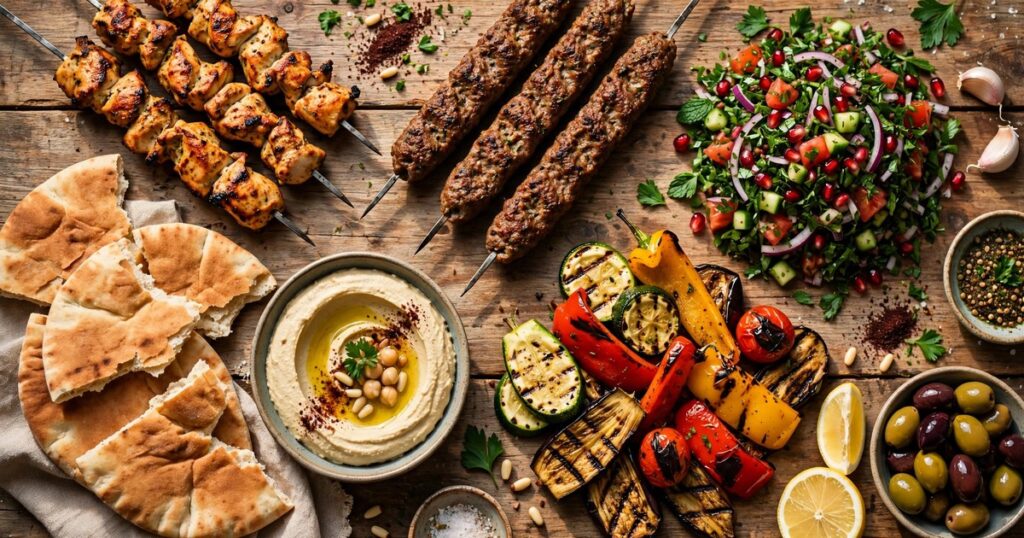
San Francisco is a city that takes eating seriously — arguably too seriously. Every block in the Mission smells like somebody’s grandmother’s cooking, every alley in Chinatown has a line spilling onto the sidewalk, and locals will argue for hours about the best burrito. The question I hear from Muslim travelers isn’t whether the food is good (it is). It’s whether any of it is halal. Fair question — and the honest answer is better than most people expect.
SF doesn’t have the sheer halal density of Dearborn or Jackson Heights, but what it has is genuinely exciting: halal hand-pulled Chinese noodles in Chinatown, a legendary Arab bakery in the Mission, Pakistani kabob houses in the Tenderloin, Afghan kebabs in the Richmond, and a halal Filipino-Mexican food truck that locals queue up for. You can eat your way across half of Asia and the Middle East in seven square miles. You just need to know where to look — and this guide is exactly that map.
Quick Answer: The best halal food in San Francisco clusters in the Tenderloin (Pakistani kabobs), the Mission (Reem’s Arab bakery, halal trucks), the Richmond (Afghan kebabs), and near Chinatown (halal Chinese at Old Mandarin Islamic). Expect dinner plates in the $15–$30 range, budget gems under $20, and quieter halal options near tourist hubs like Union Square and Fisherman’s Wharf.
Where Can You Find Halal Food in San Francisco?
Here’s the short version of the geography: halal dining in SF is concentrated in a handful of neighborhoods, and they all sit surprisingly close together. The city is only 49 square miles, so “far” in San Francisco means a 15-minute ride. Learn the pockets, and you’re never more than a short trip from a good halal meal.
The Tenderloin is the single most important neighborhood for halal food in the city. It’s the dense, working-class grid just west of Union Square, home to a large South Asian and Middle Eastern community, and it hosts a cluster of Pakistani and Indian halal restaurants within a few blocks of each other. If you’re staying near Union Square, this is your walkable halal zone.
The Mission District brings the more artisanal side of the scene: an acclaimed Arab bakery, halal food trucks parked on busy corners, and a few fusion experiments. The Richmond District (Inner and Outer Richmond along Geary and Clement) leans Afghan, Persian, and Chinese — the western half of the city quietly has some of the best kebabs around.
Downtown proper, Union Square, SoMa, and the Financial District are the weakest zones — office-lunch territory with very few halal kitchens. And Fisherman’s Wharf? We’ll be honest about it below: beautiful views, almost no halal food. Plan accordingly and you’ll never go hungry in this city.
Which San Francisco Neighborhoods Have the Most Halal Restaurants?
If you only have a few days, eat in these four zones and you’ll cover the highlights:
- Tenderloin — the halal workhorse neighborhood. Pakistani kabob houses, Indian curries, a legendary budget spot or two, all within walking distance of Union Square. This is where dinner costs the least and hits the hardest.
- Mission District — the soul of the scene. An Arab bakery that food writers gush about, halal food trucks, and some of the city’s most creative Muslim-owned kitchens.
- Richmond District — the kebab corridor. Afghan and Persian grills along Geary Boulevard, plus halal Chinese options nearby. Less touristy, locals-approved.
- Polk Gulch / Chinatown edge — halal Chinese hand-pulled noodles and a handful of Pakistani/Indian spots sitting between the Tenderloin and North Beach.
Worth knowing: several well-known halal names have Bay Area roots beyond SF proper. Reem’s California, for instance, has locations in the Mission and across the bay in Oakland. And if your trip takes you down the Peninsula, Palo Alto’s Zareen’s (Pakistani-Indian, halal) is a local institution — easy BART-plus-rideshare territory if you have a free evening.
What Are the Best Halal Restaurants in San Francisco?
These are the spots I’d send a visiting friend to first. Hours, menus, and even halal policies can shift in SF’s brutal restaurant economy, so call ahead or check the restaurant’s current site before making a special trip — the one-line descriptions below reflect each spot’s reputation as of 2026.
Old Mandarin Islamic Restaurant — halal Chinese
This is the headline pick, and it only exists in a handful of American cities. Old Mandarin Islamic Restaurant, near Chinatown, serves Chinese food made with halal ingredients — think hand-pulled noodles, cumin lamb, dumplings, and dry-fried dishes you almost never find in a halal context. For Muslim travelers who’ve been watching friends eat great Chinese food for years, this place is a genuine delight.
Reem’s California — Arab bakery (Mission & Oakland)
Chef Reem Assil’s bakery put Palestinian-Syrian food on the national map, and the mana’eesh — wood-fired flatbreads with za’atar, akkawi cheese, or labneh — are worth planning a morning around. It’s the kind of place where the food tastes like somebody’s childhood memories, because it literally is. Grab a mana’eesh, a side of muhammara, and thank me later.
Lahore Karahi — Pakistani (Tenderloin)
A Tenderloin institution for proper Pakistani food: karahi chicken sizzling in its own masala, seekh kabobs off the grill, daal fry, and naan that comes out blistered and perfect. The room is unpretentious, the portions are generous, and the prices are some of the friendliest in central SF.
Pakwan — Pakistani/Indian (Tenderloin & Mission)
If there’s a “halal food in San Francisco” starter pack, Pakwan is in it. Cheap, filling, fast: curries, kabobs, biryani-adjacent rice plates, and the kind of tandoori chicken that costs double anywhere else in the city. This is where you eat when you want to spend under $20 and leave stuffed.
Shalimar — Pakistani/Indian (Polk area)
Another beloved budget powerhouse on the Tenderloin-Polk border. Shalimar’s mix of Pakistani and Indian dishes — karahi, nihari-style preparations, grilled meats — has fed generations of SF’s South Asian community and plenty of late-night crowds. Expect no-frills dining and big flavor.
De Afghanan Kabob House — Afghan (Richmond)
Afghan food is kabob royalty, and this Geary Boulevard spot is where locals go for it: tender lamb and chicken kabobs over rice, mantu dumplings, and aushak. The Richmond setting is unglamorous; the food is the opposite.
Senor Sisig — Filipino-Mexican halal food truck
SF’s most famous halal-adjacent truck story: Filipino flavors in Mexican formats — sisig burritos, tocino tacos, garlic rice bowls — served from trucks and brick-and-mortar spots around the city. The operation has publicly emphasized halal-certified proteins over the years; still, always confirm at the window before ordering, since truck menus rotate.
| Neighborhood | Restaurant | Cuisine | Price | Why go |
|---|---|---|---|---|
| Chinatown edge | Old Mandarin Islamic Restaurant | Chinese (halal) | $$ | Rare halal Chinese — hand-pulled noodles, cumin lamb |
| Mission | Reem’s California | Arab bakery | $$ | Wood-fired mana’eesh; breakfast of champions |
| Tenderloin | Lahore Karahi | Pakistani | $ | Proper karahi + seekh kabobs, best value downtown |
| Tenderloin / Mission | Pakwan | Pakistani / Indian | $ | Under-$20 feasts; local legend |
| Polk / Tenderloin | Shalimar | Pakistani / Indian | $ | No-frills curries and grills |
| Richmond | De Afghanan Kabob House | Afghan | $$ | Top-tier kabobs, mantu, aushak |
| Truck / citywide | Senor Sisig | Filipino-Mexican | $ | Sisig burritos on the go |
A note on Kabab & Curry: it’s another name you’ll see on SF halal lists, and it has its fans for Pakistani grills. Verify its current halal status and hours before going — SF turnover is real, and listings go stale fast.
For more restaurant roundups in the same series, see our San Diego halal food guide for the southern California side of the coast, and our NYC halal restaurants guide if you’re comparing coasts.
Where Can You Find Halal Food Trucks and Carts in SF?
San Francisco does food trucks extremely well — but the halal truck scene is thinner than the restaurant scene, and it works differently than New York’s famous halal cart rows. There is no single street lined with halal carts here. Instead, halal-friendly trucks rotate through events and gatherings.
Senor Sisig is the name to track first — its trucks and storefronts serve the Filipino-Mexican fusion described above, and halal-certified proteins have been part of its story. Follow the truck schedule on the day you plan to go; trucks move, and the menu varies by stop.
Beyond that, your best truck-and-event strategy is gatherings: Off the Grid (the big food-truck market at Fort Mason on Fridays) usually has several vendors offering halal or halal-friendly options — look for signage, and ask directly. The Mission’s weekend street-food pop-ups and Ramadan-night markets also surface halal vendors seasonally. If you’re visiting during Ramadan, it’s genuinely worth checking whether a night market is running — SF’s Muslim community turns out in force, and the food is spectacular.
Practical rule for any truck or cart: ask before you order. “Is everything halal, or just the chicken?” takes five seconds and prevents a miserable surprise. Reputable vendors answer happily; the ones who dodge the question are telling you something.
Are There Halal Options Near Fisherman’s Wharf and Union Square?
Let’s be direct, because tourists need this: Fisherman’s Wharf has almost no halal food. It’s clam chowder bread bowls and crab stands — delicious for everyone else, a dead zone for halal diners. Don’t plan a halal dinner there. Eat before you go for the sea lions, or grab delivery to your hotel after.
Union Square is a different story — not because the square itself is full of halal spots (it isn’t), but because the Tenderloin starts a few blocks west. Shalimar, Lahore Karahi, Pakwan, and Halal Restaurant are all an easy 10–15 minute walk from the square, heading down toward Jones and Turk. That walk is the single most useful halal hack in the city: stay near Union Square for the shopping and transit, walk west for dinner.
SoMa and the Financial District are similarly thin — a couple of halal-adjacent Mediterranean chains come and go, but nothing I’d build a trip around. The move is always the same: lunch wherever, then point yourself at the Tenderloin or Mission for the meal that matters.
What Should You Know About Halal Certification in the Bay Area?
This is the part every halal guide should include and most skip. In the Bay Area, halal assurance usually rests on Muslim ownership and community reputation rather than a single city-wide certifier. That’s not a red flag — it’s how the market works here. The Pakistani, Afghan, Arab, and Turkish restaurants listed above are run by Muslim families whose entire customer base would vanish if their halal sourcing slipped. Their reputation is the certification.
A few things worth knowing anyway:
- Zabiha vs. halal: some diners specifically want zabiha (hand-slaughtered) meat. Many SF halal restaurants source from halal suppliers but may not specify zabiha. If it matters to you, ask: “Is your chicken zabiha?” Staff at the Tenderloin spots answer this question daily.
- Alcohol on the menu: a restaurant can be halal-sourced and still serve alcohol. Some diners care, some don’t. The budget Pakistani spots are typically alcohol-free; fancier fusion places may not be.
- “Halal options” ≠ halal restaurant: plenty of mainstream SF restaurants offer “halal chicken available on request” — worth taking at face value for casual meals, but verify sourcing if you’re strict. Cross-contamination is a real thing in shared kitchens.
- Apps help: community apps and sites like Zabihah maintain crowd-sourced SF halal listings with recent reviews — a good cross-check before trying somewhere new.
When in doubt, the counter question — “Is everything on the menu halal?” — works in every language and every neighborhood. SF’s halal vendors hear it constantly and respect it.
How Much Does Halal Food Cost in San Francisco?
San Francisco is one of America’s most expensive cities, and the halal scene reflects that — but it’s also where the best bargains hide, because the Tenderloin’s South Asian restaurants price for the community, not for tourists.
- $ (under $20): Pakwan, Shalimar, and Lahore Karahi plates — curries, kabobs, biryani-style rice dishes with naan. This is the budget sweet spot and it’s genuinely excellent food, not “good for the price” food.
- $$ ($20–$35): Old Mandarin Islamic, Reem’s with extras, De Afghanan kabob platters, sit-down Afghan/Persian dinners in the Richmond. Most proper restaurant dinners land here.
- $$$ ($35+): upscale fusion or special-occasion spots. Honestly, SF’s halal strength is the $ and $$ tiers — if you want white-tablecloth halal, the options thin out, and that’s what our halal steakhouse guide is for when you’re in a steak mood.
Money-saving moves that actually work: eat your big meal at lunch (several spots do lunch pricing), share kabob platters (built for two, priced like one), and remember that a $14 Pakwan plate in the Tenderloin out-eats a $30 tourist-trap meal at the Wharf. SF rewards diners who walk a few blocks past the postcard zones.
Want more city guides in this series? Browse our other food guides — new restaurant and food-travel guides land several times a week.
Halal Food in San Francisco: Frequently Asked Questions
Is there halal food in San Francisco?
Yes — and more of it than most visitors expect. The Tenderloin has a dense cluster of Pakistani and Indian halal restaurants, the Mission has an acclaimed Arab bakery and halal food trucks, the Richmond has Afghan kebab houses, and Chinatown’s edge has halal Chinese. You won’t find halal on every corner like in some East Coast cities, but a well-planned trip eats very well.
What is the best halal restaurant in San Francisco?
It depends on your craving. For a once-in-a-trip experience, Old Mandarin Islamic Restaurant (halal Chinese near Chinatown) and Reem’s California (Arab bakery in the Mission) are the two names locals mention first. For everyday eating, the Tenderloin’s Lahore Karahi, Pakwan, and Shalimar deliver outstanding Pakistani food at budget prices.
Are halal restaurants expensive in San Francisco?
They can be, but the best ones aren’t. Budget Pakistani spots in the Tenderloin serve full plates under $20, most sit-down halal dinners run $20–$35 per person, and only upscale fusion pushes past that. The trick is eating where the community eats — the Tenderloin and Richmond — rather than in the tourist zones.
Is Senor Sisig halal?
Senor Sisig has publicly emphasized halal-certified proteins in its Filipino-Mexican truck and restaurant food, which is why it appears on SF halal lists. That said, menus and suppliers can change, and trucks rotate — confirm halal status at the window on the day you visit.
Where can I find halal food near Union Square?
Walk 10–15 minutes west into the Tenderloin. Shalimar, Lahore Karahi, Pakwan, and Halal Restaurant are all clustered there, serving Pakistani and Indian halal food at the city’s best prices. It’s the single most useful halal walk in San Francisco.
Is the halal food in San Francisco zabiha?
Some restaurants specify zabiha (hand-slaughtered) meat and others simply source halal without specifying. If zabiha matters to you, ask directly — “Is your chicken zabiha?” — since practices vary by restaurant and even by dish.
Are there halal options at Fisherman’s Wharf?
Very few. The Wharf is built around seafood shacks and chowder stands with almost no halal kitchens. Eat before you visit for the sights, or plan dinner in the Tenderloin or Mission afterward. Delivery apps can also bridge the gap if you’re staying in the area.
San Francisco rewards halal travelers who do a little homework — and now you’ve done it. Pick your neighborhood, walk in hungry, and ask questions at the counter. The city will take care of the rest.
I’m Lila Spoonbelle, your host on this flavorful ride through food, fun, and fearless puns. Let’s turn every bite into a burst of laughter!