
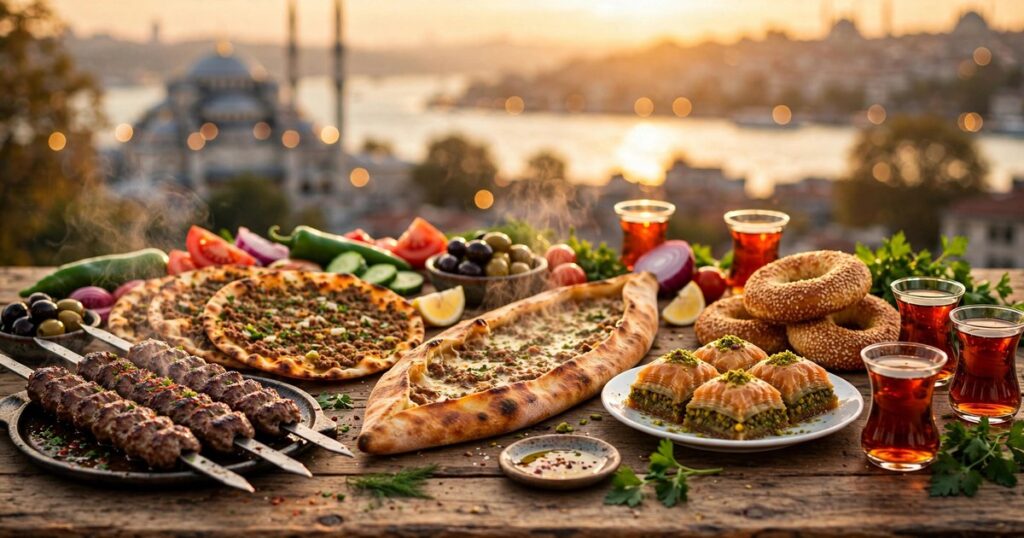
Istanbul Food Guide: What to Eat & Where in 2026
Quick Answer
Istanbul is one of the world’s great eating cities. Eat your way from sizzling Adana kebabs and wood-fired pide to sesame simit on the ferry, syrup-soaked baklava, and a proper Turkish breakfast. Base yourself in Karaköy or Kadıköy, graze the street food in Eminönü, and expect street snacks from ₺30–200, local meals around ₺300–600, and mid-range dinners near ₺1,000 per person in 2026.
Few cities reward a hungry traveler like Istanbul. This is a city that straddles two continents, and its food does the same — Central Asian kebabs, Mediterranean meze, Balkan pastries, and Ottoman palace desserts all share the same table. Istanbulites take eating seriously: lunch is a proper sit-down affair, dinner stretches past midnight, and a simple tea break can turn into a two-hour conversation. You will not find a “foodie neighborhood” here because the entire city is one.
This guide is built for the first-time visitor who wants to eat like they mean it: the dishes you must not miss, the neighborhoods where the locals actually eat, honest 2026 prices, and a day-by-day plan. No paid placements — just a food lover’s map of Istanbul, in the same spirit as our halal food guide to Tokyo and Seoul.
Why Is Istanbul a Food Lover’s Dream Destination?
Centuries of empires on one plate
Istanbul has been the capital of two empires, and both left their kitchens behind. Ottoman palace chefs perfected layered pastries, slow-cooked stews, and syrupy desserts; the city’s position on the Silk Road pulled in spices, techniques, and migrants from Central Asia, the Balkans, the Caucasus, and the Middle East. The result is a cuisine with real depth — not a handful of famous dishes, but an entire system of eating, from breakfast spreads to midnight soup runs.
Every meal has its own culture
In Istanbul, breakfast (kahvaltı) is a multi-plate event, lunch means the lokanta (a traditional eatery with trays of home-style dishes), the afternoon runs on tea and simit, and dinner might be kebabs, meze with rakı, or grilled fish by the Bosphorus. Even the late-night scene has its own logic: soup shops and kokoreç grills that only come alive after midnight. Learn the rhythm and you will eat twice as well.
It is still remarkably affordable
Turkey’s inflation has pushed prices up sharply in recent years — a simit cost ₺25 in early 2026 and hit ₺30 by September — but Istanbul remains one of the cheapest great food cities in the world. A satisfying local lunch still costs less than a sandwich back home, and even a proper dinner with meze rarely breaks the bank. Your money goes further here than in Paris, Tokyo, or New York.
What Should You Eat in Istanbul?
Start with these essentials. If you eat nothing else, eat these.
Kebabs: Adana, Urfa, and döner
Forget everything you know about “kebab” as fast food. Adana kebab — hand-minced lamb with red pepper, grilled on long skewers over charcoal — is smoky, juicy, and served with bulgur, grilled tomato, and flatbread. Urfa is its milder sibling. And döner, shaved off the vertical spit, reaches its highest form here: order a dürüm (wrap) from a busy shop at lunch and thank us later. A kebab plate at a local spot runs ₺420–540; a dürüm ₺270–390.
Lahmacun and pide
Lahmacun — a thin, crisp flatbread topped with spiced minced meat — is Istanbul’s answer to pizza: squeeze lemon over it, scatter parsley, roll it up, and eat with your hands (locals order two; one is never enough). Pide is its boat-shaped, wood-oven-baked cousin, most famously kıymalı (minced lamb) or kaşarlı (cheese). Expect ₺135–195 per lahmacun and ₺210–360 for a pide at a neighborhood spot.
Lokanta classics: the home-style lunch
A lokanta is a traditional eatery where the day’s dishes sit in trays behind glass — point at what looks good. This is where you meet the soul of Turkish home cooking: kuru fasulye (white beans in tomato sauce), karnıyarık (stuffed eggplant), tas kebabı (slow-braised beef), mercimek çorbası (red lentil soup), and rice pilaf that puts all other rice to shame. A full lokanta lunch plate costs roughly ₺270–390.
Balık ekmek: fish sandwich by the water
At Eminönü, right by the Galata Bridge, boats grill mackerel and stuff it into bread with lettuce and onion — balık ekmek, eaten standing up with the seagulls and the ferries. It is simple, smoky, and perfect. Eat it there, not anywhere else; the setting is half the dish.
Kokoreç and midye dolma: the adventurous bites
Kokoreç — seasoned lamb intestines grilled on a horizontal spit, chopped with tomato and spices, served in bread — is Istanbul’s beloved late-night street food. It sounds intimidating and tastes incredible. Midye dolma (mussels stuffed with spiced rice, sold from trays with a squeeze of lemon) are the city’s favorite seaside snack: eat a dozen standing at the cart, one lemon wedge at a time.
Where Should You Eat in Istanbul?
Istanbul is enormous. Anchor your eating around these neighborhoods instead of crossing the Bosphorus for every meal.
Karaköy: the modern food hub
Once a gritty port district, Karaköy is now Istanbul’s trendiest eating neighborhood — third-wave coffee, creative Turkish restaurants, and some of the city’s best bakeries, all a short walk from the Galata Bridge. It is an ideal base: central, walkable, and full of options from breakfast to late night.
Kadıköy: the Asian side’s food capital
Take the ferry across the Bosphorus (the ride itself is worth it) and you land in Kadıköy, where locals outnumber tourists and the eating is superb. The market streets behind the ferry terminal are packed with pickle shops, dessert houses, fish restaurants, and buzzing meyhanes. Come hungry, stay late — this is where Istanbulites go to eat on their nights off.
Eminönü and the Grand Bazaar area
The old city’s commercial heart runs on street food and working lunches. This is balık ekmek territory, plus corn and chestnut carts, lokantas feeding bazaar shopkeepers, and the Spice Bazaar for edible souvenirs. Eat here at lunch, when everything is freshest and the crowds are local.
Beyoğlu and Istiklal Street
The historic Pera district behind Taksim holds classic meyhanes (taverns serving meze), old-school kebab houses, and the famous Çiçek Pasajı arcade. It is touristy in parts — walk two streets off Istiklal and prices drop while quality rises. The side streets of Asmalımescit and Nevizade are the sweet spot.
Ortaköy and the Bosphorus
For the postcard meal — grilled fish or kebabs with the Bosphorus Bridge glittering outside — head to Ortaköy or the waterfront restaurants of Bebek and Arnavutköy. You will pay more for the view, but one sunset dinner on the water is worth the splurge. Ortaköy’s famous kumpir (loaded baked potato) stalls are the budget-friendly consolation.
What About Istanbul Street Food?
Istanbul’s streets are a second kitchen. These are the snacks to hunt down between meals:
- Simit: the sesame-crusted bread ring — Istanbul’s unofficial emblem. Buy it from the red carts for ₺30 (the 2026 citywide price), ideally with a wedge of cheese from a corner shop.
- Roasted corn and chestnuts: the winter carts on every busy corner; smoky, cheap, and warming.
- Midye dolma: stuffed mussels with lemon, sold from trays at night — the rule is you never eat just one.
- Kumpir: a giant baked potato mashed with butter and cheese, then loaded with your choice of a dozen toppings, Ortaköy-style.
- Kokoreç: the late-night grilled sandwich described above — find the busiest grill and join the queue.
- Turkish ice cream (dondurma): stretchy, chewy, served with theatrical flair by vendors in tourist areas — fun once, then find the serious ice cream shops in Kadıköy.
Why Should You Plan a Morning Around Turkish Breakfast?
A proper Turkish kahvaltı is not breakfast — it is an event. The spread arrives in waves: white cheese and kaşar, olives, tomatoes, cucumbers, honey with kaymak (clotted cream), menemen (eggs scrambled with tomatoes and peppers), börek (flaky pastry), fresh bread, and endless small glasses of çay. Plan 90 minutes, arrive hungry, and order the “serpme kahvaltı” (the full spread) at least once. Great breakfast neighborhoods include Karaköy, Kadıköy, and the Bosphorus-side villages like Bebek. Budget roughly ₺400–700 per person for the full spread at a good spot — and skip dinner plans, because you will not need them.
Which Sweets and Drinks Should You Try?
Baklava and künefe
Baklava in Istanbul — paper-thin layers of pastry, crushed pistachios, light syrup — is the real thing, a world away from the dense versions abroad. The classic move: a plate of pistachio baklava with a glass of çay. Künefe, its hot counterpart, is shredded pastry filled with melted cheese, served bubbling with syrup and crushed pistachio. Eat it immediately, while the cheese still stretches.
Turkish delight (lokum) and more
Beyond the tourist-box cliché, proper lokum — pomegranate, mastic, or rose with real pistachio — is delicate and worth seeking at the old confectioners near the Spice Bazaar. Also try sütlaç (baked rice pudding with a caramelized top) and aşure (the ancient “Noah’s pudding” of grains, fruits, and nuts).
Çay, Turkish coffee, and ayran
Çay — strong black tea in a tulip glass — is the fuel of Istanbul: offered in shops, sipped on ferries, drunk at every hour. A glass costs ₺45–75 at a local tea house. Turkish coffee, thick and unfiltered, is for slowing down; the grounds at the bottom of your cup are traditionally read for fortunes. With kebabs, drink ayran, the salted yogurt drink (₺105–150) — it is the perfect cooling counterpoint to charcoal-grilled meat.
How Much Does Food Cost in Istanbul in 2026?
Turkey’s inflation means prices move fast — treat these as honest 2026 ranges, and remember tourist zones like Sultanahmet can charge double the local price. If your bill looks twice these numbers, walk two streets over.
| What | Local spot | Tourist area |
|---|---|---|
| Simit (street) | ₺30 | ₺30 |
| Çay (tea house) | ₺45–75 | ₺90–150 |
| Lahmacun (each) | ₺135–195 | ₺250+ |
| Döner dürüm | ₺270–390 | ₺450+ |
| Pide (whole) | ₺210–360 | ₺450–600 |
| Lokanta lunch plate | ₺270–390 | ₺540–750 |
| Kebab plate | ₺420–540 | ₺750–1,050 |
| Meze (per dish) | ₺180–330 | ₺360–540 |
| Full Turkish breakfast (per person) | ₺400–700 | ₺800+ |
| Mid-range dinner (per person) | ₺700–1,000 | ₺1,200–1,800 |
Daily budget rule of thumb: street-food grazing all day runs under ₺800; a comfortable day with a lokanta lunch, snacks, and a proper dinner lands around ₺1,500–2,000 per person.
Is Istanbul Food Halal?
Yes — Istanbul is one of the easiest major cities in the world for halal eating, because Turkey is a Muslim-majority country. The overwhelming majority of restaurants serve halal meat as standard; pork is rare outside a few specialty shops, and alcohol is simply absent from most traditional eateries (meyhanes and upscale restaurants are the exception — they will say so clearly). You do not need to ask, check certificates, or decode labels the way you might in Tokyo or Seoul. For Muslim travelers, Istanbul is the rare food capital where the entire city is the halal restaurant.
3-Day Istanbul Food Itinerary
Day 1 — Old city classics
Morning: serpme kahvaltı near Sultanahmet. Midday: Eminönü for balık ekmek by the water, then graze the Spice Bazaar (taste before you buy). Lunch: a lokanta behind the Grand Bazaar. Afternoon: baklava and çay. Dinner: Adana kebab in a classic ocakbaşı (grill house) — sit near the charcoal for the full experience.
Day 2 — Cross to the Asian side
Morning: ferry to Kadıköy with simit and çay on deck. Late morning: explore the market streets — pickle shops, cheese stalls, dessert houses. Lunch: pide at a wood-oven spot. Afternoon: Turkish coffee in a historic kahvehane. Evening: meze and grilled fish in Kadıköy’s meyhane streets, then midye dolma from a night cart.
Day 3 — Modern Istanbul
Morning: menemen and börek in Karaköy. Midday: lahmacun crawl (two per shop, judge accordingly). Afternoon: Istiklal Street and the side streets of Asmalımescit for tea and people-watching. Sunset: the Bosphorus splurge — dinner in Ortaköy or Bebek with the bridge lights. Nightcap: kokoreç after midnight, like a local.
Practical Tips for Eating in Istanbul
- Water: tap water is technically treated but locals drink bottled — do the same; it is cheap everywhere.
- Tipping: 5–10% at sit-down restaurants is customary; not expected at street carts or lokantas (though rounding up is appreciated).
- Bread is free: most restaurants bring bread automatically — it is part of the meal, not a charge.
- Service charge: some tourist-area restaurants add it to the bill; check before tipping twice.
- Ramadan: visiting during Ramadan? Most restaurants stay open and many offer special iftar menus at sunset — a wonderful experience, but book ahead.
- Reservations: not needed for lokantas or street food; wise for popular ocakbaşıs and Bosphorus restaurants on weekends.
- Allergies: nuts (especially pistachio), gluten, and dairy are everywhere — learn the Turkish words (fındık/fıstık for nuts, gluten, süt for milk) if they matter to you.
Frequently Asked Questions
What food is Istanbul famous for?
Kebabs (Adana, Urfa, döner), lahmacun and pide, baklava, Turkish breakfast (kahvaltı), simit, balık ekmek (fish sandwich), and meze. The city’s Ottoman heritage means exceptional pastries, slow-cooked stews, and syrupy desserts alongside the grilled meats.
Is Istanbul expensive for food?
No — it is one of the cheapest great food cities in the world. Street snacks run ₺30–200, a local lunch costs ₺270–540, and a proper mid-range dinner is around ₺700–1,000 per person (2026 prices). Tourist zones charge roughly double, so eat where locals eat.
Is street food in Istanbul safe to eat?
Generally yes. Stick to busy vendors with high turnover — a packed kokoreç grill or midye cart is self-certifying. As everywhere, use common sense with anything sitting out in summer heat.
Where do locals eat in Istanbul?
Kadıköy on the Asian side, the back streets of Beyoğlu, neighborhood lokantas, and ocakbaşı grill houses. The rule of thumb: if the menu is in Turkish only and the room is full of locals, you have found the right place.
What is a traditional Turkish breakfast?
Kahvaltı: a spread of cheeses, olives, tomatoes, cucumbers, honey with kaymak (clotted cream), menemen (eggs with tomato and pepper), börek, and fresh bread, with endless çay. Order the full “serpme kahvaltı” and plan 90 minutes.
Do I need reservations at Istanbul restaurants?
Not for street food, lokantas, or casual kebab shops. Book ahead for popular ocakbaşıs, Bosphorus-view restaurants, and anywhere during Ramadan evenings or weekends.
Eat Your Way Across Two Continents
Istanbul does not do food halfway. It feeds you at 7 a.m. with a breakfast spread the size of a table, at noon with a lokanta tray of your grandmother’s imaginary recipes, at midnight with a kokoreç grill glowing on a side street — and in between, with tea, simit, baklava, and the Bosphorus glittering behind it all. Come hungry, walk everywhere, and let the city feed you. For more eating around the world, browse our Travel Guides, from Tokyo to Seoul.
I’m Lila Spoonbelle, your host on this flavorful ride through food, fun, and fearless puns. Let’s turn every bite into a burst of laughter!