
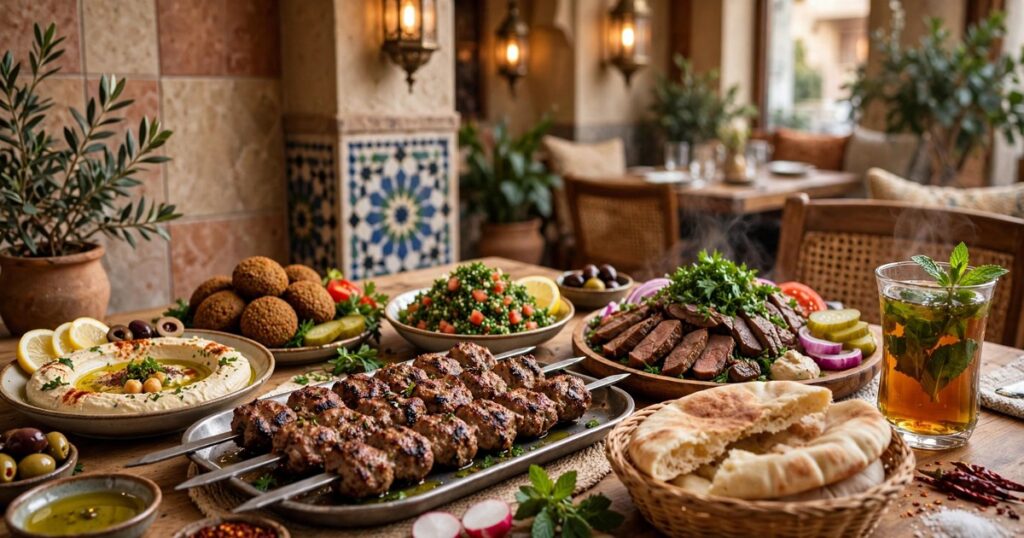
If you are searching for halal food in Dearborn, you have picked the right city. Dearborn, Michigan, is home to one of the largest Arab-American communities in the United States, and its food scene shows it. Along Warren Avenue and Michigan Avenue, family-run Lebanese, Yemeni, Iraqi, Palestinian, and Bangladeshi restaurants serve halal dishes every single day — not as a special menu, but as the normal way of cooking.
That is what makes Dearborn different from most American cities. You do not have to hunt for a halal symbol, call ahead to check the meat supplier, or settle for one lonely halal option on a long menu. Here, halal is the default, the portions are generous, the bread is baked fresh, and the prices are usually far kinder than in New York, Chicago, or Los Angeles. Whether you are visiting for a weekend, passing through on a road trip, or planning a full food tour, this guide will help you eat very well.
Quick Answer: Dearborn is one of the best cities in America for halal food, thanks to its large Arab-American community. Most restaurants along Warren Avenue and Michigan Avenue are fully halal by default. Start with shawarma and falafel for a quick lunch, try mansaf or Yemeni mandi for a family dinner, and finish with knafeh and Arabic coffee.
Why Is Dearborn Famous for Halal Food?
Dearborn’s reputation did not appear overnight. Arab immigrants began settling in the city more than a century ago, many of them drawn by jobs in the auto industry. Over generations, they built bakeries, butcher shops, grocery stores, and restaurants that served the food they grew up with. Today, the city has one of the highest concentrations of Middle Eastern restaurants anywhere in the United States.
The result is a food scene with real depth. You can find Lebanese mezze, Yemeni slow-cooked lamb, Iraqi masgouf-style fish dishes, Palestinian musakhan, Egyptian koshari, and South Asian curries — often within a few blocks of each other. Because competition is fierce and customers know good food, quality stays high and prices stay honest.
Another advantage is trust. In Dearborn, halal certification is rarely a question mark. Many restaurants display their halal status clearly, butchers sell zabiha meat as standard, and staff are used to answering questions about ingredients, preparation, and cross-contamination. If you are ever unsure, just ask — in this city, it is a normal question, not an awkward one.
Where Should You Start Eating in Dearborn?
If this is your first visit, start on Warren Avenue. This is Dearborn’s main food corridor, lined with bakeries, sweet shops, and restaurants that have been feeding families for decades. Michigan Avenue is the second key strip, with a mix of sit-down restaurants, cafes, and late-night spots.
For a first-timer’s day, keep it simple:
- Lunch: A shawarma wrap or falafel plate from a busy Warren Avenue counter.
- Afternoon snack: Fresh pita and hummus from a bakery, or a slice of knafeh from a sweet shop.
- Dinner: A shared family-style meal — mixed grill, mansaf, or mandi — at a sit-down restaurant.
- Dessert: Baklava, knafeh, or Arabic ice cream, followed by mint tea or Arabic coffee.
Eating this way lets you taste the range of the city without over-planning. Most restaurants are casual, family-friendly, and happy to explain the menu to newcomers.
What Are the Best Halal Restaurants in Dearborn?
The restaurants below are the kinds of places locals recommend again and again. Menus change, so treat this as a starting shortlist rather than a fixed ranking — and always check current hours before you go.
1. Classic Lebanese Restaurants on Warren Avenue
Lebanese food is Dearborn’s backbone. Expect generous mezze platters with hummus, baba ghanoush, tabbouleh, fattoush, and stuffed grape leaves, followed by shish tawook, kafta, and mixed grills cooked over charcoal. The pita is usually baked in-house and arrives warm, which makes even a simple hummus plate feel special.
These restaurants are ideal for groups: order several mezze to share, add a mixed grill for the table, and finish with baklava. Prices are typically moderate, portions are large, and the atmosphere is relaxed and family-oriented.
2. Yemeni Restaurants for Mandi and Slow-Cooked Lamb
Yemeni restaurants are one of Dearborn’s great discoveries for visitors. The signature dish is mandi — fragrant rice cooked with slow-roasted lamb or chicken, served with a light tomato sauce and sometimes a spicy chutney. Fahsa, a bubbling lamb stew, and saltah are other dishes worth trying if you like hearty, warming food.
Many Yemeni restaurants offer floor seating areas alongside regular tables, which is part of the experience. Come hungry: mandi portions are famously generous, and a family platter can easily feed four.
3. Shawarma and Falafel Counters for a Quick Lunch
Dearborn does fast halal food better than almost anywhere in America. Shawarma here is sliced fresh off the spit, wrapped with pickles, garlic sauce, and fries, and served in bread that holds up to the fillings. Falafel is usually made to order — crisp outside, green and herby inside — and served in a wrap or as a plate with salad and tahini.
These counters are perfect for lunch on a busy day, for travellers passing through, or for anyone who wants a great meal for a modest price. If a counter has a queue of locals at lunchtime, that is usually the best sign of all.
4. Iraqi and Palestinian Specialities Worth Seeking Out
Beyond the Lebanese and Yemeni favourites, look for Iraqi dishes like masgouf (grilled fish), dolma, and hearty stews served with rice, and Palestinian dishes like musakhan (roast chicken with sumac onions on flatbread) and maqluba (upside-down rice, vegetables, and meat, flipped at the table). These dishes tell the story of the region’s home cooking, and they are often the items regulars order without even looking at the menu.
5. Bakeries, Sweet Shops, and Coffee Houses
No Dearborn food trip is complete without the bakeries. Fresh pita, manakish topped with za’atar or cheese, and spinach pies come out of the ovens all day. Sweet shops sell knafeh — shredded pastry with sweet cheese, soaked in syrup — alongside baklava, ma’amoul, and Arabic ice cream.
Coffee houses are the social heart of the city. Arabic coffee, Turkish coffee, mint tea, and fresh juices are served alongside shisha in some lounges and simple table seating in others. It is a good place to rest between meals, plan your next stop, and watch the neighbourhood go by.
What Should You Order If You Have Never Tried Middle Eastern Food?
New to this cuisine? Start with the dishes that are hardest to get wrong:
- Hummus and warm pita: Creamy chickpea dip with olive oil — simple, fresh, and universally loved.
- Chicken shawarma wrap: Marinated chicken, garlic sauce, pickles, and fries in a wrap.
- Falafel plate: Crisp chickpea patties with salad, tahini, and rice or pita.
- Mixed grill: A sampler of shish tawook, kafta, and lamb — ideal for sharing.
- Mansaf: Jordanian lamb and rice in a tangy yoghurt sauce, traditionally eaten from a shared platter.
- Knafeh: Warm shredded pastry with cheese and syrup — order one to share, then order another.
If you eat vegetarian or vegan, Dearborn is generous: falafel, hummus, baba ghanoush, tabbouleh, fattoush, stuffed grape leaves, and lentil soup are widely available, and many restaurants can build a full meat-free meal without fuss.
How Much Does Halal Food in Dearborn Cost?
Dearborn is one of the most affordable halal food cities in America. A shawarma wrap or falafel plate at a counter often costs about the same as a fast-food meal elsewhere. A sit-down mezze and grill dinner for two is usually very reasonable by big-city standards, and family platters offer the best value of all.
| Meal type | Typical price per person | Best for |
|---|---|---|
| Shawarma or falafel counter | Budget | Quick lunch, solo travellers |
| Bakery snack (manakish, pita, sweets) | Budget | Breakfast, afternoon snack |
| Casual sit-down (mezze + grill) | Moderate | Families, first-time visitors |
| Family platter (mandi, mixed grill) | Moderate, shared | Groups of 4 or more |
| Dessert and coffee house stop | Budget | Evening wind-down |
Prices vary by restaurant and portion size, so use this table as a planning guide rather than a promise. Tipping follows normal American restaurant practice: around 15–20 percent for sit-down service.
Is All Food in Dearborn Halal?
No — not every restaurant in Dearborn is halal, and that is worth saying clearly. The city also has American diners, pizza places, and international restaurants that are not halal. But the share of halal restaurants is exceptionally high, especially along Warren Avenue, and halal status is usually easy to confirm.
To be safe, follow three simple habits:
- Look for a halal sign or certificate in the window or on the menu.
- Ask staff directly: “Is all your meat halal?” — in Dearborn, this is an everyday question.
- When in doubt, choose the busy Middle Eastern restaurants and butcher-backed eateries where halal is the core of the business.
If you keep strictly zabiha, it is worth asking that exact word too, since some diners use “halal” loosely. Most Dearborn Middle Eastern restaurants will answer plainly and happily.
Where Can You Find Prayer Spaces and Halal Groceries?
Dearborn is unusually well set up for Muslim travellers. The Islamic Center of America and several other mosques are in the city, and many restaurants are within a short drive of prayer facilities. If you are visiting during Ramadan, expect special evening menus, extended hours, and a lively atmosphere after iftar.
For self-catering, halal butchers and Middle Eastern grocery stores sell zabiha meat, fresh pita, spices, olives, dates, and sweets. Stocking up here is a smart move if you are driving onward — good halal groceries get much harder to find once you leave the Detroit area.
What Is the Best Time to Visit Dearborn for Food?
Dearborn eats well all year, but a few times stand out. Ramadan brings special menus and a festive night-time atmosphere. Summer is ideal for walking Warren Avenue and sitting outside. Autumn, with cooler weather and the start of the school year, is quieter and comfortable for a food weekend.
Weekday lunches are the best time to avoid queues at popular counters, while weekend evenings are the liveliest — and the busiest. If you are visiting a specific restaurant, check its hours in advance: some family-run spots close on a weekday or keep shorter Sunday hours.
How Do You Plan a One-Day Halal Food Tour of Dearborn?
Here is a relaxed one-day plan that covers the city’s highlights without rushing:
- Morning: Start with a bakery breakfast — manakish with za’atar, plus Arabic coffee.
- Midday: Walk Warren Avenue, stop at a shawarma or falafel counter for lunch, and browse a grocery store for spices and sweets.
- Afternoon: Visit a sweet shop for knafeh, then rest at a coffee house with mint tea.
- Evening: Book a sit-down dinner — mezze to share, then a mixed grill or mandi family platter.
- Night: Finish with Arabic ice cream or baklava to take home.
If you have a second day, add a Yemeni restaurant you missed, try an Iraqi or Palestinian speciality, and spend a morning at the Henry Ford Museum or the Arab American National Museum — both are in or near Dearborn and pair well with a food trip.
What Are Common Mistakes Visitors Make in Dearborn?
- Only eating at one restaurant: Dearborn rewards grazing. Try several small stops instead of one big meal.
- Skipping the bakeries: The bread and sweets are half the experience — do not miss them.
- Ordering too much at dinner: Portions are large. Order mezze to share first, then add a main if you still have room.
- Assuming every restaurant is halal: Most Middle Eastern spots are, but always confirm if it matters to you.
- Not asking questions: Staff love explaining dishes. Ask what is popular, what is spicy, and what is made fresh that day.
How Does Dearborn Compare to Other Halal Food Cities?
| City | Halal scene | What stands out |
|---|---|---|
| Dearborn | Extensive, halal by default | Warren Avenue corridor, bakeries, Yemeni mandi |
| New York City | Very large, spread out | Halal carts, diverse borough scenes |
| Chicago | Strong, neighbourhood-based | Devon Avenue, Middle Eastern and South Asian mix |
| Dallas | Growing, suburban clusters | Richardson and Irving restaurant hubs |
Dearborn’s edge is concentration: so much good halal food sits within such a small area that a single day here can cover more ground than a week of searching in a bigger, more spread-out city. For more city guides in this series, see our Food Guides hub, plus Halal Food in Chicago, Best Halal Restaurants in NYC, and Halal Food in Dallas.
Frequently Asked Questions About Halal Food in Dearborn
Is Dearborn the best city in the US for halal food?
It is certainly one of the best. No city makes halal eating as easy, affordable, and varied as Dearborn, thanks to its large Arab-American community and its Warren Avenue restaurant corridor. New York and Chicago have larger scenes overall, but Dearborn wins on concentration and everyday convenience.
Are most restaurants in Dearborn halal?
A very large share of Middle Eastern restaurants in Dearborn are halal, and halal is the default at most of them. Non-halal restaurants also exist, so if halal matters to you, confirm with the restaurant — a quick question is all it takes.
What is the most famous halal dish in Dearborn?
Shawarma is the city’s signature quick meal, followed closely by falafel, mixed grills, and Yemeni mandi. For dessert, knafeh is the dish visitors remember most.
Is Dearborn good for vegetarian halal food?
Yes. Falafel, hummus, baba ghanoush, tabbouleh, fattoush, stuffed grape leaves, and lentil soup are widely available, and many restaurants can prepare a full vegetarian meal on request.
Where is the best area to eat in Dearborn?
Start with Warren Avenue, then explore Michigan Avenue. Together, these two corridors hold the bulk of the city’s best-known halal restaurants, bakeries, and sweet shops.
Do Dearborn restaurants serve alcohol?
Many Middle Eastern restaurants in Dearborn do not serve alcohol at all, which suits family dining and Muslim travellers. Policies vary by restaurant, so check in advance if this matters to your group.
Can you do Dearborn as a day trip from Detroit?
Easily. Dearborn is about a 20-minute drive from downtown Detroit, making it a perfect food day trip — or a delicious stop on a longer Michigan road trip.
Dearborn proves a simple point: when halal food is the everyday norm rather than the exception, everyone eats better. Come hungry, walk Warren Avenue slowly, share plates with your group, and save room for knafeh. You will leave planning your next visit before you have even left the city.
I’m Lila Spoonbelle, your host on this flavorful ride through food, fun, and fearless puns. Let’s turn every bite into a burst of laughter!